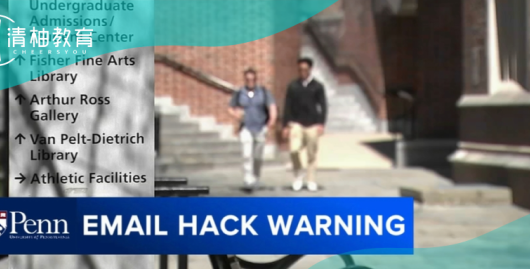
Last Friday, the University of Pennsylvania experienced a serious information security incident.
A hacker impersonated Penn officials and sent a series of highly offensive emails to graduate students and alumni, attacking the university's faculty and student body.
Hacked emails targeting Penn
Over the weekend, a hacker group published thousands of pages of internal university documents on a forum, including internal talking points, memos about donors and their families, bank transaction receipts, and personally identifiable information.
The group claimed they had "full access" to a university employee's PennKey account and exported data of "1.2 million Penn students, alumni, and donors" from the university's database, which they plan to release publicly within 1–2 months after they finish using it.
Source: thedp
"We believe Penn favors legacy students and donor kids in admissions, at least as bad as, if not worse than, its affirmative action practices," the hackers told media.
On Monday, Penn announced it had reported the data breach to the FBI and was cooperating with other law enforcement agencies in the investigation.
Source: thedp
This is not the first time Penn students have been targeted with fraudulent emails. Last year, a large number of students received fake messages impersonating the university's Board of Trustees communications, claiming the institution was "captive to the wealthiest and most despicable."
Penn is also not the first university to suffer a hacker attack. The academic world is like a huge amateur troupe, and students seem unfazed by it all...
Frequent Data Breaches, No Elite University Spared
In recent years, many top universities, including NYU, Harvard, Stanford, and the UC system, have experienced data breaches involving student grades, financial information, and even research data.
At the end of March this year, New York University's website was hacked. The attackers defaced NYU's homepage, replacing it with data charts and downloadable documents that remained for about two hours.
Admission data of over 3 million applicants dating back to 1989, including key metrics like SAT, ACT, and GPA, were leaked.
Source: NYU News
The hacker claimed the act was to protest NYU's continued "racially biased admissions policy" even after the 2023 Supreme Court ruling banned the consideration of race in college admissions.
In 2023, Stanford University suffered a cyberattack that leaked sensitive information such as Social Security numbers of approximately 27,000 faculty and students.
Source: Spiceworks
In 2023, UCLA was hit by a ransomware attack, with some data illegally downloaded, but the school explicitly stated it would not pay the ransom.
Source: NBC Los Angeles
University Admissions Equity: A Long Road Ahead
The exposure of Penn's data has laid bare the admissions disparities between different classes, making "legacy admissions" and "donor admissions" hot topics once again.
"Legacy admissions" refers to giving preference to children of alumni in college admissions, while "donor admissions" refers to gaining an advantage due to family donations to the school.
New York State has the highest number of colleges with legacy preference policies in the U.S., with 15% of such institutions nationwide located there.
Source: nyclu
After the affirmative action ruling was overturned, enrollment of students of color dropped sharply, and Asian American enrollment did not increase as expected.
Source: nyclu
Instead, legacy admissions policies have surged ahead, unfairly benefiting white students and exacerbating the prevalence of wealthy students on campus.
Many universities have recognized that the long-criticized "legacy admissions" and "donor admissions" policies do more harm than good.
California Governor Gavin Newsom signed a bill last year that, effective September 1, 2025, bans private nonprofit universities in California from considering "legacy admissions" and "donor admissions" preferences.
Source: Gavin Newsom official
Similar reforms have been sweeping across the nation. Maryland earlier enacted a law banning alumni-based admissions preferences at private colleges, while Virginia, Illinois, and Colorado imposed the same restrictions on public universities.
"College admissions should be based on students' actual achievements and abilities, not family background or economic status"—this is believed to be the ideal outcome. However, even with various efforts to promote diversity in recent years, universities still struggle to shake off the deep roots of elitism.
Coupled with the new administration's strong crackdown on DEI, how to balance diversity and fairness in a new era remains a profound question for American higher education, with educational equity still a long way off.
For international students, the university application is only the first challenge. Even after gaining admission to a top university, there is no guarantee of absolute career success later; there is still a long way to go.
While striving and fighting for what they deserve, they should also maintain a broad mindset and plan rationally. I hope everyone can become their best selves.