

ETS recently released the latest GRE annual report, but many online analyses overwhelm students with excessive information. This article by CheersYou(清柚教育) will cut to the chase and provide the most precise analysis.
1. Average Scores: U.S. Students vs. Other Countries
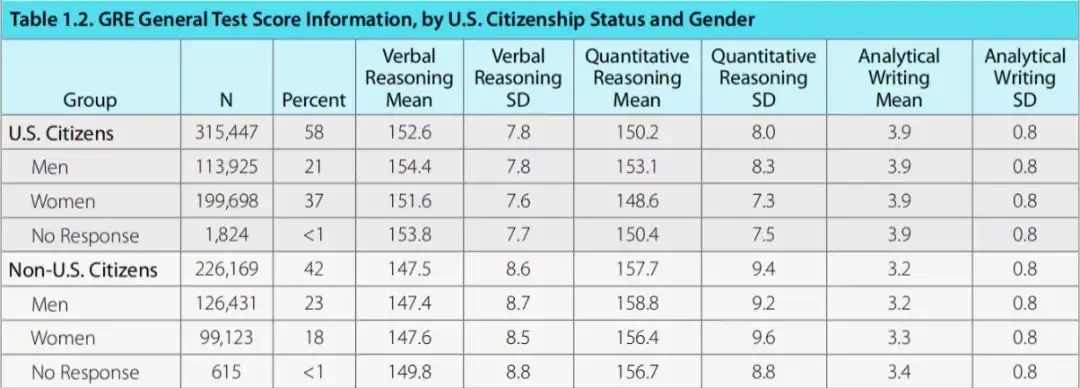
Looking at the average scores by country, Chinese test-takers over the past year averaged: Verbal 148.6, Quantitative 164.8, and Writing 3.1.
Verbal scores are far below those of some developed countries like Australia, Singapore, the UK, and Germany. The lower verbal scores among Asian test-takers are partly due to language barriers, but the more significant factor is reading habits.
Test-takers in Asian countries often learn English as a tool, studying specifically for exams, with a focus on test-taking strategies.
How to cultivate English reading habits so you can truly rely on ability plus test-taking skills in the GRE. Recommended readings: The New York Times, The New Yorker, The Economist, TIME, and similar publications. Here's a secret: most GRE sentence equivalence and text completion questions are sourced from these very outlets.
Moreover, never overlook the math section. Although the average math score of Chinese test-takers is far ahead, a 164 offers no advantage for applicants in STEM fields. Math has been getting more difficult in recent years; preparing early and aiming for a perfect score should be the goal for many.
2. Rising Numbers: More Test-Takers Are Choosing the GRE
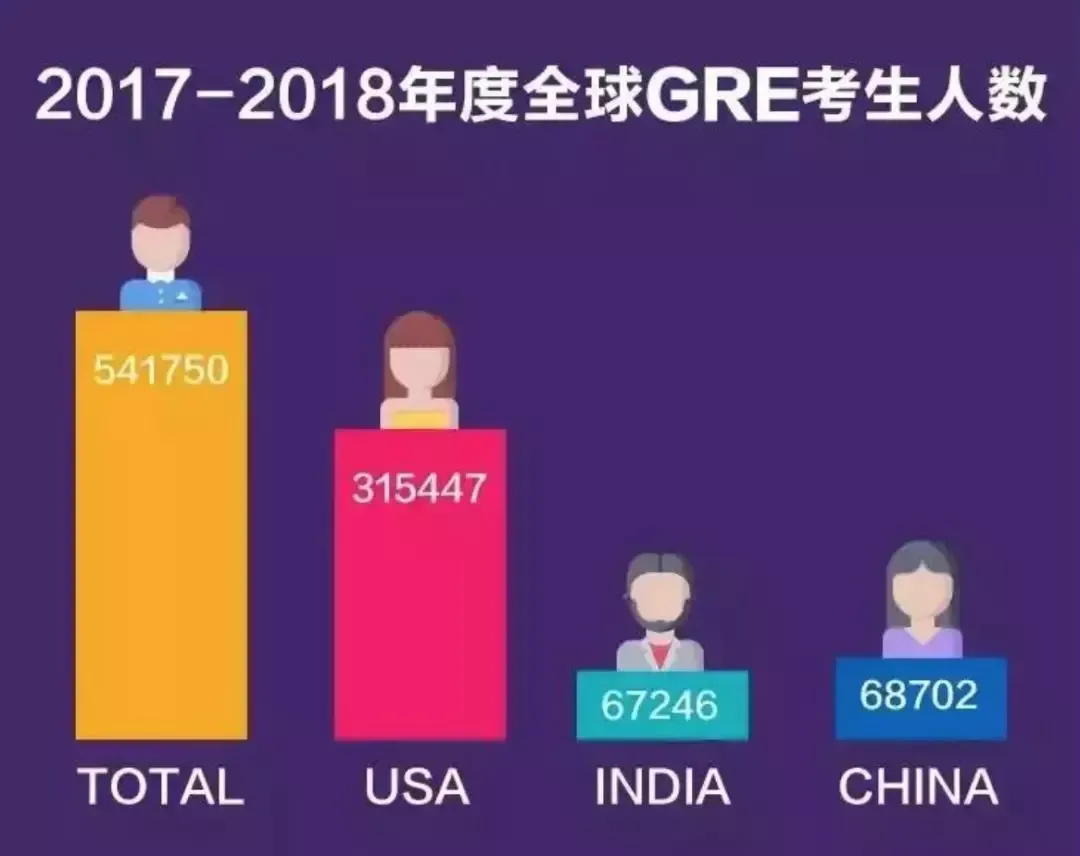
As business schools relax their exam requirements, more people are opting for the GRE; now some law schools are also accepting GRE scores. Coupled with the increasing number of international students, 2019 will see a new peak in GRE test-taker numbers.
The pool of GRE questions will continue to expand, and the pursuit of higher scores is intensifying.
However, a reminder: scores are just one part; application materials are more critical. Don't neglect enhancing your background in your intended field and preparing your essays just to chase a GRE score.
3. Majors and Fields of Application
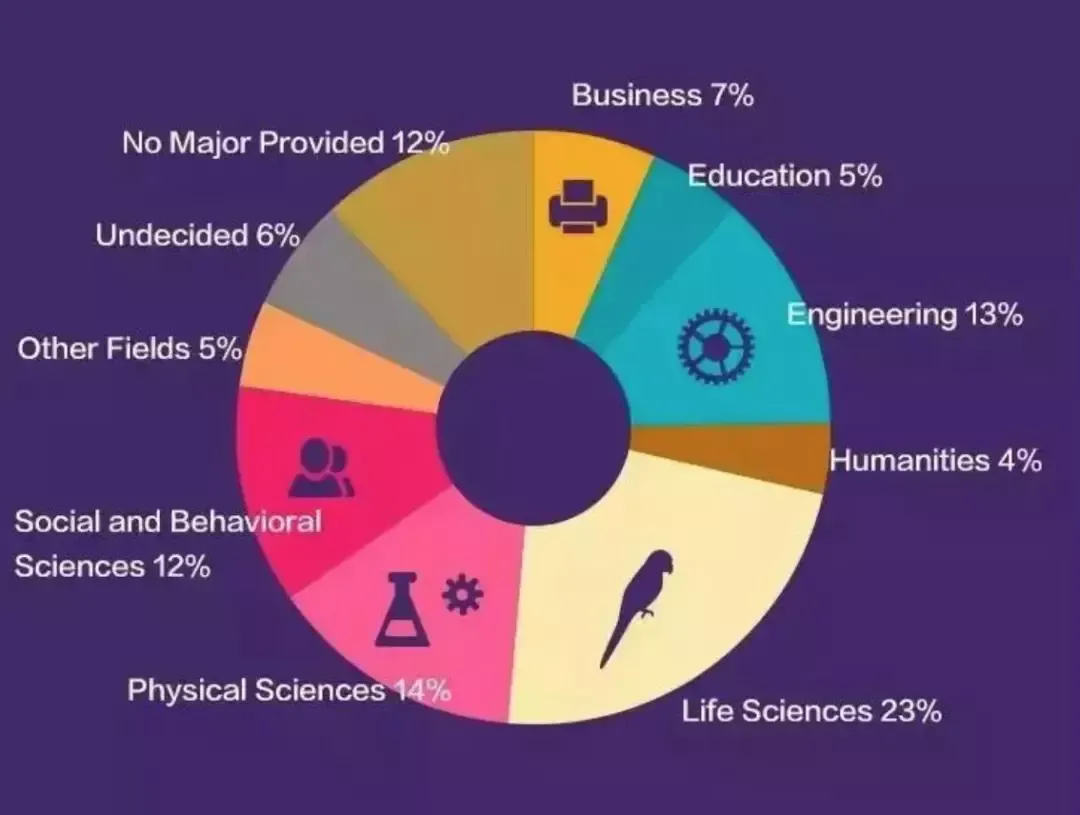
Looking at the fields of application, STEM and humanities each have their share, but notably, GRE test-takers are increasingly applying to business-related majors.
The reason: almost all business schools now accept GRE scores, compared to only accepting GMAT in the past, giving candidates more options. Additionally, for those applying to a broad range of business programs, we recommend taking the GRE.
There are two reasons: first, it's easier to achieve a high score on the GRE than the GMAT (after all, GRE scores are closely tied to vocabulary mastery); second, some specialized programs only accept GRE scores, such as the University of Michigan's Quantitative Finance and Risk Management program.
4. Schools Begin Accepting Superscoring After June 2018
The data in this report ends in June 2018. However, in the second half of 2018, some schools began accepting GRE superscoring.
Test-takers can send multiple GRE score reports to graduate schools, but note: while superscoring is beneficial, it is only workable if the overall scores from two or more attempts are not too far apart. Also, don't rely on luck—aim to achieve a satisfactory score in one sitting.