
Kyle Kashuv, a survivor of the 2018 Florida school shooting, said that Harvard University rescinded his admission—and the reason was this!
Kashuv is an 18-year-old high school senior who survived the shooting at Marjory Stoneman Douglas High School early last year.
After the shooting, many of Kashuv's classmates demanded stricter gun control measures, while he believed that people need to learn how to use firearms for legitimate self-defense to prevent similar tragedies. He thus became a defender of the Second Amendment, which protects the right to keep and bear arms.
He leveraged this position to meet with President Trump and others, successfully advancing what he considered more effective federal legislation to improve school safety and help identify potential threats of violence in schools. He proudly mentioned this experience in his Harvard application essay.
Kashuv later scored 1550 on the SAT, ranking second in his class, and was admitted to Harvard—a typical "model student" admired by others.
.jpg?x-oss-process=style/opt-webp)
But three months later, why did he receive an email from Harvard rescinding his admission?
It all stemmed from the fact that when Kashuv was 16 (a few months before the shooting), he had edited a racist comment in a shared class Google Doc.
In the Google Doc chat, he said he was really good at typing the word "N*gger," since practice makes perfect.
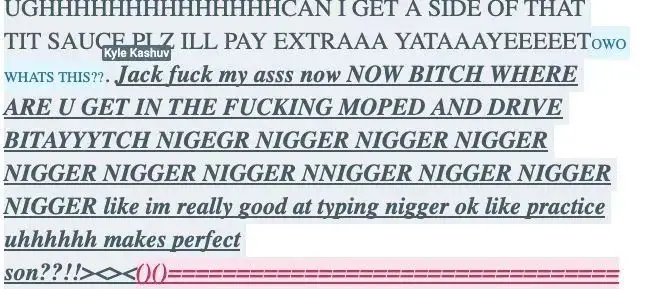
A few weeks ago, this message surfaced. Kashuv immediately issued a public apology.
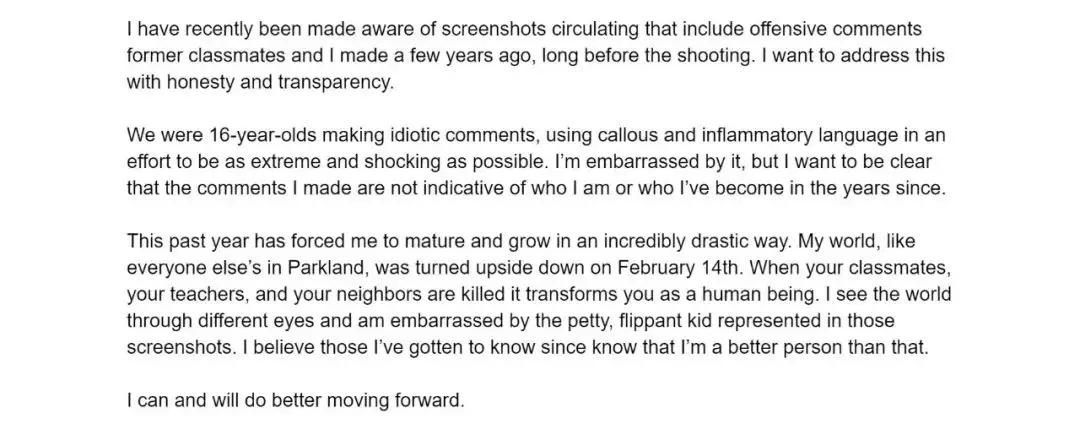
Unexpectedly, the situation escalated. After his apology was posted, more and more people began attacking Kashuv, especially his political opponents.
To make matters worse, Kashuv soon received a "letter of inquiry" from Harvard.
.jpeg)
Harvard stated that it reserves the right to rescind an offer of admission and asked Kashuv to respond in writing within 72 hours.
.jpg?x-oss-process=style/opt-webp)
Kashuv promptly sent an explanatory response, expressing deep regret and apology.
.jpg?x-oss-process=style/opt-webp)
Kashuv also emailed Harvard's Office of Diversity and Inclusion, seeking help and pledging to work for the office after enrollment to atone for his past mistake.
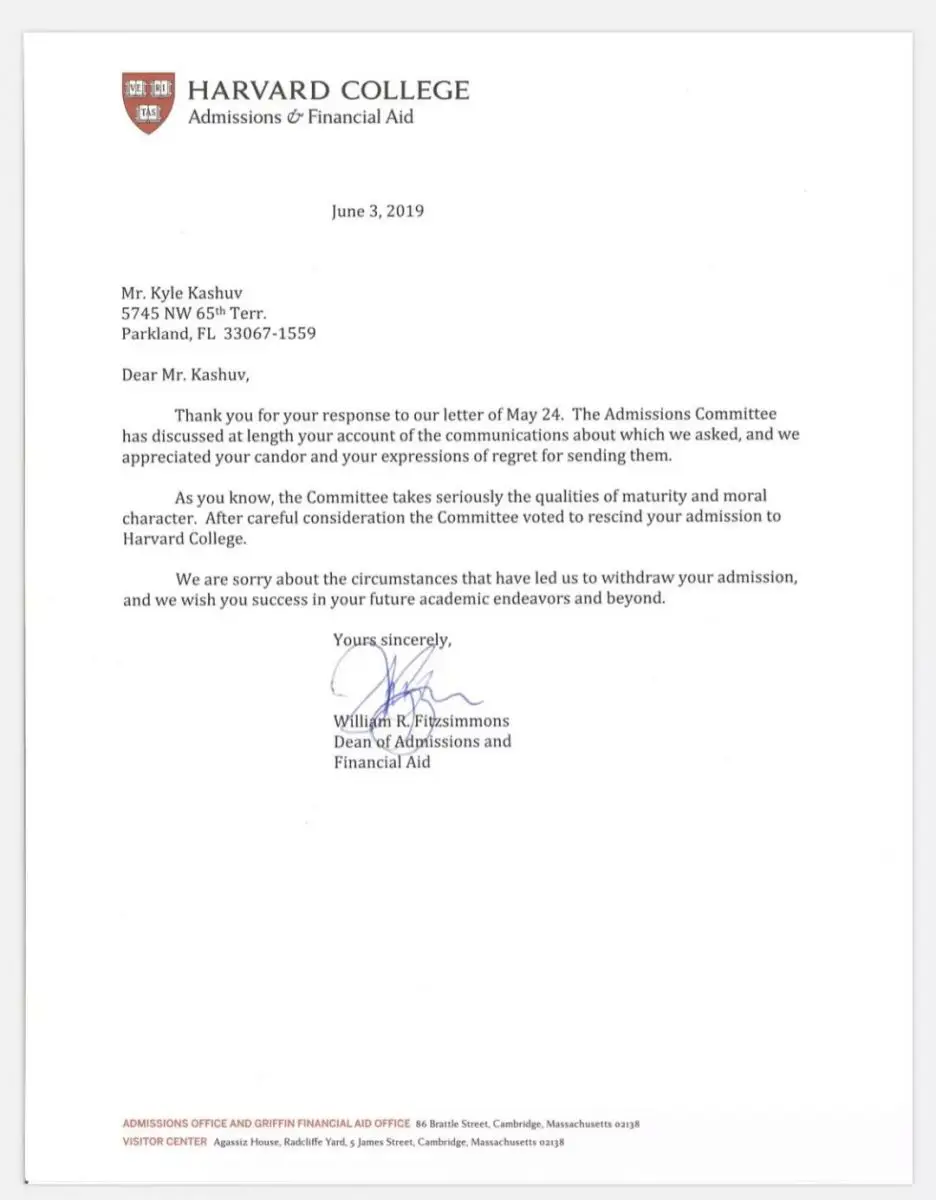
In the end, however, he still received an email "rejection letter" from Harvard. It read:
"After careful consideration, the Admissions Committee voted to rescind your offer of admission to Harvard."
"We are sorry about the circumstances that led to this decision, and we wish you success in your future academic and personal endeavors."
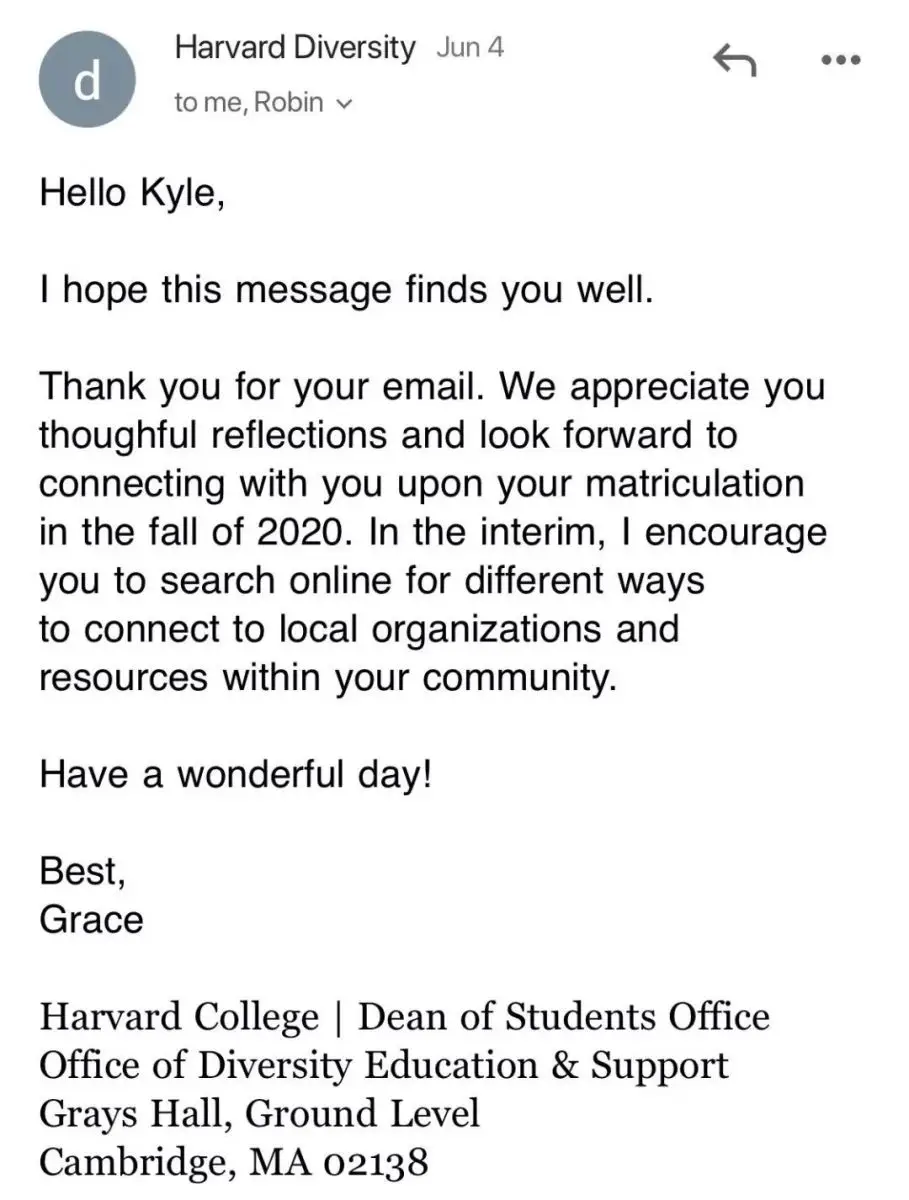
Meanwhile, Kashuv received a reply from the diversity office expressing anticipation of working with him.
Armed with this reply, Kashuv again wrote to the Harvard Admissions Office, hoping for a chance to save the situation through an interview.
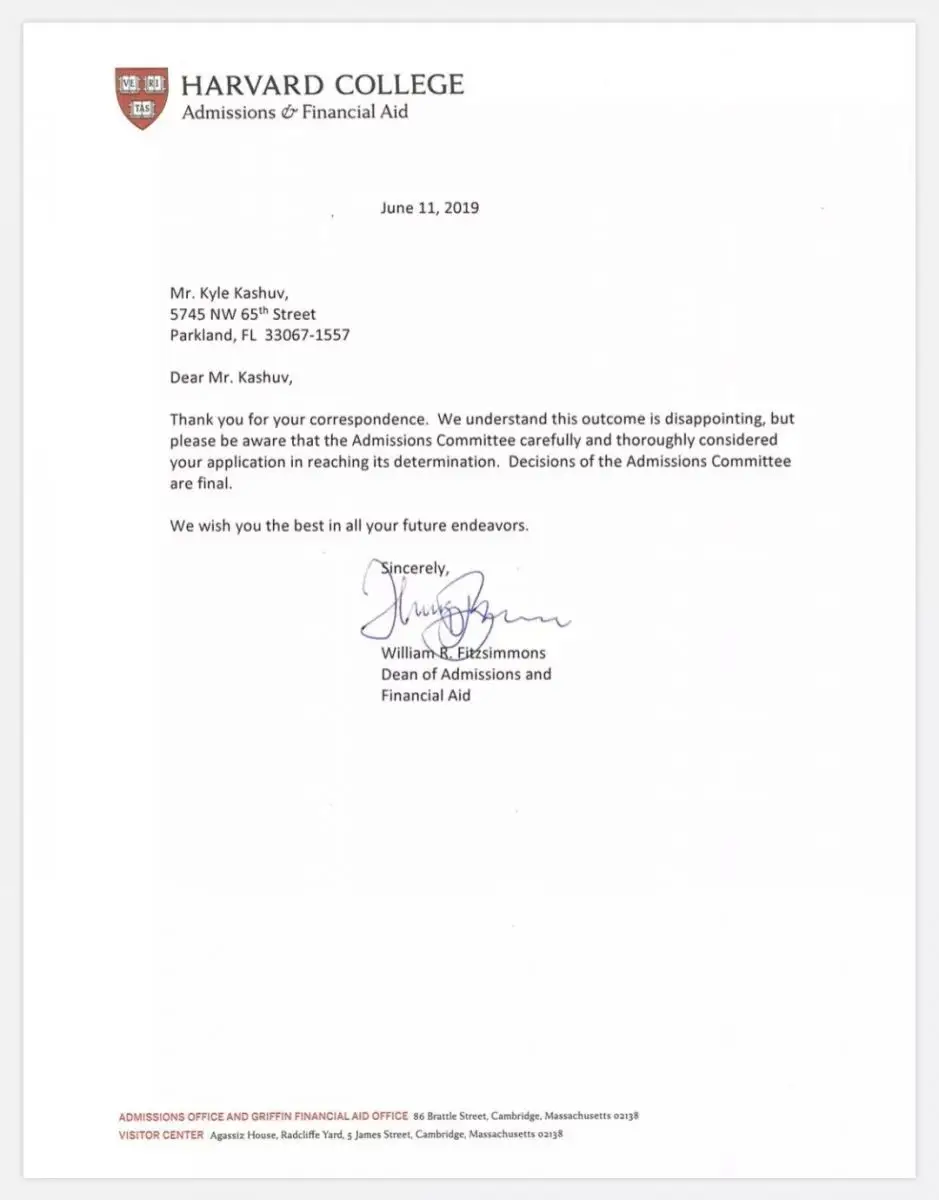
However, Harvard replied that the decision of the Admissions Office was final and denied his request for an interview.
This Monday, Kashuv posted a series of tweets describing the sequence of events, calling Harvard's decision "deeply disturbing."
He said, "Throughout its history, Harvard's faculty has included slave owners, segregationists, bigots and antisemites."
He added, "If Harvard is suggesting that one's progress is impossible and that our past determines our future, then Harvard is inherently a racist institution. But I don't believe that. I believe that both institutions and individuals can grow."
In this case, Harvard seemed unwilling to believe that a young person could grow through life's experiences. Rather than expecting Kashuv to become "better" in college, Harvard chose to give the spot to other outstanding students.
.jpeg)
There were also many different voices in society.
David Brooks, a columnist for The New York Times, said, "Harvard's move is unwise, because morality is formed through recognizing mistakes and repenting. A comment made in a 16-year-old's worst moment should not be the standard for judging the entire person."
Some netizens also felt that it is overly cruel to define a person by one action at age 16.
However, many netizens believed that he did not deserve sympathy; since he had done something wrong, he should bear the consequences.
Because of Harvard, Kashuv had turned down offers from all other prestigious universities, many with scholarships. Now, the deadlines for confirming enrollment at other schools had long passed.
.jpg?x-oss-process=style/opt-webp)
Having a spot but being unable to attend is perhaps the most heartbreaking thing. So, besides not watching your words on social media/the internet, what other mistakes could make your admission offer fly away? The following two are the most common among international students.
Severe GPA Decline
Before applying, everyone pays close attention to their GPA, but many students immediately relax after receiving an offer, causing a serious drop in their final semesters. Little do they know that the GPA of the last semester is equally important.
Some schools will inquire about a drop in GPA. If the explanation is unconvincing, the admission may be rescinded.
And some schools have strict requirements for the final semester GPA; falling below a certain threshold may result in direct revocation of admission or cancellation of scholarships.
Falsifying Application Materials
If you fabricate application materials during the application process, or even directly alter your transcripts, once discovered—even after enrollment—the school will not hesitate to rescind your admission.
In the United States, any form of academic fraud is a very serious offense. Even after enrollment, if you engage in any fraudulent activity during your studies, such as cheating on exams or using ghostwriting services, you may face the risk of expulsion at any time.
Therefore, students must maintain integrity throughout the application process and never resort to dishonesty. Before and after applying, always pay attention to your grades, words, and actions to secure a firm admission!