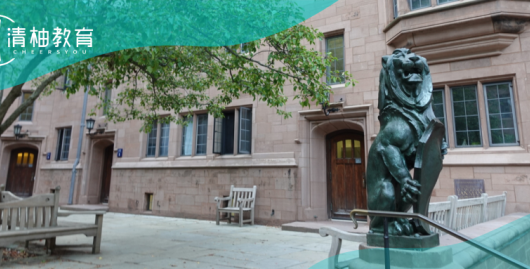
Recently, the news of Yale University expelling an undergraduate for falsification has sparked heated discussion among study-abroad circles.
According to the Yale Daily News, a Yale freshman had their admission rescinded for submitting false information in application materials, and was escorted out of the dormitory by campus police and the college dean.
Source: Yale Daily News
A spokesperson for Yale College stated: "The student submitted falsified information and made misleading statements about themselves in the application."
Source: Yale Daily News
According to a roommate, the student gave inconsistent accounts of her background and experiences, claiming to be from North Dakota one time, and then occasionally saying she was from California, China, or Canada. Her personal life also remained a mystery.
Yale declined to disclose specific details of the falsification, only emphasizing that the admissions process is "premised on the honesty of applicants."
The incident shocked the entire university and sparked widespread external discussion about admissions integrity and student conduct standards.
Admission Fraud: From "Elite Dream" to Nightmare
In fact, this is not an isolated case. In recent years, many prestigious schools have seen incidents where students were "rescinded or expelled for application fraud."
Just last year, media reported on a high school graduate from Washington State who was eventually rescinded by Stanford University months after being admitted, because she "exaggerated her volunteer hours" in her activity list.
Source: Your Tango
On her activity list, the student had claimed she volunteered "32 weeks per year, 12 hours per week," but Stanford's background check found that she had actually volunteered only during the summer for 12 weeks, 4 hours per week. The school immediately rescinded her admission after verifying.
Also last year, four international students at Lehigh University were arrested and expelled after being discovered to have forged transcripts, facing charges of forgery and theft of services.
Additionally, there are cases of "cross-school fraud plus financial fraud."
In 2017, an expelled student from Cornell University admitted that over six years, by forging transcripts and recommendation letters, she had deceived three universities into admitting her and fraudulently obtained over $130,000 in federal loans.
Source: cornellsun
According to a survey by Intelligent, as many as 61% of college students admitted that they had "fabricated some information" in their applications:
-
40% fabricated volunteer hours
-
39% forged work experience
-
38% added fake extracurricular activities
-
32% fabricated internship experiences
-
30% even forged recommendation letters
What seems like a minor "resume tweak" is actually a high risk of being rescinded or expelled.
The Admissions Scandal That Shocked the Nation
When it comes to application falsification, one cannot help but mention the 2019 U.S. college admissions scandal.
This nationwide admissions fraud case involved over 50 wealthy and celebrity families, coaches, admissions consultants, and even several top Ivy League schools.
These wealthy families used methods such as fabricating athletic profiles, altering test scores, and bribing coaches and admissions officers to get their children into prestigious schools like Stanford, Yale, and USC.
This case was later adapted into a Netflix documentary, Operation Varsity Blues: The College Admissions Scandal, which recreated the entire behind-the-scenes operation—from fake athletic resumes and SAT proxy testing to coaches taking bribes and admissions officers falling short, exposing the money manipulation behind the elite education system.
The documentary became a global hit upon release, shocking and prompting reflection among countless viewers.
Tread These Red Lines, and You Too Could Be Rescinded or Expelled
Stories of being "returned" by universities go far beyond application fraud.
In the American higher education system, everything from academic dishonesty and social media remarks to criminal behavior can cause a student to lose their admission or enrollment, and even affect their lifelong record.
At Harvard University, there have been multiple incidents of "admissions being revoked."
In 2017, more than a dozen Harvard freshmen had their admission offers revoked for posting racist, sexist, and violent jokes in a private Facebook group.
Source: Harvard Crimson
In 2019, Harvard again revoked the admission of a prospective freshman after his extreme hateful writings from high school were exposed. Online speech can also become part of academic integrity; the internet is not a lawless or amoral zone.
Source: Inside Higher Ed
In 2025, students at Barnard College in New York were suspended or expelled for participating in anti-Israel protests on campus and posting signs with extreme or hateful messages, which the school deemed "disruptive to campus order and in violation of student conduct code."
Source: NY Post
Also this year, a doctoral student at the University of Minnesota was expelled for academic dishonesty after being accused of using ChatGPT on an exam.
The student denied using AI and subsequently sued the university and relevant professors, alleging defamation and discrimination. His case became the world's first university expulsion and legal lawsuit triggered by "alleged AI cheating."
Source: MN Daily
It's clear that universities have boundaries of tolerance, and any transgression can instantly undo years of effort. Moreover, the judgment of "red-line crossing" behaviors will continue to evolve with the changing times.
Behind every rescission or expulsion lies a real-life warning about violations and their costs.
Integrity is a moral bottom line; academic freedom is not a get-out-of-jail-free card. For international students in a foreign land, it is even more important to remain vigilant at all times.
In the U.S. higher education system, universities share information through the Common Data Network and student disciplinary record systems. Once fraud or misconduct is discovered, this record may follow you for life.
Whether before or after applying, or during your studies, take it seriously, be cautious in word and deed, and don't let one misstep lead to lifelong regret.