As a foundational discipline, economics is one of the driving forces of modern society. Society also needs well-trained economists and analysts to conduct multi-dimensional research to predict and respond to changes and infer trends.
Careers in economics generally require a master's or doctoral degree, demanding higher levels of education compared to other fields, but the return on investment is also substantial.
According to the U.S. Bureau of Labor Statistics, the median annual wage for economists is $102,490, with a projected job growth rate of 6% from 2019 to 2026.
Top U.S. economics departments primarily offer doctoral programs, so among the top 50 economics departments, only about 20 currently have master's degree programs.
Given the extreme difficulty of admission and graduation requirements for U.S. economics doctoral programs, students generally prefer to apply for a master's degree first, and then decide during their master's studies whether to enter the job market directly or continue to a Ph.D. Many universities have also established master's-to-Ph.D. pathways.
Fields of Specialization
For the many branches of economics programs, after completing core courses (microeconomics, macroeconomics, statistics, econometrics, etc.), students can choose elective courses based on their interests or career goals.
For example, Duke University's curriculum includes: Applied Economics, Computational Economics, Financial Economics, Health Economics, and more. These specialized fields also require applicants to have certain statistical analysis skills.
Career Options
Many graduate economics programs focus on specific research areas, such as microeconomics, health care economics, economic policy, or other niche markets, which can all become potential career directions.
As a graduate student, elective courses and internship experiences are also important factors influencing career direction. Therefore, before applying, students should learn as much as possible and clarify their future career path.
CheersYou(清柚教育) also lists some possible job options for different specialization branches:
1、Macroeconomics
Graduates can work in government economic departments coordinating economic policy research, or become professors in related subjects at universities.
2、Microeconomics
Similar to macroeconomics, graduates typically work in universities or government departments.
3、Labor Economics
Graduates often work in corporate support departments, or in government economic agencies coordinating the research and implementation of economic and labor laws and regulations.
4、International Economics
Graduates can work in government economic departments coordinating international economic policy research, or in international trade companies in roles related to international trade. Job prospects are very good with ample room for growth.
5、Econometrics
Graduates often work in large multinational corporations conducting economic strategic analysis, with generous compensation.
6、Development Economics
Job prospects are very promising. Graduates can work in comprehensive economic management departments, policy research institutions, financial institutions, and enterprises, engaging in economic analysis, forecasting, planning, and economic management.
Recommended Master's Programs
Johns Hopkins University
Johns Hopkins University is recognized as America's first research university and has been a model for other educational institutions globally for over 140 years.
Johns Hopkins University's Master's in Applied Economics can be completed by full-time students in two years.
Some courses include:
· Microeconomic Theory
· Macroeconometrics
· Accounting and Financial Reporting
· Business Leadership and Human Values
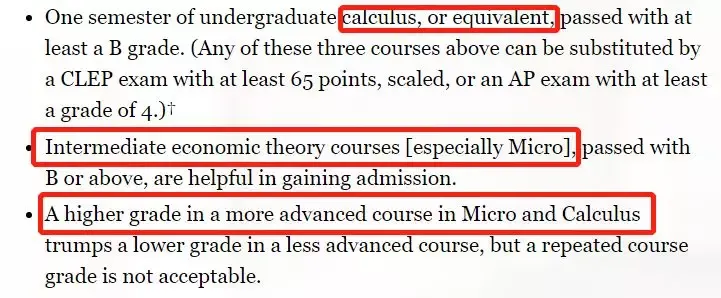
Prerequisites for the JHU Master's in Applied Economics:
Duke University
Duke University is renowned nationwide in fields such as law, business, engineering, arts, and sciences, with many strong disciplines including sociology, political science, and economics.
Duke's Master's in Economics requires at least 15 credits of core economics courses, along with many related electives in political science, public policy, finance, statistics, and mathematics.
Some courses:
· Game Theory with Applications to Economics and Other Social Sciences
· Advanced Microeconomic Analysis
· Industrial Organization
· Time Series Econometrics
Duke's Master's in Financial Economics is a STEM-designated program: Click to learn about U.S. STEM programs: From Liberal Arts to STEM, Yes You Can! A 2019 Guide to Choosing STEM Majors
.png?x-oss-process=style/opt-webp)
Washington University in St. Louis
Washington University in St. Louis offers a wide range of excellent undergraduate and graduate programs, including arts and architecture, business, medicine, law, social work, and more. Its graduate economics program ranked 27th in the U.S. News 2019 rankings.
Some courses:
· Macroeconomics
· Microeconomics
· Quantitative Methods in Economics
· Applied Econometrics
Teaching requirements for the Master's in Economics at Washington University in St. Louis (currently a combined master's-Ph.D. track):

New York University
With over 50,000 students, New York University is one of the largest private universities in the U.S. Its acclaimed economics department offers a master's program that is also one of the most rigorous in the country.
NYU's Master's in Economics can be completed full-time in just three semesters, designed to enhance students' skills in economic analysis and public policy.
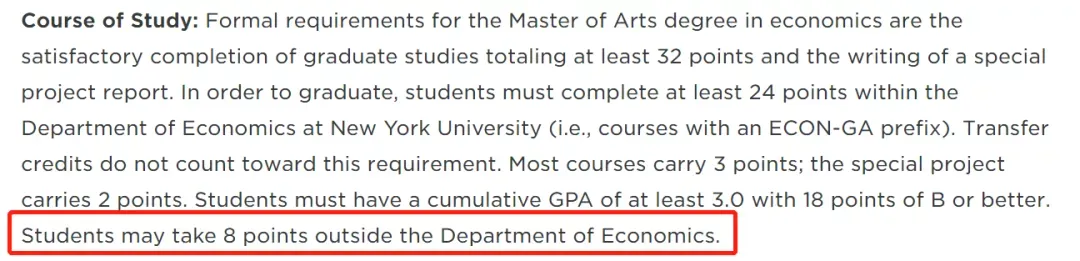
The program requires at least 32 credits, with some core courses including:
· Mathematics for Economists
· Microeconomic Theory
· Macroeconomic Theory
· Applied Statistics and Econometrics
NYU's Economics Master's allows 8 credits of electives from other schools:
Boston University
Boston University's economics department offers programs including Global Development Economics (MA), Economic Policy (MA), and Economics (MA).
The Master's in Economics requires at least 32 credits through eight courses. Four are core courses, and the remaining four can be chosen from various electives. Some courses include:
· Market Structure and Industrial Organization
· Money and Financial Intermediation
· Race and American Economic Development in a Global Perspective
· Energy and Environmental Economics
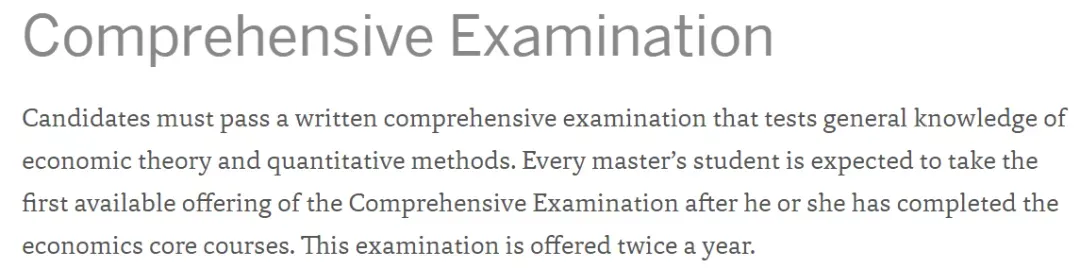
The BU Economics Master's also requires a writing exam to assess knowledge of theory and quantitative methods:
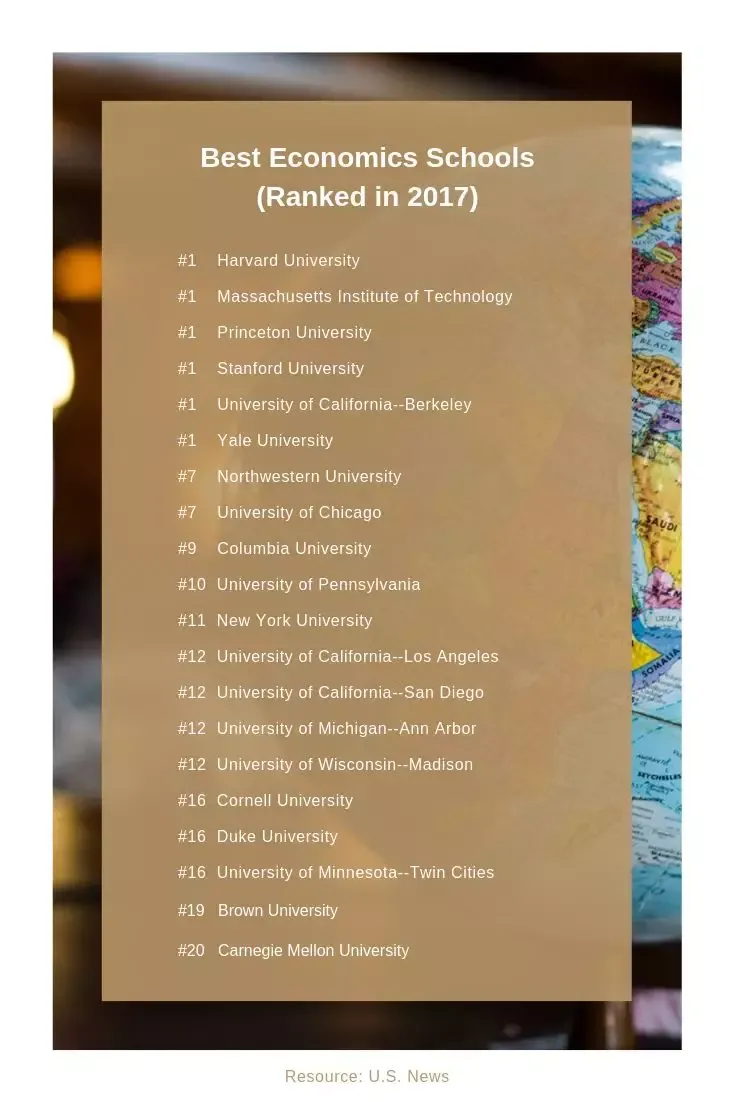
Finally, here is the U.S. News 2017 ranking of Economics graduate schools (master's and above) for your reference.