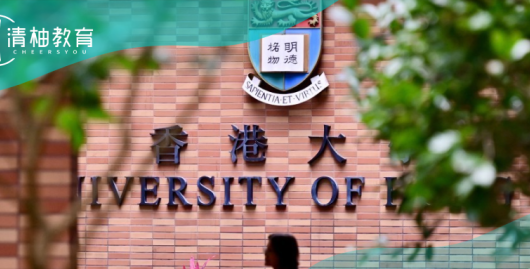
Recently, the news that HKU raised its tuition by HK$40,000 overnight went viral in study-abroad circles. What people find infuriating isn't just the price hike itself, but the fact that you are only told about it after you've paid your deposit.
From application to payment, the price was clearly marked as HK$334,800;
But after you've paid the HK$160,000 deposit, the official website quietly changes it to HK$375,000;
After being slammed on social media and having complaints and rights protection actions filed, it was secretly changed back.
Source: Internet
No email, no explanation, no notification—only a vague statement from start to finish that "the final interpretation right belongs to the school."
This is no longer a simple price increase; it's more like a compliance test targeting applicants.
HKU Raised Tuition by 40,000 Overnight?!
From the application opening in October 2025, to the recommendation letter in December, to the conditional offer issued in March 2026, the tuition displayed on both the official website and the offer letter was consistently HK$334,800.
However, after students paid the deposit (approximately HK$167,850), the official website quietly changed it to HK$375,000—an increase of HK$40,000, about 12%.
The school gave no clear notice throughout; students were left to discover it on their own.
When students called the faculty, the response was clear: the tuition increase had been approved and could be implemented. Students who had already paid the deposit might need to make up the difference later.
When asked why they hadn't been informed in advance, the explanation was: because the approval process takes time, it is only now being announced.
The students defending their rights asked bluntly: is the tuition a minor adjustment, or can it be hiked by 12% directly? Why not provide a range in advance? Why no email notification?
If the school can change the price at any time, what is the point of publishing a tuition standard?
Source: rednote
Within 48 hours, over 400 students took collective action: collecting evidence, flooding screens, sending emails, filing complaints, and publicly defending their rights.
The outcome was positive; HKU's official website changed the tuition back to HK$334,800. This storm was forcibly suppressed.
The students won, but trust was lost.
What truly made everyone uncomfortable wasn't just the price hike, but the feeling of being "calculated."
The timing was extremely precise: offers were delayed until mid-to-late March, so students lacking better alternatives would often pay the deposit first to "lock in a spot."
Raising the price at that point—what does that mean? You have no room to choose anymore.
You can choose not to enroll, but you'll lose a sunk cost of HK$160,000.
This kind of "technically compliant" maneuver essentially erodes trust.
Moreover, this is already HKU's second price hike in half a year:
October 2025: 320,000 → 334,800
March 2026: 334,800 → 375,000
In just five months, the increase reached nearly 60,000. This is no longer just about raising tuition—it's treating international students like cash cows.
HKU Has Become Arrogant, and Applicants Are Acquiescing
If this were seen only as an isolated case, you might think it's a one-time operational mistake by HKU. But if you place it within the broader study-abroad market, you'll realize it's not accidental.
In recent years, the trend among Hong Kong universities has been: more and more new programs, tuition climbing year after year, highly compressed curricula, and expanding enrollments.
It looks like education, but in reality, it resembles a high-turnover model.
The essence is: one-year programs, high pricing, rapid graduation, and continuous recruitment.
This logic isn't flawed; one might even say it's very successful.
Source: China Daily HK
The problem is that as the expansion speed accelerates, the rule constraints gradually weaken. Hence, situations like today arise: prices can change at any time, information can be opaque, and risks are borne by students.
Slowly, the boundary of education begins to blur, and the logic of commerce becomes clearer.
A single faculty splits into multiple specialized master's programs. The names sound new, but the essence is capacity expansion. Some programs aren't opened for academics, but for the market.
Tuition rises year by year, the ways of increasing it become more flexible, and application deadlines are extended to somewhat ridiculous lengths.
Source: rednote
Official data shows that in the 2024/25 academic year, there were 1,930 students who withdrew from the eight UGC-funded universities. Among them, HKU had 341 withdrawals, ranking third among the eight institutions.
This might not directly indicate teaching quality issues, but it at least reflects one thing: when enrollment scale, program numbers, and tuition keep rising, the system is under pressure, and students' experience is gradually being diluted.
Source: epaper
Despite the many negative reviews, HKU still dares to act "arbitrarily." Ultimately, it's because the demand in its study-abroad market is too strong.
For many people, a Hong Kong master's degree has several irreplaceable advantages: close to home, one-year completion, prestigious reputation, and manageable risks.
And HKU undoubtedly sits at the most sought-after position. Thus, a delicate situation emerges: everyone curses while still applying.
Source: rednote
Although everyone complains that HKU courses are light, faculty quality is uneven, and practicality is insufficient, it's indeed cost-effective and close to home, with no substitute in Southeast Asia.
Once supply and demand are out of balance, pricing power is naturally not in your hands.
Even if this public uproar grows larger, the final number of applicants may not necessarily drop significantly.
Because the reality is clear: costs in the UK and US are higher, competition in mainland China is fiercer, and Hong Kong remains one of the most cost-effective study-abroad paths.
So HKU's logic is very simple: those who can accept it will still accept it; those who cannot are hard-pressed to find an alternative for now. That's its true source of confidence.
HKU has indeed "become arrogant," but applicants are also "acquiescing."
This creates a cycle: the school constantly tests boundaries, and applicants find it harder to withdraw. Ultimately, the boundaries will only keep being pushed—no matter how outrageous the operation, it will be forgotten after a few days.
Regardless, we still hope everyone remembers: when applying to study abroad, don't just look at the school's reputation; check for uncertain clauses, whether information is transparent, and if there's risk from time gaps. If you encounter unequal terms, communicate and defend your rights immediately.
More importantly, don't bet all your choices on one school. Apply to multiple programs and always leave yourself a way out.
HKU remains a good school, and a Hong Kong master's degree is still a solid path, but we also suggest that students choose rationally based on their backgrounds and long-term plans, without blindly following the herd.