In recent years, the trend of studying abroad has been on the rise, and earning a foreign degree has come to be seen as a necessary step toward a successful and happy life. Parents do not hesitate to invest hundreds of thousands or even millions of yuan to give their children "international exposure."
At the same time, with the surge in the number of students going overseas, many have begun to question: Are overseas degrees still valuable? How competitive are returnees back in China?
China's Overall Employment Environment
According to relevant reports, in 2019, the number of Chinese university graduates exceeded 8 million for the first time, and the domestic employment situation remains tough.
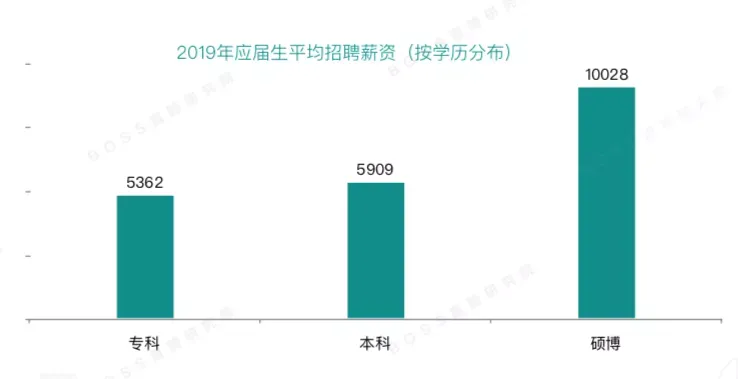
Data from Boss Zhipin shows that in 2019, the average recruitment salary for master's and doctoral graduates was 10,028 yuan, while the salaries for bachelor's degree and vocational school graduates were roughly the same, averaging around 5,000 yuan. This indirectly indicates that industries are increasingly setting higher academic requirements.
Employment Situation for Domestic Fresh Graduates
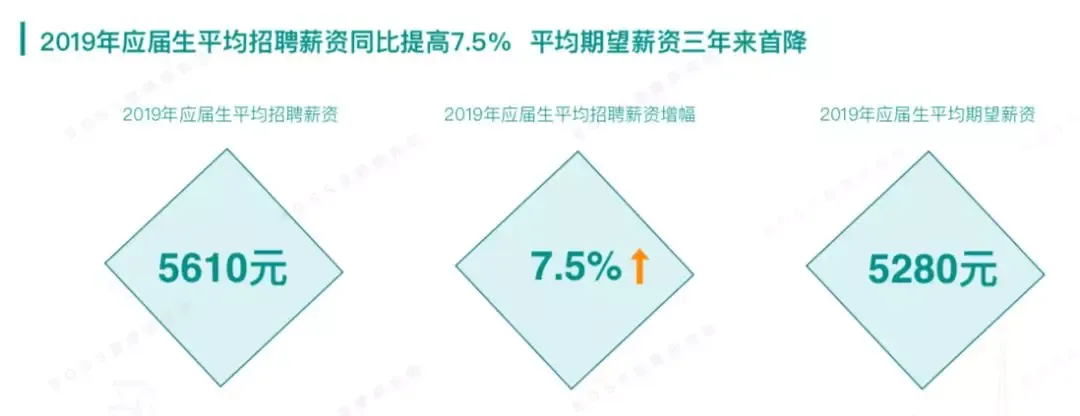
As of August 2019, the average salary for domestic fresh graduates was 5,610 yuan, a 7.5% increase compared to 2018.
Against this uncertain employment backdrop, fresh graduates' salary expectations have been gradually decreasing. Data shows that the average expected salary for 2019 fresh graduates was 5,280 yuan, marking the first decline in three years.
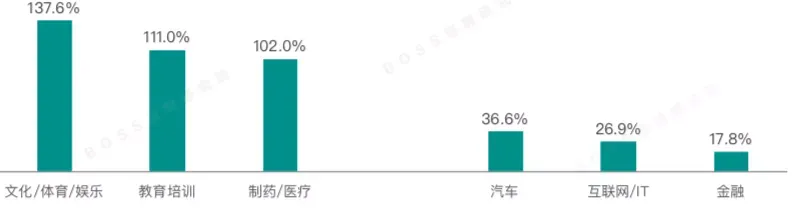
Surveys also indicate that the demand for fresh graduates in the culture/sports/entertainment, education/training, and pharmaceutical/healthcare sectors has surged. In particular, demand in the culture, sports, and entertainment industry increased by as much as 137.6%.
The culture, sports, and entertainment industry is showing a strong upward trend, with more related positions opening up. In contrast, previously popular sectors like internet and finance have clearly slowed their hiring of fresh graduates.
With the full arrival of the digital economy era, companies increasingly prefer candidates with data analysis and programming skills, and they place a high value on educational background. In 2019, among the internet technology positions open to fresh graduates, 52.2% explicitly required a master's degree or higher, while only 4.8% accepted vocational school graduates.
The threshold for the highly popular AI-related positions in recent years is even higher. In 2019, nearly 60% of AI fresh graduate positions required a master's degree or above, and vocational school graduates were essentially not accepted.
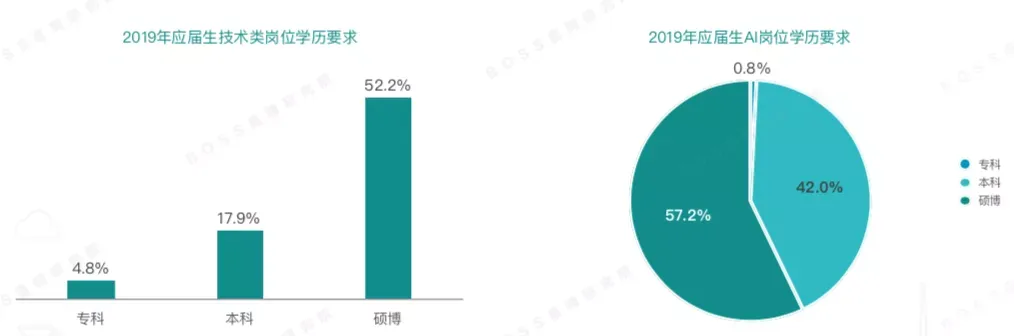
From this, it is clear that the more specialized the industry, the stricter the academic requirements.
The Situation for Overseas Returnees
Like their domestic counterparts, the primary challenge for students returning from overseas is—finding a job! So what are the prospects for returnees back home? Do they have a clear advantage in the job market?
Reports indicate that around 70% of companies still value hiring returnees. 65% have special interview processes for candidates who have not yet returned, and 64% are willing to offer additional benefits to returnees. Foreign-funded and private companies are particularly willing to invest more to attract overseas talent.
At the same time, data shows that about 80% of surveyed companies prefer candidates with two or more internship experiences. Therefore, we advise students to seek as many internship opportunities as possible while in school—grasping the chance to apply theory in practice will give you an edge when job hunting.
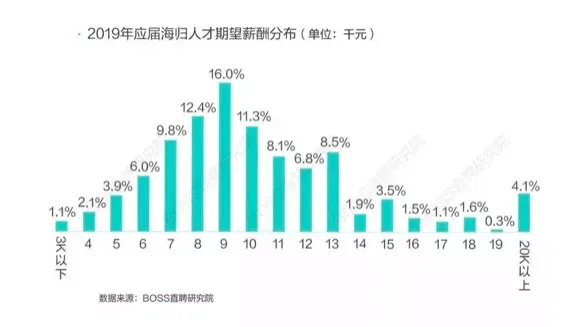
In terms of salary, the average expected salary for 2019 overseas returnee fresh graduates was 9,265 yuan, with undergraduates expecting 7,925 yuan and postgraduates 10,429 yuan—32% and 20% higher, respectively, than their domestic counterparts.
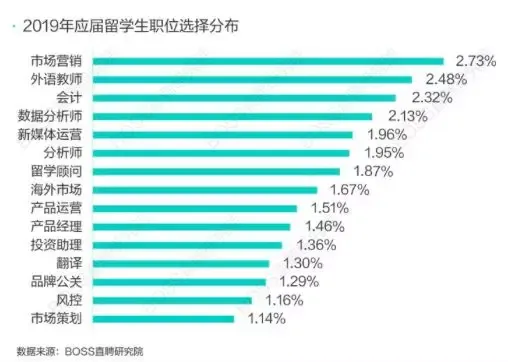
In terms of job distribution, marketing roles that leverage language and cross-cultural strengths are most popular among returnees. The top three positions favored by returnees in 2019 were marketing, foreign language teacher, and accountant.
Overseas market promotion, which had long been among the top three, saw its share drop from 2.7% in 2017 to 1.6% in 2019 due to the global economic downturn, ranking only seventh in 2019.
Private enterprises are more popular with returnees. With the rapid development of the domestic economy, the salary gap between private and foreign-funded companies has narrowed, and in some industries like the internet sector, starting salaries at private companies even exceed those at foreign firms.
Are Advanced Overseas Degrees Still Competitive?
In summary, although the competitive advantage has narrowed from 38% in 2017 to 31%, the overall employment competitiveness of returnees remains significantly higher than that of domestic job seekers in the same year.
For those planning to return to China, a high-level degree from a prestigious overseas university is still a reliable trump card. Whether you ultimately land a job offer depends more on your personal capabilities; but without an excellent academic background to open doors, you might not even get the chance for an interview.
However, just as there are a thousand Hamlets in a thousand eyes, everyone's judgment of the value of studying abroad differs. Some may feel that spending millions to study abroad only to return to a starting salary of less than 10,000 yuan a month simply is not worth it. But studying abroad offers returns beyond just monetary ones—it also cultivates a more complete value system, a broader mindset, and stronger learning abilities.
These qualities may not make you stand out early in your career, but they manifest in your daily work and collaboration with others. Whether it's receiving more opportunities at the beginning or the acceleration of your future development, an advanced overseas degree still holds its advantages.
Of course, what matters most is your own effort; those who are diligent and hardworking will always have good luck. CheersYou(清柚教育) also wishes all students currently studying abroad the best of luck in finding their dream jobs eventually~