
Market analytics and business analytics are increasingly popular major options, with application numbers rising steadily. However, many students still don't understand the differences between them, and thus aren't sure which one suits them better.
Today, CheersYou(清柚教育) helps you analyze the characteristics and advantages of each, and break down the differences between them.
Business Analytics Major
Program Introduction
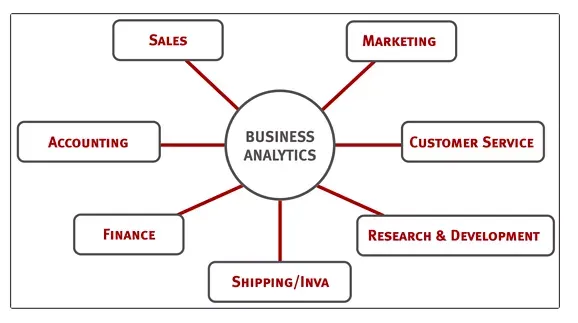
Business Analytics, or BA, involves analyzing data owned by enterprises—not just market data but also user behavior and preferences—to derive insights useful for business decisions.
BA is an interdisciplinary field combining mathematics, computer science, and business management. Most programs are housed in business schools, though some are in engineering or information schools, and they all require a strong background in math and computing.
Curriculum
Most Master's in Business Analytics programs are career-oriented, and the coursework is highly practical.
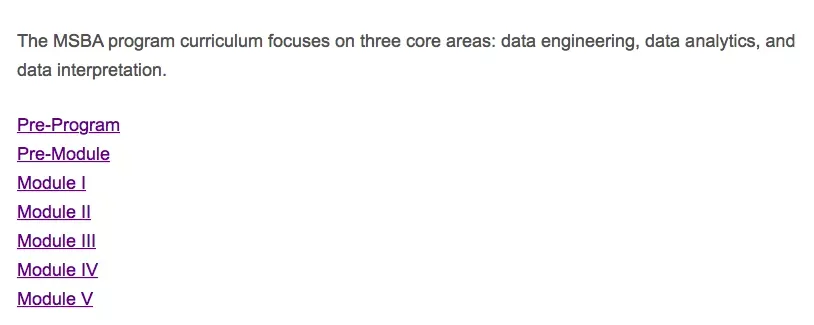
For example, NYU's MSBA curriculum focuses on three core areas: data engineering, data analytics, and data interpretation.
Recommended Programs
Massachusetts Institute of Technology:
Master of Business Analytics
University of Texas at Austin:
Master of Science in Business Analytics
University of Chicago:
Master of Science in Analytics
New York University:
Master of Science in Business Analytics
Johns Hopkins University:
Master of Business Analytics and Risk Management
University of Rochester:
Master of Science in Business Analytics
Boston University:
Master of Science in Business Analytics
Application Requirements
As an interdisciplinary field, business analytics requires applicants to have both a business background and a quantitative background.
Currently, very few undergraduate programs worldwide directly offer a major in business analytics. Therefore, students from a business background need to particularly strengthen their coursework and practical experience in mathematics, statistics, and programming.
Students with a background in mathematics or statistics, on the other hand, need to enhance their research or internship experience in business analytics and undergo systematic training for their interview skills.
Specifically, in terms of academics, business analytics programs hope or require applicants to have at least studied advanced mathematics, linear algebra, probability theory, and statistics, and possess certain programming skills.
In terms of practice, research projects or internships that align well with business analytics include, but are not limited to, credit card user behavior analysis, new song recommendation systems, business operations analytics and optimization, web data analysis, and identification of "fake followers" on Weibo.
Overall, applying to business analytics is quite challenging. BA programs are few in number, the number of applicants is high, and the bar keeps rising every year.
Career Prospects
Overall, the employment outlook for BA is bright. Graduates can become market researchers, data analysts, consultants, etc. Common industries include IT, finance, securities, and consulting.
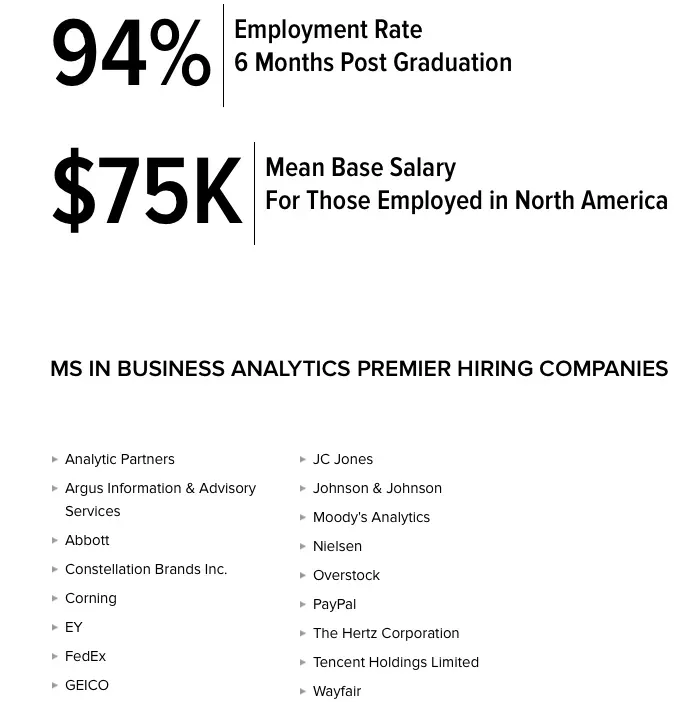
Take the Simon Business School at the University of Rochester for example: BA graduates have a 94% employment rate and an average annual salary of $75,000, making it a major with real earning potential.
Market Analytics Major
Market analytics is a field that applies data analysis to the marketing domain. By analyzing data, it helps better understand the supply-demand relationships in the market, providing constructive insights and publishing guidance reports. In short, it primarily focuses on the analysis of market-related data.
Marketing Analytics is usually offered as a concentration within majors like Marketing or Integrated Marketing Communication; some schools also offer a standalone Marketing Analytics major.
The field of Marketing Analytics combines knowledge from business, statistics, and computer science. It takes a blend of traditional business analyst, statistician, and programmer to become a Marketing Analytics professional suited for the new era.
Curriculum
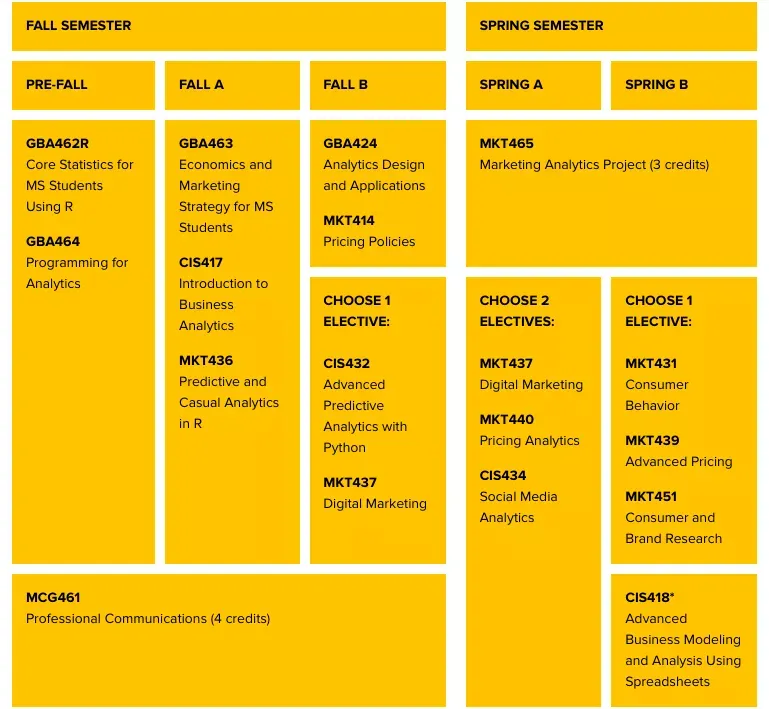
Based on the curriculum of schools offering Market Analytics, the main subjects include: marketing, consumer behavior, statistics, and data processing tools such as SQL, SAS, R, etc.
For instance, the MA program at the University of Rochester covers both data analysis and marketing knowledge.
Recommended Programs
Columbia University:
MS in Marketing Science
Northwestern University:
MS in IMC - Consumer Insight and Analytics
University of Maryland:
MS in Marketing Analytics
University of Georgia:
Master of Marketing Research
University of Rochester:
MS in Marketing Analytics
Johns Hopkins University:
MS in Marketing - Marketing Analytics
New York University:
MS in Integrated Marketing - Marketing Analytics
Application Requirements
For Marketing programs, applicants' undergraduate studies should support functions in marketing, such as statistics, media, communications, etc.
A background in marketing, media communications, or business English is also necessary. Students from STEM backgrounds make up a small fraction of applicants, while those with a statistics background are the majority.
For MA programs, admitted students typically have an average of 2-3 years of work experience. Among the TOP100 schools that offer a master's in marketing, only about 7 or 8 do not require work experience; in other words, MA programs place greater emphasis on whether applicants have work experience.
Career Prospects
In terms of employment, the MA industry in the U.S. is very mature, and the demand for analytics talent is on the rise. Although we face natural disadvantages in language and culture, we have always been quite competitive in more tech-oriented areas.
For those who want to stay in the U.S., graduates can work in various industries and institutions, including management, research, and technical consulting firms, insurance companies, professional research agencies, and large multinational corporations, mostly in IT and Analytics departments. Main tasks include: collecting market data, studying consumer purchase preferences, monitoring marketing trends, etc.
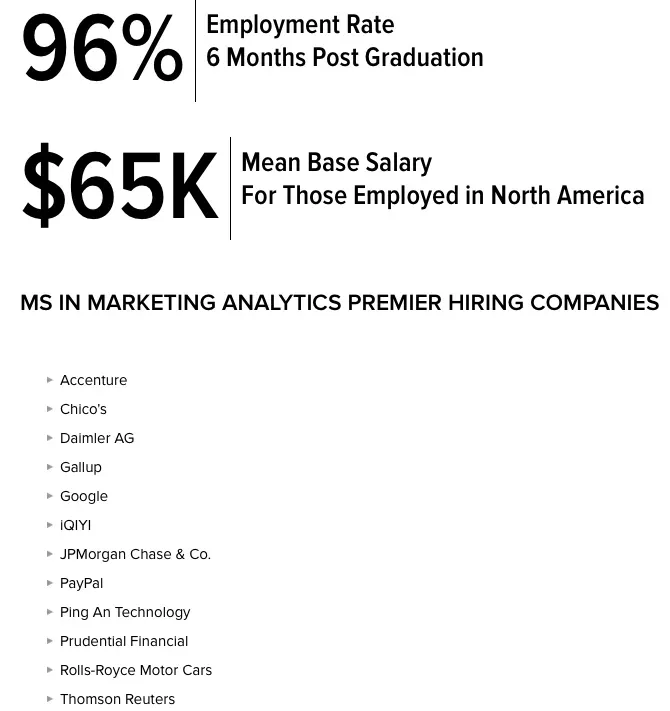
Again, taking the Simon Business School at the University of Rochester as an example: MA graduates have a 96% employment rate within six months of graduation, with an average salary of around $65,000.
From both employment and practical standpoints, business analytics and market analytics each have their own strengths. Moreover, many programs in these two fields are STEM-designated, offering the enviable three-year OPT period, making them great choices for those seeking job opportunities in the U.S.
As for which to choose, students should make decisions based on their own actual situation and long-term goals to pick the program that suits them best.