As modern life becomes increasingly stressful, more people are paying attention to and studying psychology, and a considerable number of students begin studying psychology at the undergraduate level.
Psychology is fundamentally a science, focusing on human behavior, consciousness, and the brain across a wide range of fields, including cognitive psychology, abnormal psychology, social psychology, organizational psychology, biological psychology, neuropsychology, personality psychology, counseling psychology, developmental psychology, early childhood education psychology, and more.
Despite growing popularity in recent years, employment remains a major challenge for international students graduating with psychology degrees, so most choose to pursue advanced degrees after graduation.
Yet we find many students struggling with the decision between a direct PhD and a master's in psychology.
A Master's in Psychology Is Actually the Better Choice
Because many psychology programs offer combined master's and doctoral tracks, students aiming for a research career often consider applying directly to PhD programs.
However, PhD admission requirements are high, demanding excellent grades, extensive internship and research experience, and successful networking with advisors. Even if admitted, students face a grueling 4–5 years or more—and if they can't persist, all their efforts may be wasted.
Therefore, for students still eager to study psychology but without extremely strong grades or experience, or for those who are hesitant or worry they can't handle intense academic pressure, a 1–2 year master's program is a much more fitting option.
After completing a master's in psychology, students gain a deeper understanding of the subfields and have more breathing room. If they wish to continue to a PhD, the master's experience helps clarify future research directions.
For students whose future plans are career-focused, certain psychology master's programs better meet their needs. With a stronger practical emphasis, careers such as general psychological counseling, educational consultant, corporate executive, HR advisor, teacher, and more become more accessible and better suited to those with a relevant psychology master's background.
Graduate-level study in psychology not only accumulates rich practical experience and helps interact more effectively with others in future work, but also effectively cultivates stronger personal character.
Although master's programs in psychology are not abundant, there are still quite a few options. Below is an introduction to some psychology master's programs at top 30 U.S. universities.
Select Psychology Master's Programs and Application Requirements
Harvard University
Human Development and Psychology (Ed.M)
Harvard's Master's in Human Development and Psychology is housed within the Graduate School of Education and is a one-year program focused on the latest theory and research findings related to child, adolescent, and adult development.
Curriculum:
Requires 32 credits. Course topics cover language and literacy development, developmental psychology, educational neuroscience, prevention science and practice, early childhood education policy, assessment, gender and relationships, moral and civic development, and development across cultures.
All HDP students also have the opportunity to engage in internship research.
Basic Application Requirements:
GRE scores, three letters of recommendation, and personal statement and resume required.
Non-U.S. undergraduate degree holders must submit TOEFL or IELTS scores.
Application Deadline:
January 5, 2020
Columbia University
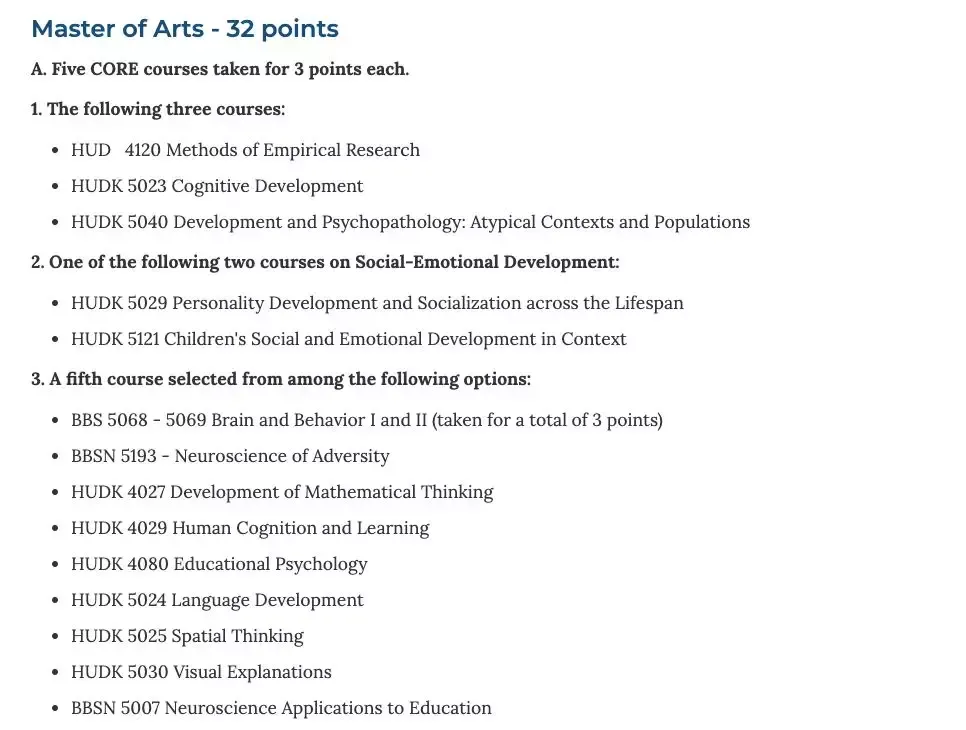
M.A in Developmental Psychology
Columbia's MA in Developmental Psychology is offered at the Teachers College. Students will become familiar with fundamental theories and research directions, and gain substantive knowledge in cognitive, language, personality, social functioning, and developmental domains.
Curriculum:
Requires 32 credits. Core course options include:
Basic Application Requirements:
At least two letters of recommendation, personal statement, and resume required.
GRE scores are not mandatory.
Non-U.S. undergraduate degree holders must submit TOEFL (100+) or IELTS (7.0+) scores.
Application Deadline:
Spring: November 1
Summer/Fall (Priority): January 15
Summer/Fall (Final): Rolling
University of Pennsylvania
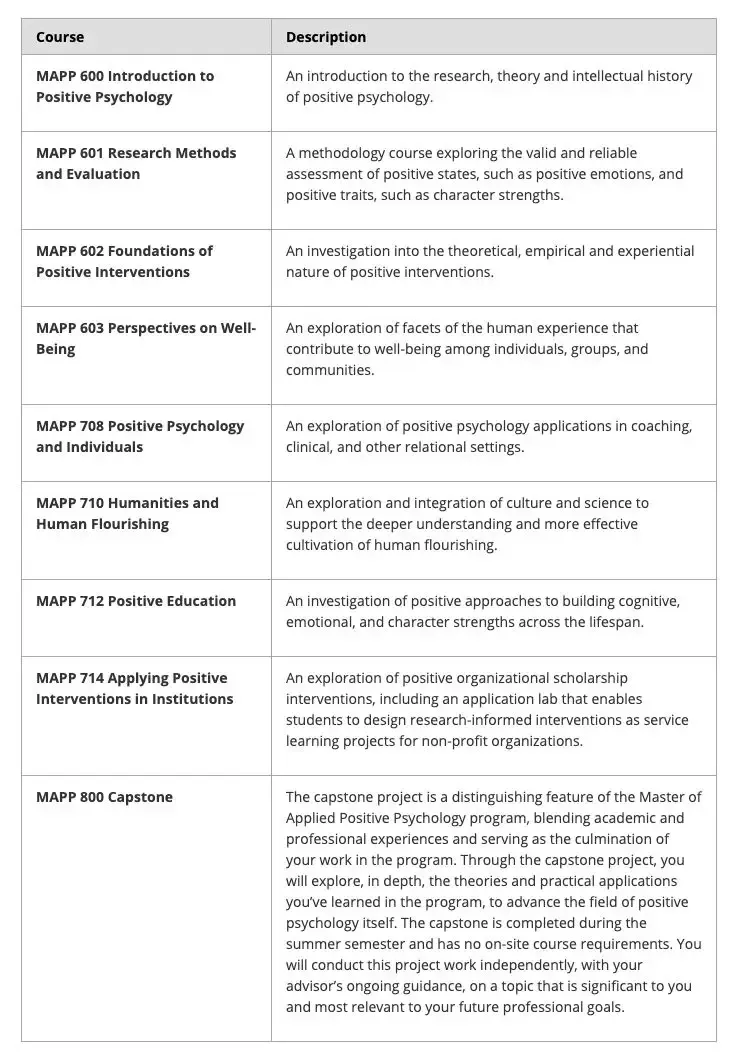
Master of Applied Positive Psychology
Penn's Master of Applied Positive Psychology is offered through the College of Liberal and Professional Studies and is the world's first degree program in this field.
Curriculum:
The program includes 9 courses.
Basic Application Requirements:
Suggested GPA of 3.0 or above.
GRE scores, three letters of recommendation, and personal statement and resume required.
Non-U.S. undergraduate degree holders must submit TOEFL scores (100+, with minimums of 23 in each section and 26+ in listening/speaking).
Application Deadline:
Fall enrollment: March 1, 2020
University of Southern California
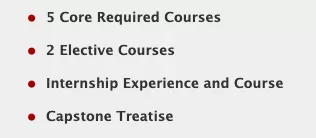
Master of Science in Applied Psychology
USC's MS in Applied Psychology is offered by the Dornsife College of Letters, Arts and Sciences and is a one-year program. It aims to help students integrate psychology with business interests, enabling them to apply psychological principles and research methods to solve problems in business contexts.
Curriculum:
Basic Application Requirements:
GRE scores required; GMAT scores are not accepted.
Three letters of recommendation, personal statement, and resume required.
Non-U.S. undergraduate degree holders must submit TOEFL or IELTS scores.
Application Deadline:
Priority Deadline - January 1, 2020
Regular Deadline - March 1, 2020
New York University
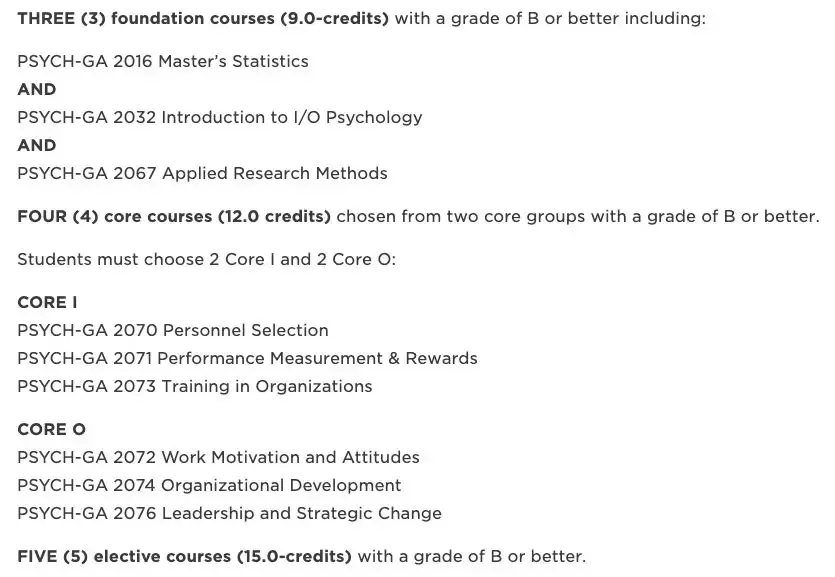
Master of Arts in Industrial/Organizational Psychology
NYU's MA in Industrial/Organizational Psychology is offered by the Graduate School of Arts and Science.
Curriculum:
Requires 36 credits.
Application Requirements:
GRE scores required; GMAT scores also accepted.
Non-U.S. undergraduate degree holders must submit TOEFL or IELTS scores.
Personal statement.
A case study is required, along with a video statement.
Application Deadline:
January 15: Fall and summer (Admission only, no financial aid)
October 1: Spring (Admission only, no financial aid)
Overall, while psychology master's programs are generally less demanding than doctoral programs, they still set a high bar for applicants' backgrounds, and some master's programs have unique application requirements.
Additionally, many master's programs welcome applicants from STEM fields and those with quantitative backgrounds. Students from other majors who are interested in psychology should also take note of these master's programs.
Finally, we wish every student admission to their dream program!