In June this year, the one-year master's programs jointly offered by NYU Shanghai and NYU Stern School of Business—the MS in Quantitative Finance and the MS in Data Analytics & Business Computing—welcomed their inaugural cohort.
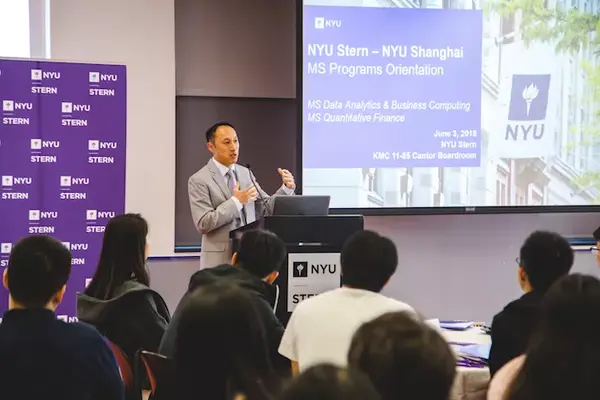
NYU's Stern School of Business is world-renowned, and its graduate program applications are notoriously difficult.
NYU Shanghai is a research university with independent legal status officially approved by China's Ministry of Education, jointly established by New York University and East China Normal University.
These two joint master's programs in Quantitative Finance and Data Analytics & Business Computing were launched last year and both confer a New York University master's degree.

Now there is a collaborative program that allows study at both NYU Stern and NYU Shanghai, awarding the same NYU Master of Science degree, and in the red-hot fields of finance and data—quite tempting indeed.
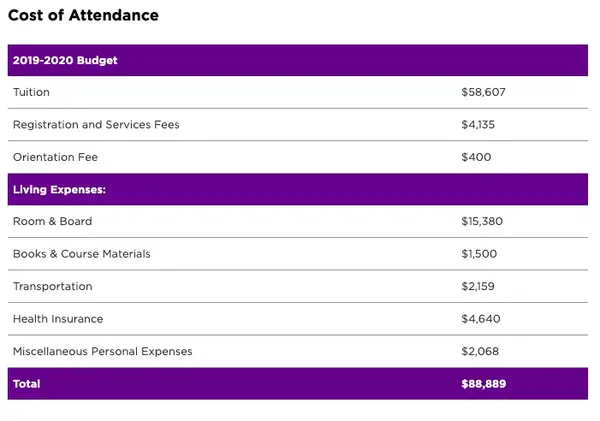
But we've found that the tuition for this joint program is also close to that of the NYU home campus, at $50,000 to $60,000 per year. This naturally raises the question: are these two programs rigorous and worthwhile?
Latest Enrollment Data
Let's first look at the latest enrollment data for these two programs this year to see the backgrounds of admitted students.
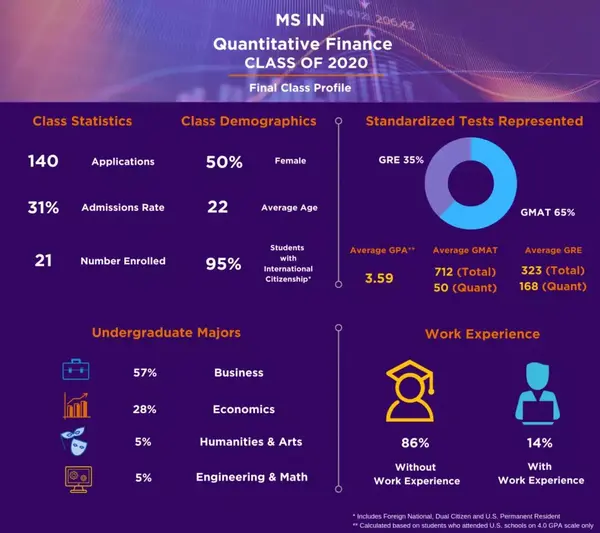
Quantitative Finance Class Profile
Applicants: 140
Acceptance Rate: 31%
International Student Ratio: 95%
Average GPA: 3.59
Average GMAT: 712 (Quant: 50)
Average GRE: 323 (Quant: 168)
Prerequisite Courses: One each in Calculus, Statistics or Econometrics, and Accounting
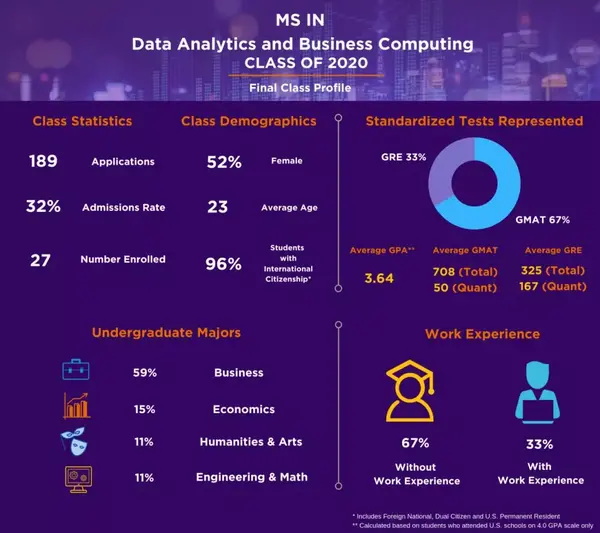
Data Analytics & Business Computing Class Profile
Applicants: 189
Acceptance Rate: 32%
International Student Ratio: 96%
Average GPA: 3.64
Average GMAT: 708 (Quant: 50)
Average GRE: 325 (Quant: 167)
Prerequisite Courses: One in Calculus
From the average standardized test scores and prerequisite requirements, it is clear that even if the requirements are not as high as those of the home campus, the joint programs with NYU Stern are by no means so-called "watered-down" programs.
GRE/GMAT scores are mandatory for the joint programs:

Additionally, it is evident that the joint programs are very friendly to international students, with ratios exceeding 95%. Unlike typical Stern programs that require work experience, most applicants to the joint programs have no work background, predominantly being recent graduates.
Curriculum and Teaching Resources
The MS in Quantitative Finance is a one-year full-time program requiring 36 credits across 13 courses.
The summer term is at NYU Stern School of Business, and the fall and spring terms are at NYU Shanghai.
The curriculum covers areas such as trading, underwriting and securitization, risk management, asset management, corporate financial management, and financial technology innovation. The specific course list is as follows:
SUMMER (15 credits)
- Business Communication
- Foundations of Finance
- Statistics and Data Analysis
- Stochastic Modeling and Simulation
- Corporate Finance
- Emerging Markets Finance
FALL (12 credits)
- Debt Instruments & Markets
- Futures & Options
- Fundamentals of FinTech
- Chinese Financial Markets
SPRING (9 credits)
- Capstone Project
- Volatility and Credit Risk
- Portfolio Management
The MS in Data Analytics and Business Computing is likewise a one-year full-time program requiring 36 credits across 13 courses.
The summer term is at NYU Stern School of Business, and the fall and spring terms are at NYU Shanghai.
The curriculum integrates business, data analytics, and management science, with the following courses:
SUMMER (15 credits)
- Business Communication
- Introduction to Python Programming
- Statistics and Data Analysis
- Stochastic Modeling and Simulation
- Decision Models and Analytics
- Operations Management
FALL (12 credits)
- Data-Driven Decision Making
- Data Science for Business Analytics
- Fundamentals of FinTech
- Network Analytics
SPRING (9 credits)
- Capstone Project
- Revenue Management and Pricing
- Marketing Analytics
From the curriculum, it is evident that although the programs are short, they are compact and substantial. All instruction is in English, and beyond in-depth professional courses, there are also cutting-edge courses like FinTech, which has gained significant popularity recently. Additionally, both programs include 15 credits of coursework at NYU Stern School of Business.
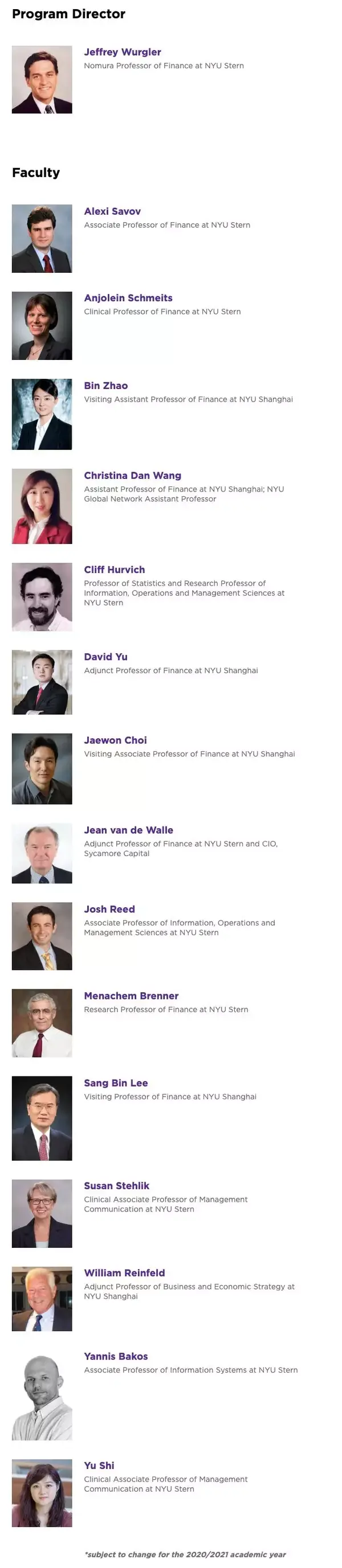
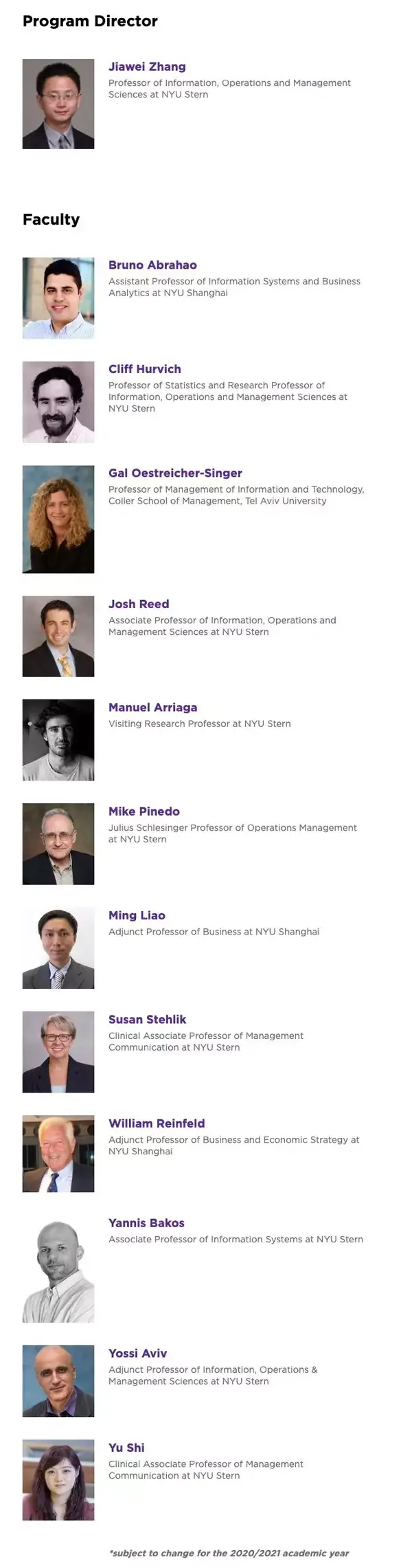
The faculty strength of these programs is also not to be underestimated. 40% of faculty are jointly appointed with NYU, 40% are full-time faculty recruited globally to standards higher than the NYU average, and the remaining 20% are adjunct and visiting professors from other top-tier domestic and international institutions, ensuring the quality of education students receive.
Quantitative Finance Program Faculty
Data Analytics & Business Computing Program Faculty
Additionally, the programs have small class sizes—shared courses typically have 40-50 students, while specialized courses have only 20-30—allowing for better interaction with professors and classmates.
There will also be school-exclusive career fairs attended by well-known companies, facilitating networking and internship searches.
Pros, Cons, and Suitable Candidates
Pros:
The majority of students admitted to both programs have undergraduate majors in business or economics. The programs share common features: short duration, fast-paced curriculum, and a goal of paving the way for students' career development in China, Asia, and globally, aiming to enhance professional skills and increase future career opportunities.
In terms of curriculum design, faculty strength, and alumni resources, they maintain the standard of NYU.
Compared to Stern's strict requirement for work experience, the joint master's programs have lower work experience requirements, making them more friendly to recent graduates with limited experience.

Cons:
Of course, the one-year program is relatively short, with only one summer of study in New York. The campus environment and surrounding atmosphere may not feel sufficiently "international," and the high tuition is nearly identical to that of NYU in New York—drawbacks that are quite evident.
Moreover, the application process for NYU Shanghai is essentially the same as for NYU, offering no savings in time, effort, or money.
Furthermore, neither program is eligible for OPT after graduation, nor are they STEM-designated.

For students aiming to intern or work in the United States in the future, there may be other program options with better value and greater appeal.
Suitable Candidates:
In summary, students who prefer smaller class sizes, don't mind studying in two locations, aspire to attend a prestigious business school but lack sufficient experience for direct admission to NYU Stern, and whose future goal is to return to China or work at well-known companies in Asia are especially well-suited for these two graduate programs at NYU Shanghai.
No university program can be definitively categorized as worth it or not; students should carefully analyze their own circumstances and consider their school choices seriously.
If you have further questions about studying abroad applications, please click on the customer service icon at the lower right of the official website to consult a CheersYou(清柚教育) admissions consultant today!