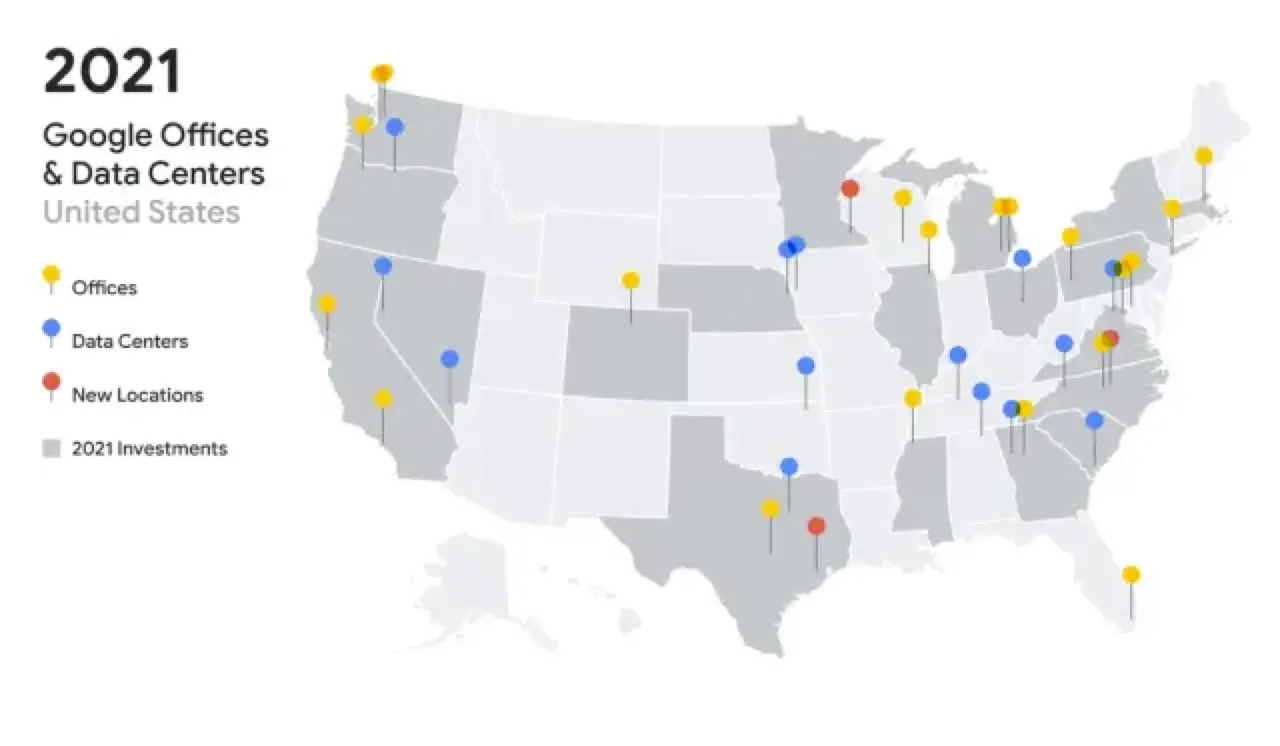
Recently, Google officially announced its 2021 expansion plan, investing $7 billion across the U.S. and creating over 10,000 new jobs.
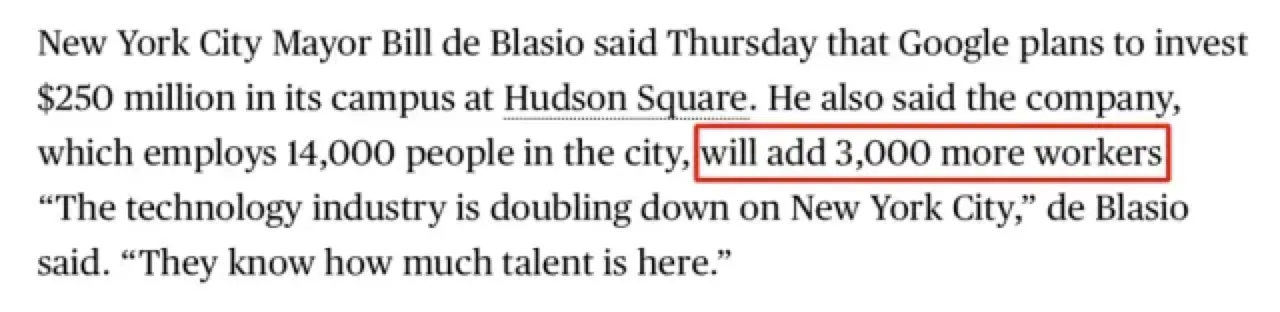
New York, in the east, continues to be a key piece of Google's expansion. This year, Google plans to invest $250 million and add 3,000 jobs. The mayor of New York also stated that the city's tech industry is doubling down on growth!
Tech Giants Relocate to New York
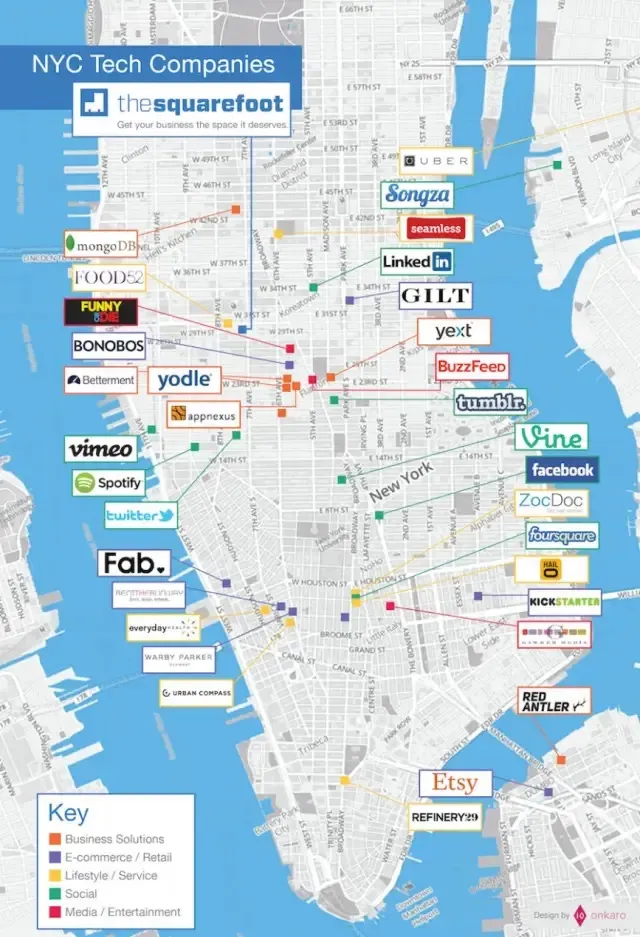
Silicon Valley in Northern California has been the hub for tech giants for decades, widely recognized as the center of global technological innovation. However, in recent years, tech giants have been moving to New York in the east, and during the pandemic, they have been expanding even more aggressively.

Amazon, Apple, Facebook, and Google have all set up large offices from Midtown to Lower Manhattan. By 2022, these tech giants are expected to employ around 20,000 people in New York.
NYC is no longer the traditional financial Wall Street in people's minds. A large number of tech unicorns—companies valued at over $1 billion—have already moved in. This trend is blurring the lines between West Coast Silicon Valley and East Coast Wall Street.
Beyond high costs, heavy taxes, and saturated tech talent pools driving companies out of Silicon Valley, the increasing reliance of industries like finance on technology is another key factor attracting these firms to New York.
In fact, as tech companies reach a certain stage, they increasingly become financial companies. With their strong cash flows, venturing into finance is inevitable, and most tech firms also hold the vision of "transforming finance through technology." "Finance" and "technology" are now two inseparable frontier topics.
Finance and Technology Grow Closer
Major tech companies have been showing growing interest in fintech services. Apple partnered with Goldman Sachs to launch its own credit card, while Google allowed users to open checking accounts with Citibank—many of you may have seen the invite codes for Google Pay flooding your screens.
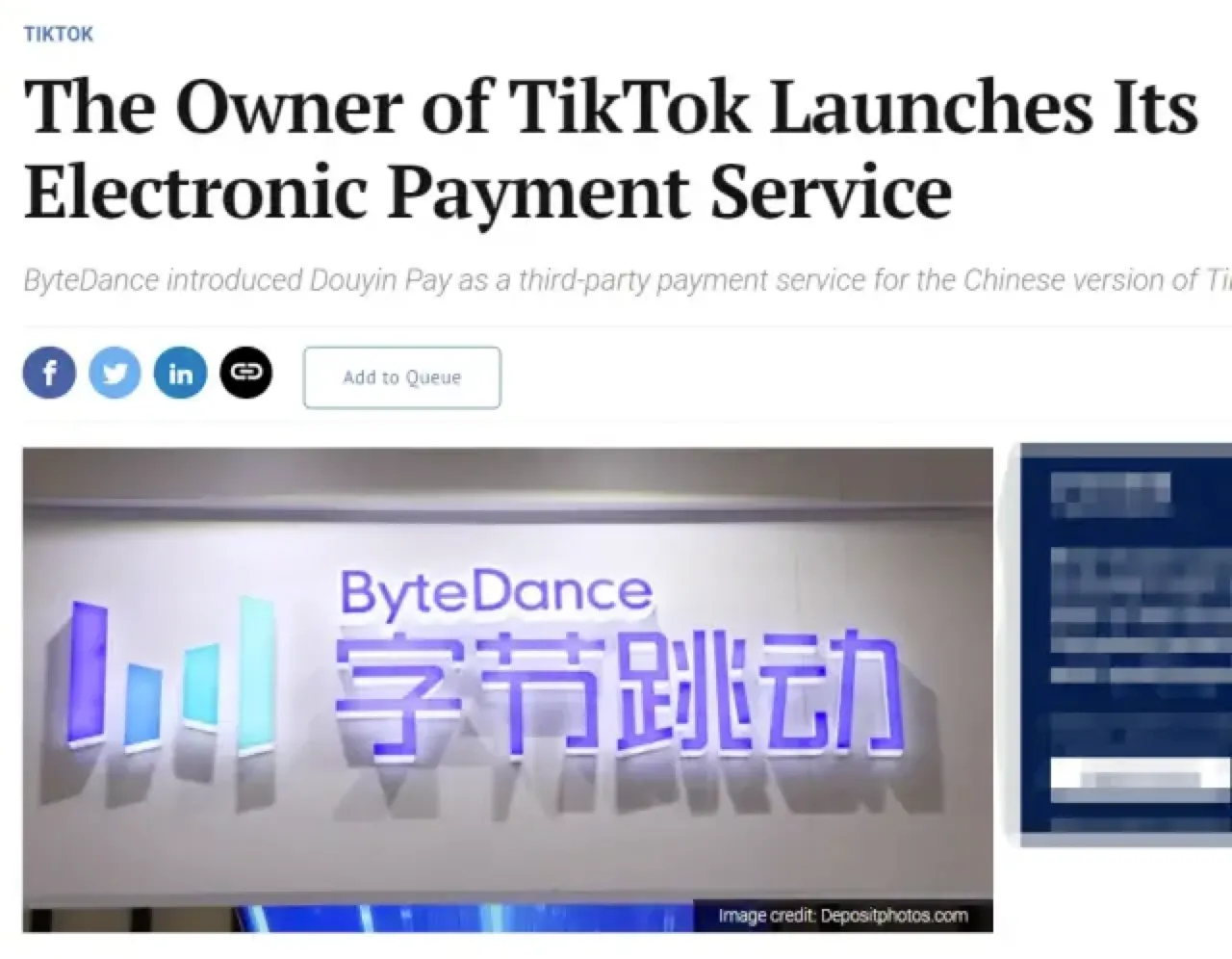
Looking at China, in January 2021, Douyin (TikTok) also launched payment features, enabling top-ups, withdrawals, and transfers. Today, internet giants have all joined the online payment, or e-wallet, arena, including Alipay, WeChat, JD.com, Suning, Meituan, Didi, Baidu, ByteDance, and a slew of other tech leaders.
Financial titans like Goldman Sachs are expanding their technology hires, and traditional banks like JPMorgan Chase are also on a hiring spree for technologists and quantitative analysts. The strong tech atmosphere has fueled the rapid growth of the internet, while also implicitly raising the bar for the financial sector.
As traditional industries such as finance, media, and trade undergo upgrading and iteration, diversification has become a trump card. The buzzword "Fintech" is changing the world.
Keeping Up with the Fintech Data Era Trend
We all know that fintech brings far more than this. Hot terms like big data, distributed ledgers, cloud computing, blockchain, and machine learning have been trending for more than just a couple of years.
Especially in the new normal of the post-pandemic era, more companies have accelerated digital transformation, putting fintech back in the spotlight. Following Duke and Imperial College launching Fintech master's programs, more universities are incorporating this emerging interdisciplinary program and cultivating fintech talent.
What are the fintech-related master's programs offered by leading universities worldwide? Let's take a look!
University of Hong Kong
Master of Finance in Financial Technology
The HKU Business School's Master of Finance in Financial Technology will equip students with essential fintech knowledge and skills to navigate the changing financial landscape.
HKU's Fintech program delves into "big data" in finance and insurance, as well as business opportunities brought by emerging digital technologies like blockchain, AI, and cloud computing.
The program offers a one-year full-time or two-year part-time option, totaling 30 credits.
Curriculum:
Requires completion of 12 courses: 10 core courses and 2 electives.
Basic Admission Requirements:
Bachelor's degree
2 recommendation letters
TOEFL: 80 / IELTS: 6
Preferably a background in computer science, engineering, mathematics, physics, statistics, etc.
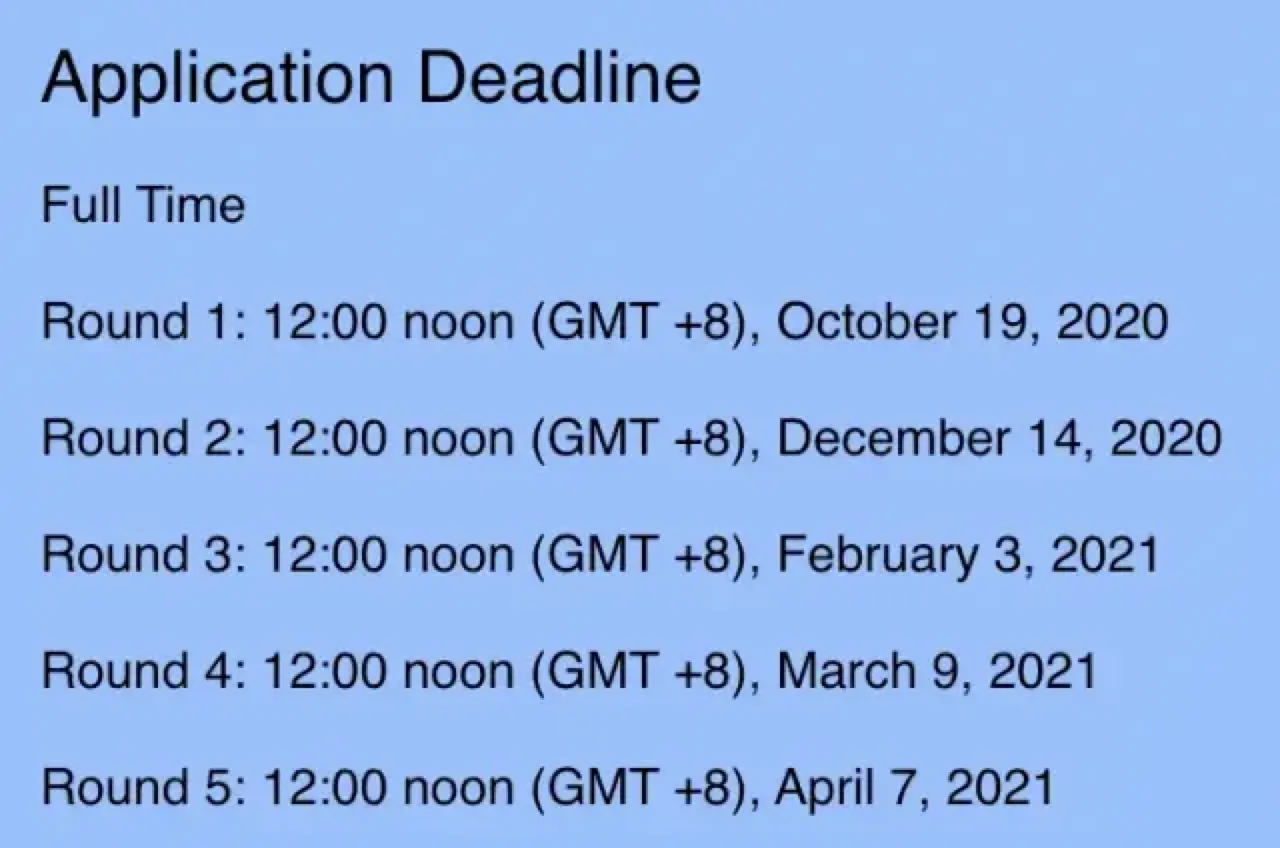
21 Fall Application Deadlines:
Duke University
Master of Engineering in Financial Technology
Duke's FinTech Master's program is jointly offered by the Pratt School of Engineering and the Duke Financial Economics Center.
With a Master of Engineering in Financial Technology from Duke, you can combine interests in engineering, computer science, business, and finance. From digital currencies and blockchain to robo-advisory and cybersecurity, fintech is rapidly reshaping the financial landscape.
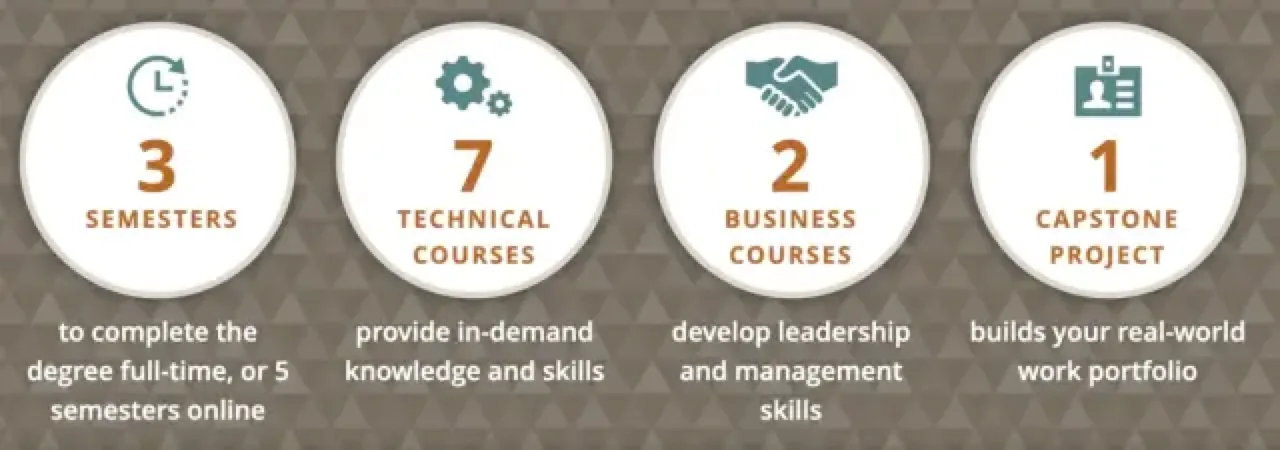
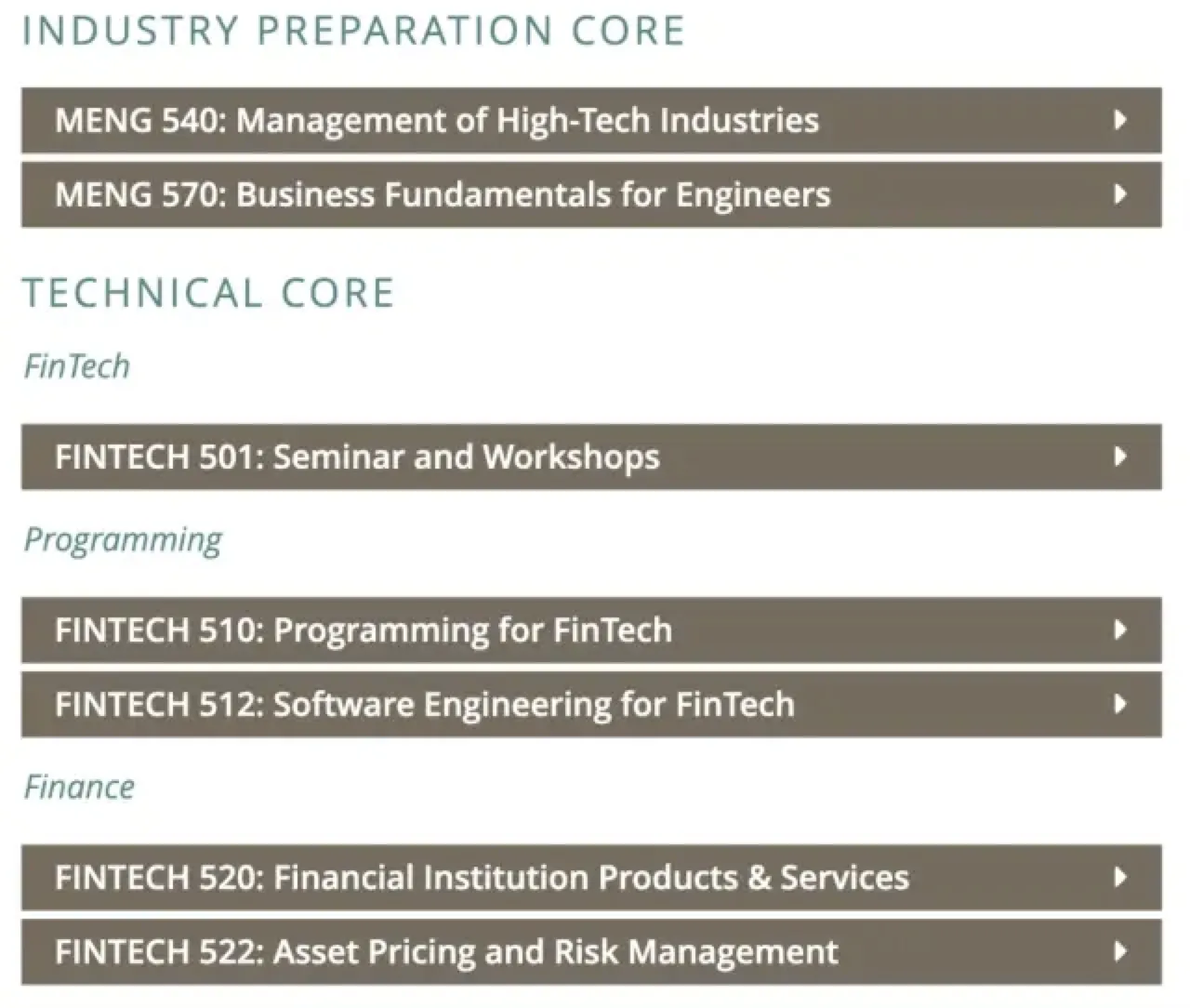
The program lasts 1.5 years and requires 30 credits: 7 technology-related courses, 2 business courses, and a capstone course.
Curriculum:
Basic Admission Requirements:
Bachelor's degree
Statement of purpose, 3 recommendation letters, video introduction
International applicants need TOEFL/IELTS
GRE optional for 2021
Preferably a background in engineering, computer science, physics, mathematics, statistics, econometrics, economics, business, etc.
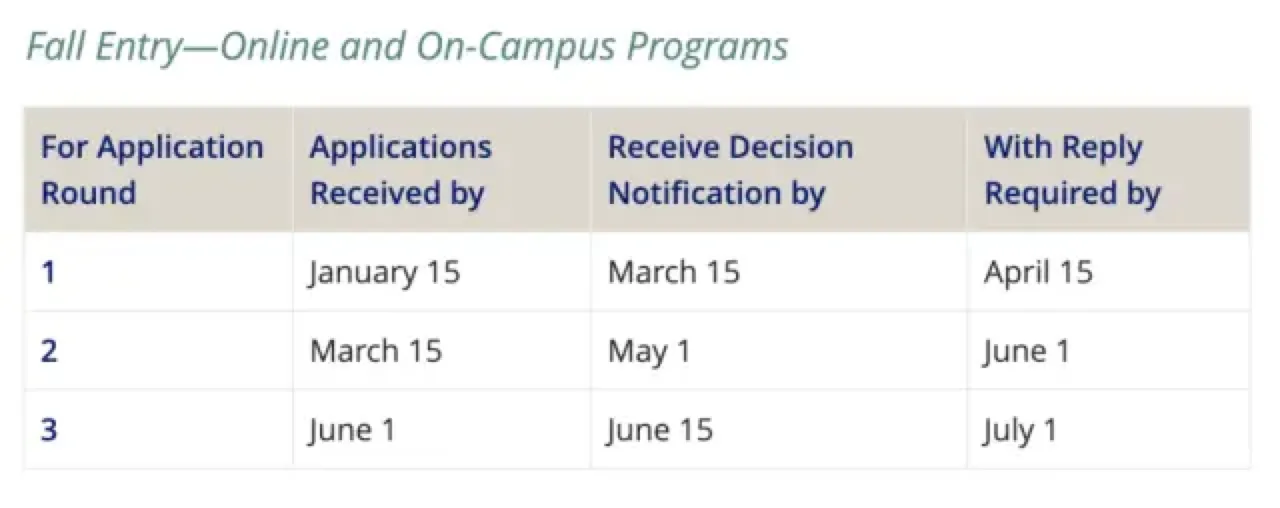
21 Fall Application Deadlines:
Imperial College London
MSc in Financial Technology
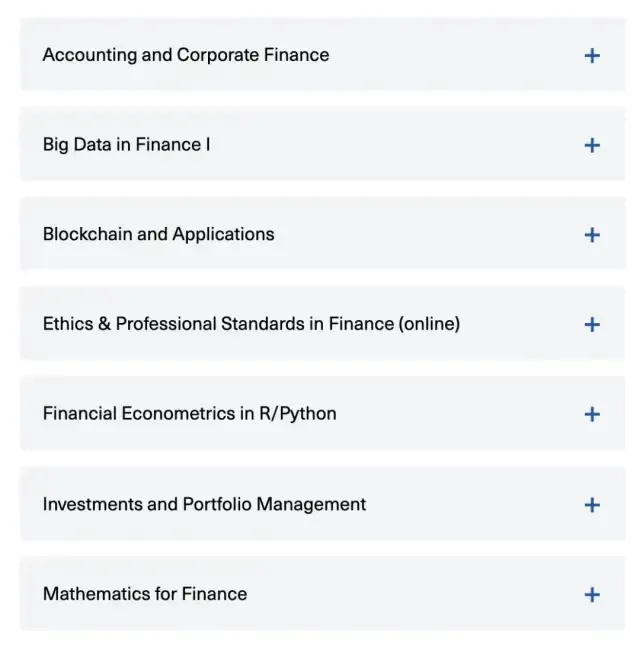
Imperial College's FinTech program is a one-year program with core courses covering accounting, big data, blockchain, financial econometrics, investment management, and other key areas.
The program focuses on cultivating tech-savvy financial services professionals, providing students with quantitative analytical skills, including coding and programming, through immersive learning that offers hands-on experience.
Curriculum:
Basic Admission Requirements:
Bachelor's degree
Strong mathematical background required
Career Planning Questions
TOEFL: 100 / IELTS: 7
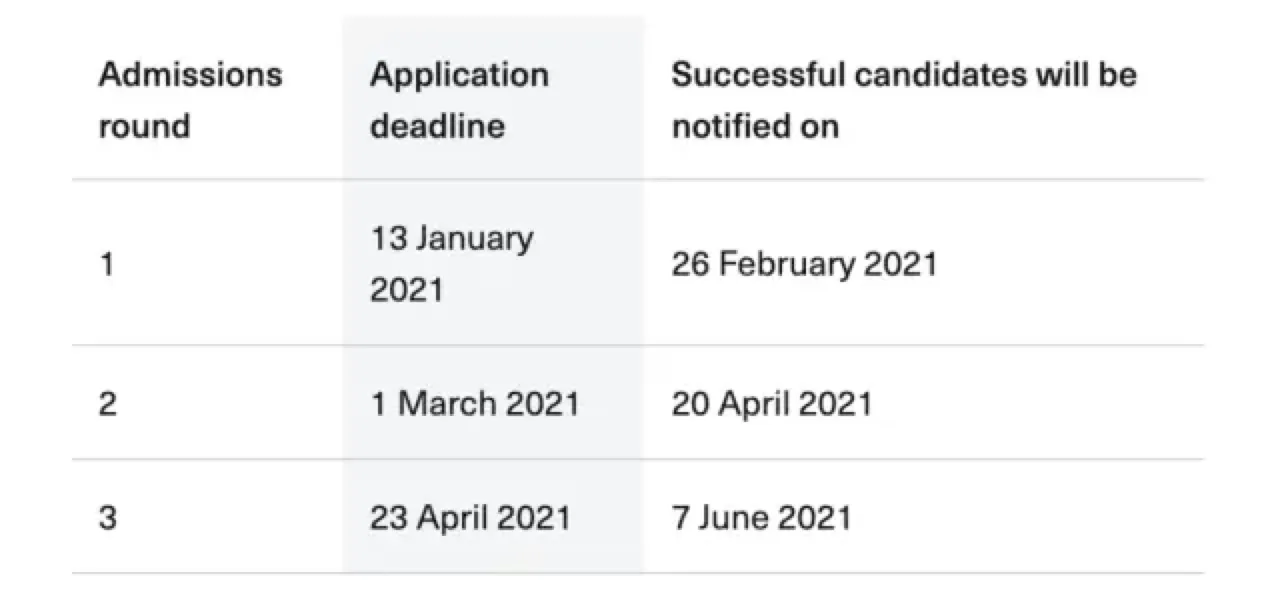
21 Fall Application Deadlines:
Nanyang Technological University, Singapore
MSc in FinTech
NTU Singapore's FinTech Master's program is offered by the School of Physical and Mathematical Sciences.
The curriculum is built on data science, artificial intelligence, and information technology, equipping students with the necessary fintech skills to navigate changes in the financial industry. The focus is on in-depth mastery of disruptive technologies in finance.
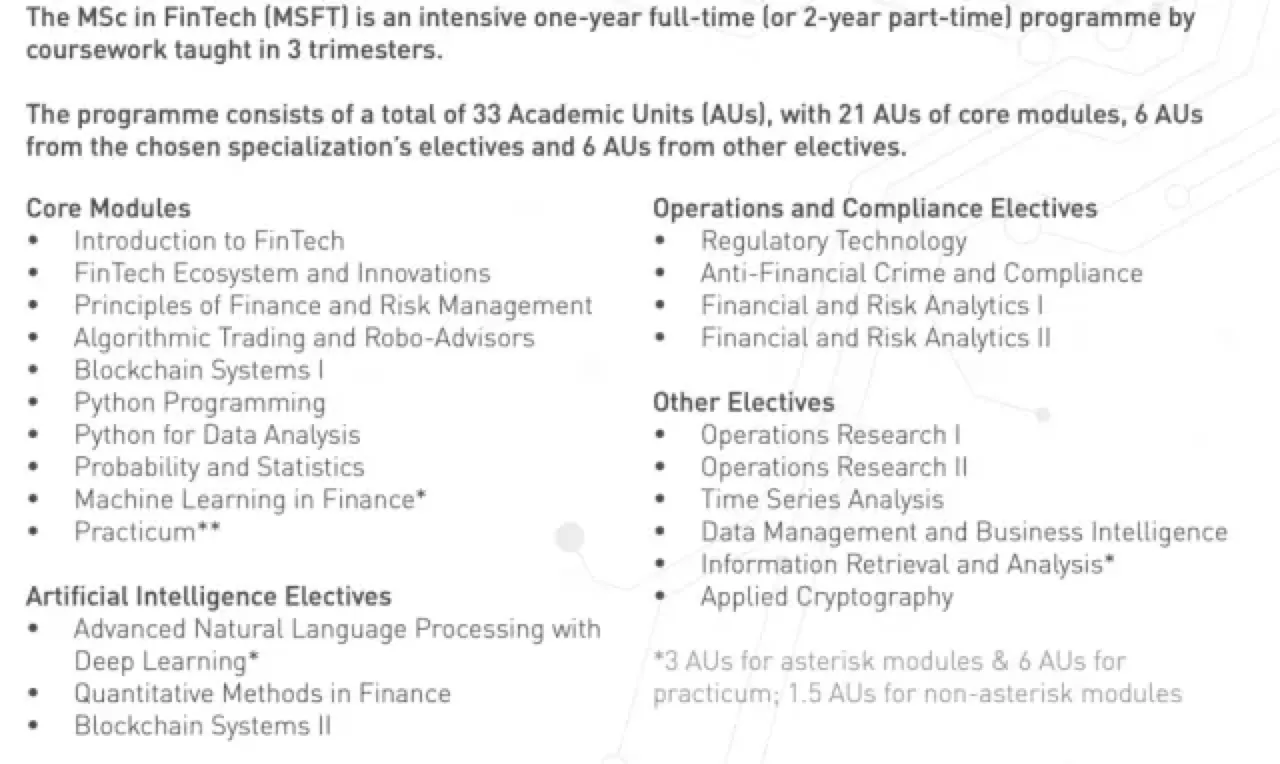
The program is a one-year full-time or two-year part-time option with 33 credits. It includes two tracks: AI, and Operations and Compliance.
Curriculum:
Basic Admission Requirements:
Bachelor's degree
International applicants need TOEFL/IELTS
GRE/GMAT recommended but not mandatory
2+ years of work experience recommended but not mandatory
Preferably a background in quantitative, business, or related fields
21 Fall Application Deadlines: