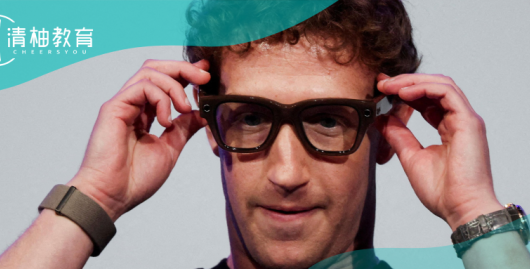
Recently, Meta's metaverse has officially shut down, and Zuckerberg's $80 billion world-famous painting was bought for nothing.
Source: Reddit
Along with the collapse of the metaverse comes the massive layoffs that Meta is about to implement.
In mid-March, multiple media outlets reported that Meta is planning a round of layoffs that could affect over 20% of its workforce, impacting about 16,000 people—the most drastic adjustment in recent years.
Source: Entrepreneur
Although Meta has publicly stated that the relevant reports are speculative, senior executives have been asked to prepare for a “leaner organization.”
If the layoffs in 2022-2023 could be explained as a “post-pandemic correction” and “the aftermath of burning cash on the metaverse,” then this time, Meta’s new script is much clearer:
Save on labor costs to fund AI.
Meta Layoffs: Making Room for AI
On the surface, Meta’s round of layoffs is about improving efficiency; in essence, it’s about freeing up budget for AI.
Meta’s estimated spending in 2026 is around $135 billion, nearly double that of last year. This significant increase will mainly be invested in AI and core businesses, namely data centers, computing power, chips, model training—the really expensive parts.
Source: Yahoo Finance
According to Reuters, Meta’s management is considering layoffs to offset some of this cost pressure, because payroll—wages, benefits, and equity incentives—has always been one of the heaviest recurring expenses for tech companies.
According to analysts’ estimates, if about 20% of employees are cut, Meta could save roughly $6 billion in costs annually.
In the past, companies said, “We’re hiring more people to do bigger things.”
Now, companies say, “We’re cutting more people to fuel bigger models.”
It sounds brutal, but this is the narrative of big tech in the AI era.
Back in January, Zuckerberg sent a very strong signal:
Some projects that used to require large teams might now be accomplished by “one very talented person.” What he wants is not to maintain a massive organization but to attract the absolute best people to Meta, letting them leverage AI to produce greater impact.
Source: Business Insider
This sounds inspiring, but it’s not friendly to ordinary job seekers, because the subtext is actually: Future job positions will be massively compressed. Companies will be more willing to spend big money on a very few top talents rather than leaving room for a large number of ordinary positions.
AI won’t make competition disappear; it will only allow the top 1% to compete.
AI, the Scapegoat for Layoffs?
Meta’s potentially 20% layoffs are not just bad news at the company level; they are more like an industry signal: In the AI era, big tech’s hiring logic is truly changing.
Source: trueup.io
In January of this year, Amazon announced another 16,000 job cuts. Combined with the first round of layoffs starting in October 2025, the cumulative target is about 30,000, close to 10% of its white-collar workforce.
Reuters reported that Amazon explicitly linked “reducing layers, increasing ownership, and improving efficiency” to changes brought about by AI.
Source: Reuters
Then there’s Block. The fintech company led by Jack Dorsey announced in February that it was cutting over 4,000 jobs, nearly half of its workforce.
Dorsey’s stance was even more direct: AI will allow smaller teams to do more, and the company must reorganize in this direction. The market actually seemed to like it, with the stock price surging after the news broke.
So what’s truly scary about this round of layoffs is not how many people Meta is cutting, but that AI is shifting from a “tech hype” to a “scapegoat for layoffs,” and investors love hearing it.
Does this mean AI can already replace a bunch of people outright? Not necessarily.
When many companies now say AI improves efficiency, it doesn’t mean they’ve actually achieved full AI replacement of human labor. Some of these layoffs may not be purely driven by AI; to some extent, they also serve as a more capital-market-friendly explanation for previous overhiring and aggressive investments.
The so-called “AI-driven layoffs” are also mixed with elements of corporate governance, cost control, and capital narrative.
Especially given that the tech industry hired too aggressively in the past few years and growth is now slowing, organizations were bound to pull back. In many cases, AI is both a new tool and a new excuse.
A more realistic way to put it is: Companies are redefining “what kind of people are worth keeping.”
Hiring fewer people, nurturing stronger systems, and keeping fewer but more expensive people is becoming the new organizational consensus in Silicon Valley.
What Do the AI-Driven Layoffs Mean for International Students?
In the AI era, the biggest change isn’t that jobs are disappearing—it’s that there is no safety zone anymore.
In the past, many people planning to study abroad and find jobs defaulted to a relatively stable path: go to a good school, do a couple of internships, apply for big tech campus recruitment, get an offer, and then think about the next steps later.
That logic used to work because big tech was still expanding, and even if many positions weren’t top-tier, there was room to absorb people.
But now, companies don’t want to keep so many “decent people” anymore; they only want to keep “one person who can do the work of three.”
The impact on international students mainly has three layers:
First, purely execution-oriented roles will be more at risk. If your job mainly involves organizing, moving things around, basic coding, low-level analysis, or process support, then AI will indeed affect you first.
Second, being “decent” is no longer comfortable. In the past, being “not bad” was enough; now, being “not bad” can easily become “not clearly irreplaceable.”
Third, recruitment will happen earlier, be narrower, and favor candidates with strong signals even more. Prestigious schools, hard skills, internship quality, and project substance will all be magnified because companies are more cautious about sponsorship and headcount.
If this round of layoffs sends any clear signal, it’s not that “liberal arts are doomed” or “CS is doomed,” but that single skills are becoming more dangerous and composite abilities are becoming more valuable.
In the future, the safest people won’t be those who can only mechanically complete single tasks, nor those who only talk without delivering.
Those who will truly be in demand are actually these types:
-
People who understand both technology and business;
-
People who can use AI and also understand the underlying logic;
-
People who can analyze data and also articulate conclusions clearly;
-
People with hard professional skills who also possess communication, collaboration, and storytelling abilities.
That’s why many tech companies are simultaneously cutting traditional positions while hiring for stranger and more expensive new types of roles. They are no longer just looking for “people who can do the work,” but for “people who can amplify the organization’s output.”
Meta’s swing of the axe cuts jobs, but more precisely, it cuts away many people’s last “illusion of stability” about the tech industry.
For international students, this doesn’t mean that opportunities have disappeared, but rather that the era of “as long as you enter the field, there’s a place for you” is passing.
International students may become more anxious because they already face multiple challenges like identity, visas, time differences, information gaps, and the advancing recruitment timeline; but precisely because of this, what’s more dangerous now than blind optimism is continuing to use the same logic to plan a career in the AI era.
Going forward, what matters more is not just what you study, but whether you have cultivated yourself into a person who can collaborate with AI, define problems, solve problems across disciplines, and still be worth keeping even after the organization downsizes.