Over the past three months, the keyword for global business news has been just three words: layoffs, automation, restructuring.
If the tech layoffs during the pandemic still carried a hint of “cyclical adjustment,” what is happening now is a complete rewrite of the rules of employment.
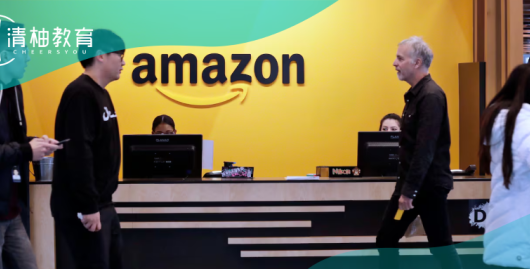
Amazon: Massive Layoffs of 30,000
Amazon has been the most talked-about in recent days.
According to Reuters, starting this week, Amazon is set to launch its largest-ever corporate job cut plan, with layoffs expected to reach 30,000, accounting for about 10% of the company’s 350,000 white-collar employees.
Source: Reuters
Departments affected include: Human Resources, AWS cloud service teams, Devices & Operations, and some management positions.
Even top performers are not immune. The current layoffs are not because of poor performance, but because the workflow no longer needs the employee.
Source: LinkedIn
Amazon CEO Andy Jassy had previously emphasized that there are excessive bureaucratic layers within the company, and that Amazon would reduce management positions and streamline processes to cut costs.
In June, he publicly stated that the application of AI is making a large number of repetitive and procedural tasks automatable, and future layoffs will increasingly be triggered by efficiency gains.
Source: Reuters
An eMarketer analyst commented: “Amazon has already gained enough efficiency benefits from AI to support this wave of large-scale layoffs.”
Wave of Layoffs, Non-Stop Cuts Across Industries
UPS
Logistics giant UPS announced this week that it has cut 34,000 operational positions this year, and combined with management cuts at the end of 2024, cumulative layoffs have exceeded 48,000, making it one of the largest workforce reduction plans in the company’s history.
Source: WSJ
Since taking office, UPS’s CEO has shifted the company strategy from “pursuing volume” to “pursuing profit margins.” The company’s CFO stated: “We need fewer planes, fewer trucks, and fewer seasonal employees.”
This means the future cost structure of the company will lean long-term towards: lean workforce + efficient automation, and layoffs will only become inevitable.
Nestlé
CNN reports that global food giant Nestlé will lay off 16,000 employees over the next two years, with 12,000 of those being white-collar positions.
The company will replace a large number of daily management and data analysis roles through supply chain automation, centralized shared service centers, AI-driven pricing and promotion strategies, etc.
Source: CNN
The new CEO stated: “The world has changed, and Nestlé must accelerate its change. This will involve making tough but necessary layoff decisions.”
Intel
Chip giant Intel announced this year it will cut 20,000–25,000 jobs globally.
Source: Yahoo Finance
Intel has been going through growing pains in recent years: market share continues to be squeezed by AMD and Nvidia, the company’s cost structure is high, profits are under pressure, and the capital market demands immediate profit restoration.
Intel’s new CEO wrote in an internal email: “The company will no longer have unconditional budgets. Every investment must have an economic return.” He stressed that Intel must return to the basics of “only doing what customers truly need and are truly willing to pay for.”
Enterprises have entered a cost-clearing cycle, no longer burning money for strategic dreams.
Procter & Gamble, Walmart
Procter & Gamble (P&G) and Walmart both launched organizational “flattening” reforms this year, directly cutting a large number of middle management and coordination roles.
Source: Business Insider
These roles essentially involve information communication, process coordination, and internal coordination. However, as enterprise digital systems mature, process boards + collaboration platforms + AI automated reporting can already accomplish most of the daily tasks of middle management.
In other words: middle management is no longer a “safe zone” but is becoming a target for streamlining.
New Wave of Major Layoffs: What Should International Students Do?
The wave of layoffs may seem sudden, but the reasons are simple and brutal:
The massive hiring spree during the pandemic is being rapidly corrected. Companies are shifting from telling “growth stories” to focusing on “profit and efficiency.” Capital demands performance, profits are under pressure, and the most direct approach is to cut costs—layoffs.
At the same time, the practical application capability of AI is rapidly improving. Tasks that previously required middle management or coordination roles to repeatedly communicate, report, and coordinate can now be completed with Kanban systems, automated workflows, and large language models.
Thus, companies find that these roles no longer require human effort, leading to yet another wave of large-scale layoffs.
For international students, the impact is even more pronounced. Because in addition to the cooling job market, the visa system itself is becoming more expensive, more difficult, and more uncertain.
Following the implementation of the new H-1B policy by the U.S. government, choosing to hire international students means higher legal costs, more complex compliance reviews, and greater risks of visa renewal and denial for companies.
Source: CBS News
As a result, more and more JD descriptions now explicitly state “No Sponsorship, Not considering OPT/CPT.” Recruiters simply draw a line, excluding all risks and unwilling to bear the costs and uncertainties.
Source: CNBC
This also means that for a considerable period ahead, difficult interviews, difficult onboarding, and difficult retention will become the new normal for international students seeking jobs.
It’s not just the U.S.—job markets worldwide are cooling, and immigration policies are tightening. For international students, the already hellish mode of overseas job hunting will become even harder.
It is advisable to adjust your mindset, face job-seeking outcomes calmly, and also consider alternative plans, such as further study or upskilling, giving yourself more buffer time. We hope everyone can win this “headwind game”!