IEOR (Industrial Engineering and Operations Research) programs in the U.S. have become incredibly popular in the past two years. Students interested in Data Science, Business Analytics, etc. have likely already heard of it. So what can you do with an IEOR degree? Which U.S. IEOR program best fits your needs? Today, CheersYou(清柚教育) is here to answer your questions!
What is IEOR?
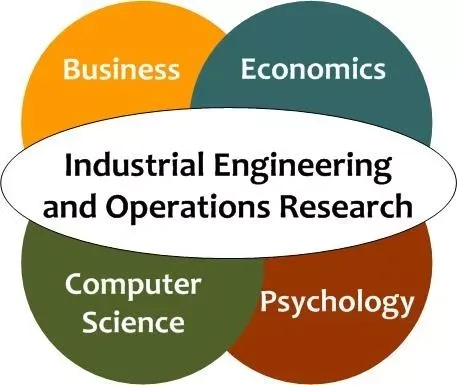
IEOR (Industrial Engineering and Operations Research) is an interdisciplinary field that combines engineering, management science, quantitative business, mathematics, statistics, data analysis, and more. In recent years, its 'quantitative all-rounder' nature, along with excellent career options and employment rates, has made it a popular choice among many students.
IEOR programs typically offer the following tracks:
-
Financial and Managerial Applications
-
Business Analytics
-
Entrepreneurship and Innovation
-
Logistics and Supply Chain Management
-
Optimization
-
Applied Probability
-
Management & Science Engineering
(Industrial engineers solve business problems from an economic perspective, apply computer science and technology to analyze data and develop decision support systems, and use psychology to ensure human factors in the system are fully understood and accounted for.)
Different universities have varying setups for IEOR. Below, we introduce the two main branches of IEOR:
IE—Industrial Engineering
Industrial Engineering (IE) is the study of the design, improvement, and implementation of integrated systems composed of people, materials, information, equipment, and energy. It applies knowledge and skills from mathematics, physics, and social sciences, along with engineering analysis and design principles and methods, to describe, predict, and evaluate the results of such integrated systems. Simply put, it's a field about making production processes, products, or systems better.
Broadly speaking, Industrial Engineering (IE) can be divided into the following areas:
-
Human Factor
-
Manufacturing
-
Production
-
Supply Chain Management
-
Transportation
OR—Operations Research
OR is an important theoretical foundation within the IE discipline. Many IE departments also have OR tracks, so some departments are called IEOR or ORIE.
Some schools have OR as a separate department or center, such as MIT's Operations Research Center. OR leans towards business analytics, operations planning, financial engineering, etc., and requires students to have a certain level of math and programming skills.
Some OR programs are housed in mathematics departments, which is less common. These are usually optimization-focused and deal more with theoretical proofs. A few schools place OR in statistics departments.
MS vs. MEng
Graduate programs in Industrial Engineering in the U.S. generally offer two types of degrees:
-
Master of Science
-
Master of Engineering
The Master of Science is a research-oriented degree, training students for research careers or to become professors/mentors. The curriculum emphasizes critical research, independent studies, etc., with more foundational theory courses. A thesis is required for graduation.
The Master of Engineering is a professional degree, more career-oriented. Most students directly enter the workforce after completing their graduate studies. The curriculum includes more engineering technology courses, and a thesis is usually not required.
Taking UC Berkeley's IEOR program as an example, let's look at the differences between the two degrees:
Master of Science
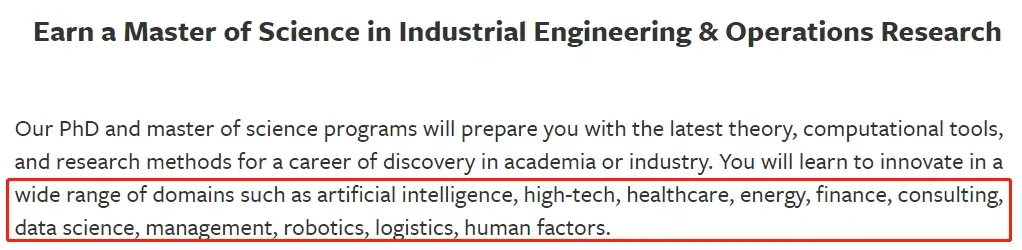
(“Our PhD and MS programs will equip you with the latest theories, computational tools, and research methods, preparing you for a career of discovery in academia or industry. You will learn to innovate across a wide range of fields such as artificial intelligence, high-tech, healthcare, energy, finance, consulting, data science, management, robotics, logistics, human factors, and more.”)
Master of Engineering
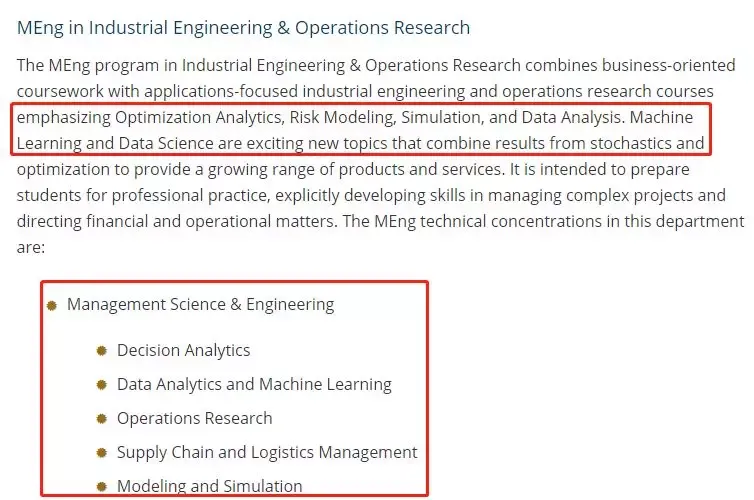
(“The MEng program in Industrial Engineering and Operations Research combines business-oriented courses with application-focused industrial engineering and operations research courses, emphasizing optimization analysis, risk modeling, simulation, and data analytics.
Machine learning and data science are exciting new topics that combine results from stochasticity and optimization to deliver an increasing array of products and services. It is designed to prepare students for professional practice, explicitly cultivating skills to manage complex projects and guiding financial and operational matters.”)
Differences Between IEOR in China and Abroad
Not only foreign universities, but many Chinese universities also offer Industrial Engineering programs. Today, let's compare the curriculum and career prospects to see how IE differs domestically and internationally.
Curriculum
The core courses for a Master's in Industrial Engineering at Chinese universities include: Mathematical Statistics, Stochastic Processes, Matrix Theory, Numerical Analysis, Operations Research, Management, Computer Networks, Advanced Manufacturing Engineering, etc.
Now let's look at the core courses of the M.S. in Industrial Engineering program at Georgia Tech:
-
Manufacturing Systems
-
Warehousing Systems
-
Supply Chain Engineering I
-
Advanced Engineering Economy
And the core courses for Cornell's M.Eng. in IEOR:
-
Optimization Modeling
-
Stochastic Modeling
-
Data Science and Statistical Modeling
-
Spreadsheet-Based Modeling and Data Analysis
Career Directions
Currently, active career directions for Industrial Engineering in China mainly include production management, quality management, planning or engineering jobs, such as e-commerce inventory management, warehouse planning, functional design planning at urban planning and design institutes, etc.
It's not hard to see that in China, not many college graduates actually find jobs directly related to their major. Most graduates end up in jobs that deviate from IE, as many positions do not explicitly require an Industrial Engineering background, due to the limited understanding of IE in China.
However, IE employment abroad is relatively prosperous, with the widest and most diverse career options among all engineering majors. These include big data analysis, machine learning, data mining in the computer field, as well as finance, etc.
Thus, domestic programs tend to lean towards traditional industries like production management, which is somewhat limiting. In contrast, the specialized tracks set by foreign universities have broken through these limitations and branched out into various fields.
Who Should Apply for IEOR?
Background Requirements
IEOR programs are generally suited for students with undergraduate backgrounds in engineering, computer science, mathematics, statistics, economics, finance, or related fields.
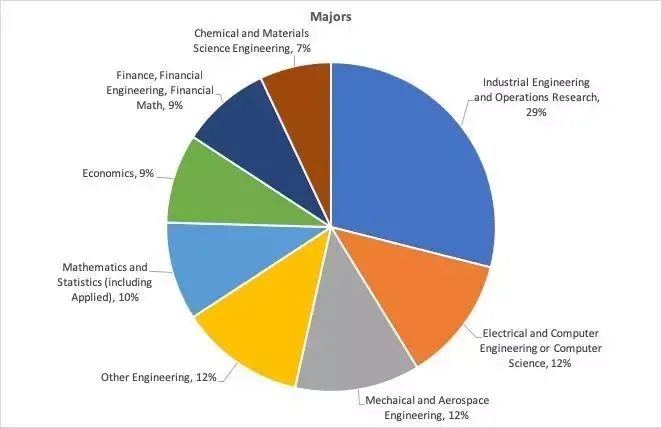
According to 2018 admission data from UC Berkeley's official website, there were over 500 applicants for Fall 2018. 72% had an undergraduate major in engineering, with 29% in Industrial Engineering and Operations Research, and 28% in finance, math, economics, statistics, and related fields.
Prerequisite Course Requirements
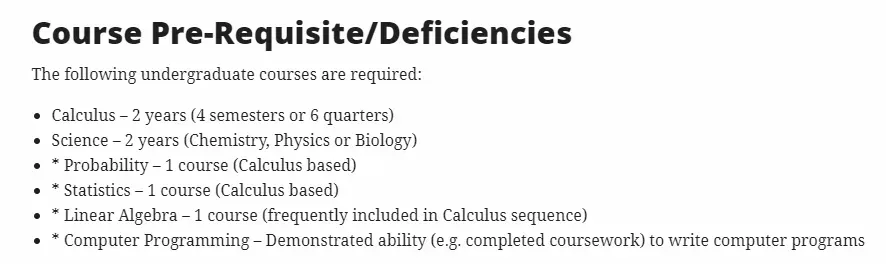
Schools offering IEOR programs usually have prerequisite requirements, typically expecting applicants to have a strong math foundation (multivariable calculus, linear algebra, probability, statistics).
Prerequisite courses for the Industrial and Operations Engineering (IOE) program at the University of Michigan, Ann Arbor:
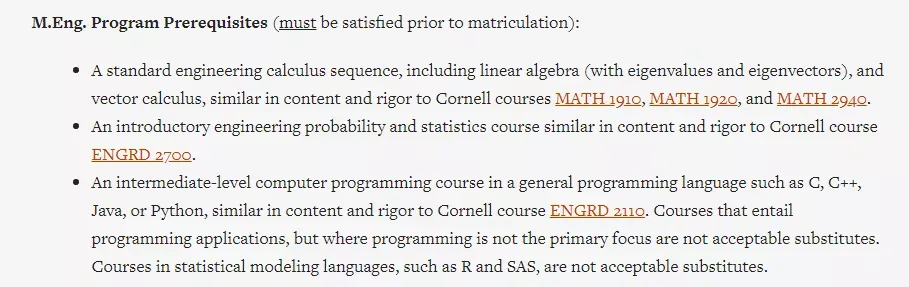
Similarly, the requirements for Cornell's M.Eng. in IEOR program include linear algebra, calculus, etc.
Summary:
Applicants to IEOR programs should have a background in engineering, mathematics, science, or computer science, and must possess strong skills in quantitative analysis, mathematical modeling, computer programming, etc.
IEOR Career Paths
Graduates in IEOR can find broad employment opportunities in engineering, management, scientific research, consulting, finance, and other fields. Most work in technical or product departments of companies as analysts, such as industrial engineers or mechanical engineers.
Some become corporate managers or department heads, and some graduates enter the Big Four accounting firms like PwC and Deloitte.
Additionally, IEOR graduates can work at American e-commerce companies like Amazon and Wayfair, as well as major airlines such as United Airlines and American Airlines.
Salaries for these positions are generally above average across U.S. regions. Starting salaries for master's graduates can reach $60,000 per year.
(UCB IEOR Career Directions)
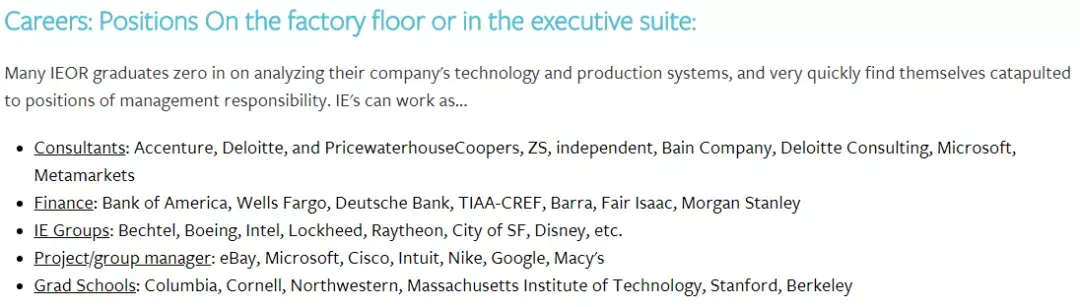
As mentioned at the beginning, IEOR is a 'quantitative all-rounder' major, so graduates can find good jobs in various quantitative fields, consulting, finance, etc. Moreover, since IEOR is a STEM field, it offers three years of OPT in the U.S., making the employment outlook quite favorable.
IEOR has many connections with FinTech, supply chain, industrial optimization, process design, and more.
For many students who enjoy engineering and want to gain solid knowledge and skills while not being confined by their undergraduate major, IEOR's broad knowledge and applications are definitely worth exploring.
CheersYou(清柚教育) has also helped a student successfully transition from business to engineering. Despite majoring in business with no quantitative background and only basic calculus math courses, the student received an offer from UC Berkeley's IEOR program and a $20,000 scholarship!
(Click to read the student's application story)
Growth is not always smooth. As long as you bravely pursue it, it will yield the results you desire. That's all for today's introduction! If you want to know more about specific IEOR programs, feel free to consult a CheersYou(清柚教育) advisor!