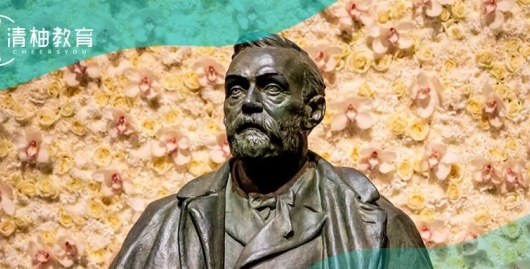
With the announcement of the final Nobel Prize in Economic Sciences, the 2025 Nobel season has come to an end.
A wave of "Nobel rejection speeches" and "Nobel runner-up self-reflections" has also swept social media, spawning endless jokes.
Behind the humor, what truly deserves our attention are those standing on the podium—their research directions, growth trajectories, and the educational ecosystems behind them often offer valuable hints about future academic trends.
Let’s take a look back at this year’s laureates and their scientific contributions!
2025 Nobel Prize Winners Roundup
Physics Prize: Quantum Properties at Human Scale
Key Achievement: Discovering macroscopic quantum mechanical tunneling and energy quantization in electrical circuits
Awarded to John Clarke from the University of California, Berkeley, Michel H. Devoret from Yale University and the University of California, Santa Barbara, and John M. Martinis from the University of California, Santa Barbara.
A major question in physics is just how large a system can be and still exhibit quantum mechanical effects.
This year’s Nobel laureates used an electrical circuit to carry out experiments in a system large enough to hold in your hand, simultaneously demonstrating quantum mechanical tunneling and quantum energy levels.
Their on-chip experiments reveal how quantum physics operates, opening opportunities to develop next-generation quantum technologies, including quantum cryptography, quantum computers, and quantum sensors.
Chemistry Prize: They Created New Spaces for Chemistry
Key Achievement: For the development of metal-organic frameworks
Awarded to Susumu Kitagawa from Kyoto University, Japan, Richard Robson from the University of Melbourne, Australia, and Omar M. Yaghi from the University of California, Berkeley.
The 2025 Nobel laureates in chemistry have created molecular structures with vast spaces through which gases and other chemicals can flow.
These metal-organic framework structures can be used to extract water from desert air, capture carbon dioxide, store toxic gases, or catalyze chemical reactions.
By developing metal-organic frameworks, the laureates have provided chemists with new opportunities to address some of the challenges we face.
Physiology or Medicine Prize: Understanding How the Immune System Is Controlled
Key Achievement: Discoveries about peripheral immune tolerance
Awarded to immunologist Mary E. Brunkow from the Institute for Systems Biology in Seattle, USA, scientific advisor Fred Ramsdell from Sonoma Biotherapeutics in San Francisco, and immunologist Shimon Sakaguchi from Osaka University, Japan.
The body's powerful immune system must be regulated; otherwise, it can attack our own organs.
The laureates have made breakthrough discoveries in peripheral immune tolerance, which prevents the immune system from harming the body.
Their findings have laid the foundation for a new field of research and spurred the development of new therapies for cancer and autoimmune diseases.
Literature Prize: Bearing Witness to the Power of Art
Key Achievement: In the horror of an apocalypse, proving once again the power of art
Awarded to Hungarian writer László Krasznahorkai.
László Krasznahorkai is a great epic writer whose style is rooted in the Central European tradition stretching from Kafka to Thomas Bernhard, notably marked by absurdism and grotesque exaggeration.
But his work goes far beyond that, soon turning its gaze to the East and adopting a more contemplative, precise tone.
Peace Prize: Keeping the Flame of Democracy Alive
Key Achievement: Tireless efforts to fight for the democratic rights of the Venezuelan people
Awarded to Venezuelan democracy activist Maria Corina Machado.
The 2025 Nobel Peace Prize is awarded to a brave and steadfast defender of peace—a woman who keeps the flame of democracy alive in an increasingly dark environment.
As the leader of Venezuela's democratic movement, Maria Corina Machado stands as one of the most outstanding examples of civilian courage in Latin America in recent years.
Ms. Machado has been a key, unifying figure in a once deeply divided political opposition, helping disparate opposition groups find common ground in demanding free elections and representative government.
Economic Sciences Prize: From Stagnation to Sustained Growth
Key Achievement: Identifying the prerequisites for sustained growth through technological progress
Awarded to economic historian Joel Mokyr from Northwestern University, Philippe Aghion, professor at École Normale Supérieure, INSEAD, and the London School of Economics, and Peter Howitt from Brown University.
Over the past two centuries, sustained economic growth has been achieved for the first time in world history. This has lifted vast numbers out of poverty and laid the foundation for our prosperity.
This year's Nobel laureates in economic sciences have elucidated how innovation provides further impetus for development.
The laureates show us that sustained growth is not a given. For most of human history, stagnation, not growth, was the norm. Their work demonstrates that we must recognize and respond to threats to sustained growth.
University of California System: The Biggest Nobel Winner
If this year’s Nobel Prize results reveal a new trend in the research landscape, then the University of California system is undoubtedly the biggest winner.
Looking at the backgrounds of this year’s laureates, this top U.S. public university system takes center stage with overwhelming dominance, setting a new world record for the most Nobel Prizes awarded to a single university system in a single year.
Faculty members alone won four Nobel Prizes; counting alumni, UC-affiliated scholars secured five awards in medicine, physics, and chemistry.
In Physics, all three laureates are UC faculty:
-
John Clarke is professor emeritus of physics at UC Berkeley
-
Michel H. Devoret holds a faculty position in physics at UC Santa Barbara and Yale
-
John M. Martinis, a UC system alumnus, is professor emeritus at UC Santa Barbara
Chemistry laureate Omar M. Yaghi is a professor at UC Berkeley, while Physiology/Medicine laureate Fred Ramsdell earned his bachelor’s degree at UC San Diego and his Ph.D. at UCLA.
With 10 campuses, nearly 300,000 students, and 260,000 faculty and staff, UC boasts broad disciplinary distribution, high equipment sharing, and vibrant cross-disciplinary and cross-campus research.
If UC were viewed as a single entity, its Nobel output would far exceed that of most countries.
In fact, UC not only relies on state and federal funding but also has diverse funding channels from hospital systems, foundation endowments, tuition, and research partnerships, providing stable support for high-risk, long-cycle research.
Nobel recognition is the best reward for its commitment to long-term thinking and a healthy research ecosystem.
The signals from the 2025 Nobel Prize go beyond just "who won."
They tell us that world-changing breakthroughs often arise from those seemingly "old" but deepest-rooted basic disciplines.
The success of the University of California is no accident—it’s the result of long-term cultivation of a research ecosystem and respect for the laws of exploration, powerfully demonstrating the unique value of public education systems in guarding the frontiers of knowledge.
The meaning of education is not to mold people into standardized "finished products," but to give everyone the chance to become an irreplaceable self.
This, perhaps, is more worth noticing than any medal.