A resume is a personal business card—a repository that every student should begin building from the moment they enter college, so it's always ready to showcase their unique side.
A common misconception many people have is mixing up a resume and a CV, but they are actually quite different.
Resume: A concise overview of your education and work experience relevant to a job, aimed at persuading an employer to hire you.
A resume focuses more on experience tailored to the specific position you're applying for. It is usually around one page, more succinct than a CV, and highlights the most critical aspects of your candidacy.
CV: Curriculum Vitae, Latin for "course of life," can be thought of as a "report card of your life."
Typically, a CV is longer and places greater emphasis on academic achievements. It broadly outlines your educational background, awards, research capabilities, etc., and is commonly used when applying for academic, educational, or research positions.
However, for graduate school applications at this stage, CV and resume can essentially be treated as the same thing, since you wouldn't be expected to produce the lengthy document that a professor might submit.
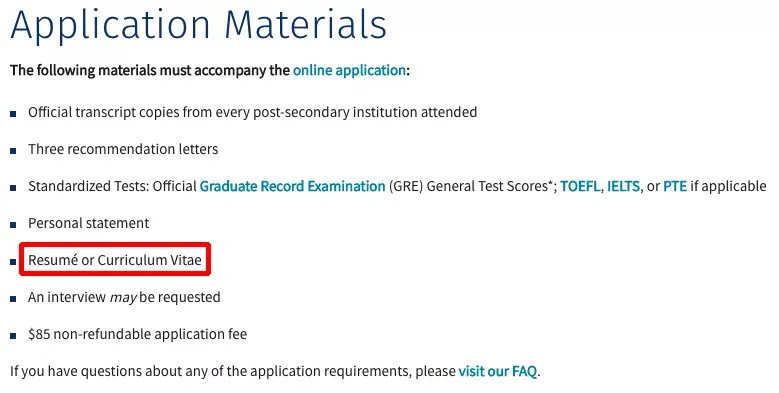
Many programs specify "Résumé or Curriculum Vitae" in their requirements. So when applying to graduate school, you generally just need to prepare a standard resume.
How to Write a Resume
1. Clean and Clear Layout
When writing a resume for the first time, 99% of people start by searching for templates online. As soon as you type in "resume," an overwhelming flood of templates appears.
The result? Ugly templates get used, and information overload easily occurs. You'll feel compelled to include everything you see on someone else's template, stuffing it full, which ultimately backfires.
We recommend keeping your graduate school application resume to one page, maintaining an overall clean and concise look. Admissions officers won't have the patience to read through a resume that's too long or messy.
If your layout exceeds one page, ask yourself: Are there too many blank lines? Or, is all that information truly necessary for the admissions officer to see?
2. Building and Enriching Experience
When structuring your resume, consider the following sections:
Education
+
Research Experience
+
Academic Projects
+
Work Experience
+
Extracurricular Activities
+
Skills/Interests
Many freshmen and sophomores face this major dilemma: What do I do if I don't have any experience?
Then go create experience!!!
Try to network as much as possible, seize opportunities for research projects, internships, and jobs. Important projects from your coursework can also help build your personal brand. Additionally, extracurricular activities like university clubs can serve as bonus points on your resume.
University clubs sometimes have notable reputations, and they look great on a resume. Your school likely has many organizations you'd find interesting—be sure to take advantage of the opportunities they offer. If you held a leadership or officer position, that experience becomes especially eye-catching.
In short, don't wait until graduation to regret four years of empty experience.
3. Refining and Organizing Information
When writing a resume, many students fall into two common traps: either providing overly superficial information or writing repetitive, verbose descriptions.
Try to follow the principle of "specific details + data." Make each bullet point concise and specific, mentioning the core aspects of the experience, the skills used, and ideally including quantitative data—for example, the number of pages in a report, or how many people attended an event.
When admissions officers see such a resume, they can quickly grasp your value, rather than wading through generic, broad paragraphs that all look the same.

At the same time, understand your strengths and highlight them with more content on your resume. Not every section needs to be supported by the same amount of information. With a one-page resume, learn to prioritize and filter your content.
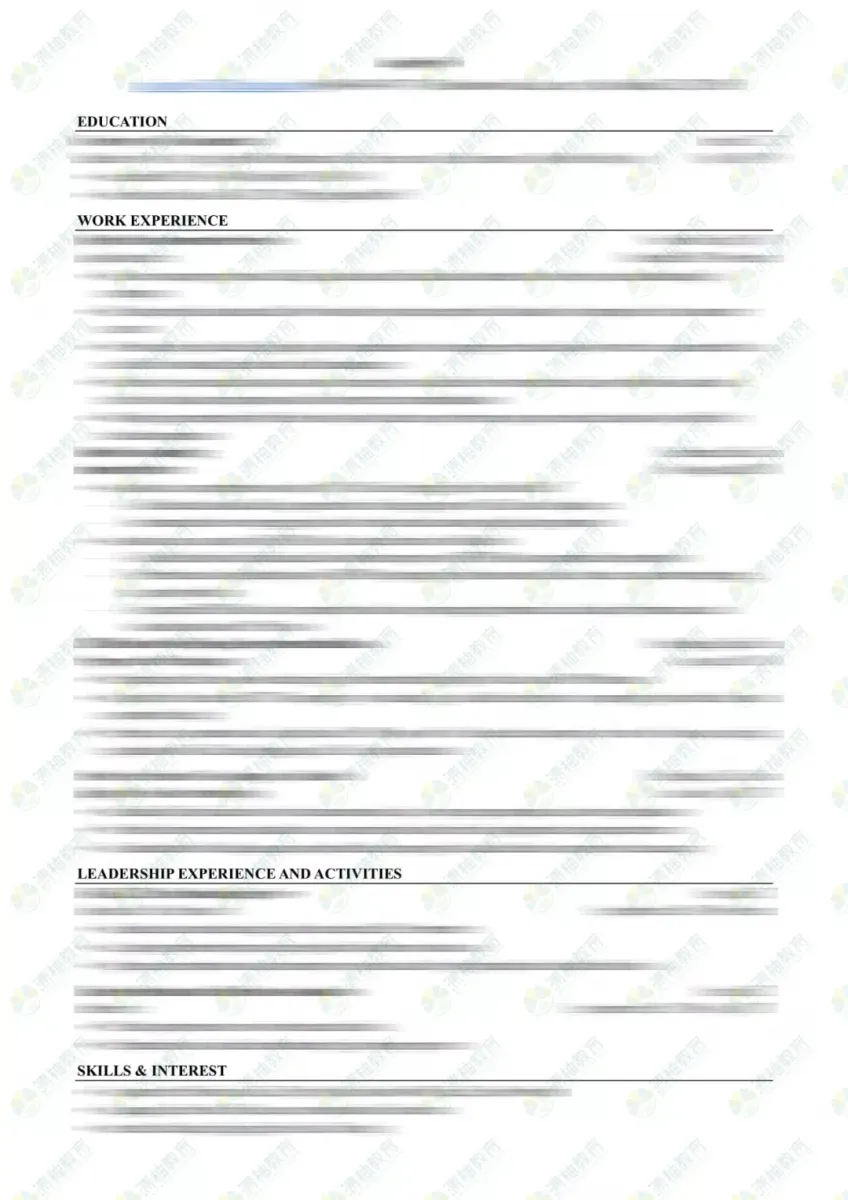
In summary, starting to build your resume early brings only benefits. We hope these tips help you out. We also strongly encourage students to utilize school resources, such as the career center, to get relevant assistance.