
Differences Between US Graduate and Undergraduate Deadlines
Unlike undergraduate applications, US graduate schools—each department or even each program—set their own application requirements and deadlines.
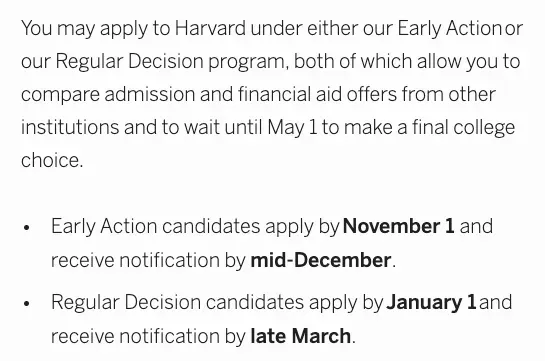
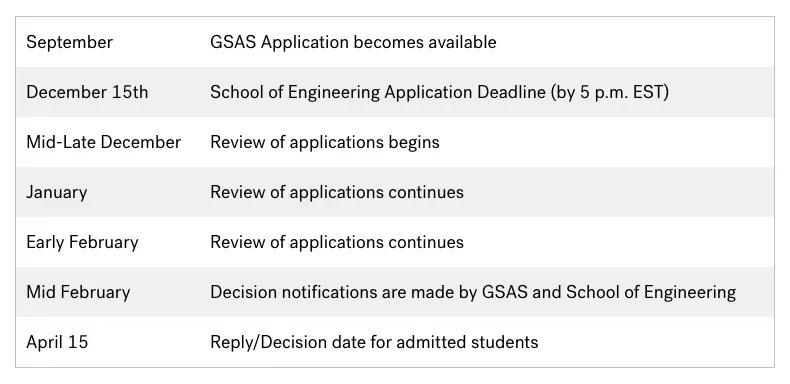
Take Harvard University as an example: Harvard College has a uniform deadline, but its graduate schools have individually set deadlines.
Harvard College Application Deadlines:
EA: November 1
RD: January 1
Selected Harvard Graduate Program Deadlines:
Law School LL.M: December 1, 2019

School of Engineering and Applied Sciences: December 15, 2019
Graduate School of Education Ed.M: January 5, 2020

Typical US Graduate Application Deadlines
Earliest Deadline: November
Leaving aside rolling/early deadlines, graduate school applications can close as early as November.
Most US medical schools close their applications in November. For example, Johns Hopkins University School of Medicine has a deadline of November 1.

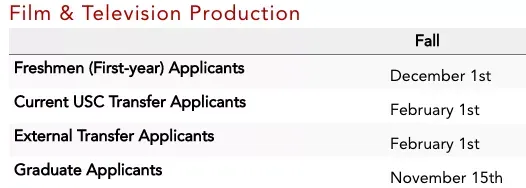
Other top programs like Princeton University's Neuroscience and Psychology, and University of Southern California's Animation & Digital Arts and Film & Television Production also have November deadlines.
USC Film & Television Production Application Deadline:
Overall, very few graduate programs close entirely in November, and these may not be on the radar of most international students.
Peak Deadline Period: December–January
December through January is the busiest application season, when most prestigious graduate programs have their deadlines.
Top universities like Princeton, Harvard, Yale, MIT, and Stanford typically close their applications in early January. Additionally, most competitive graduate programs at leading schools have December–January deadlines.
Princeton University Graduate Program Deadlines:
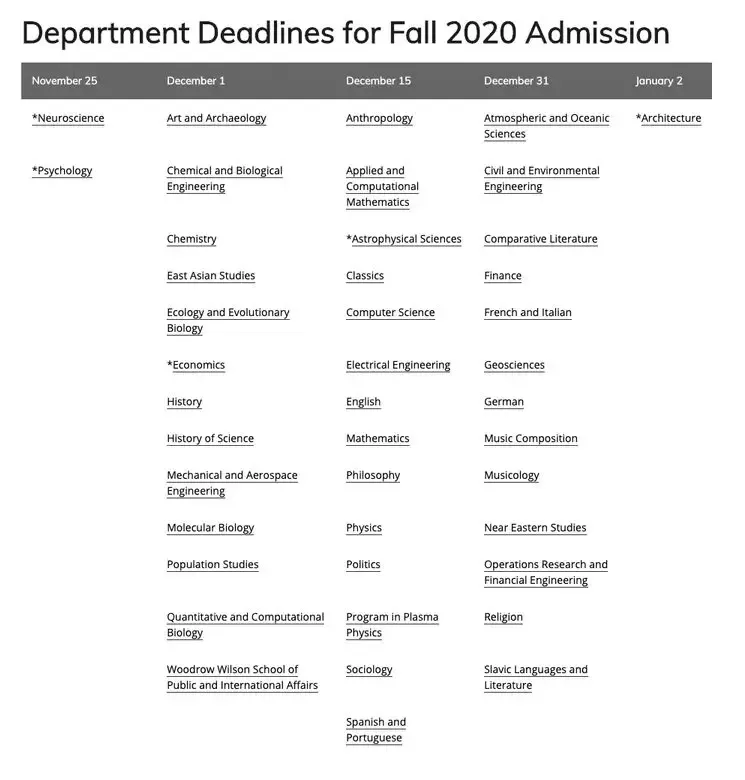
Given the popularity of these programs, this period sees a huge influx of applications, and admissions offices get swamped.
Also, don't forget the Christmas holiday. Some programs list a December 31 deadline, but you can imagine the backlog around that time. Submitting early also means receiving decisions sooner.
Late-Stage Sprint for Some Top Programs: February–March
In February and March, a considerable number of graduate programs at Top 30 schools are still open, such as Columbia University's School of Social Work, University of Pennsylvania's School of Engineering and Applied Science, and New York University's Tandon School of Engineering.
NYU Tandon School of Engineering Deadline:
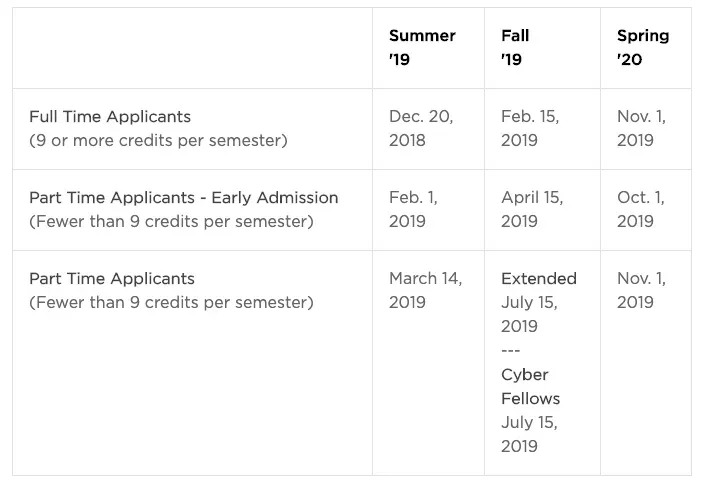
Many graduate programs at other top-100 schools also have deadlines during this time. If you faced setbacks in December–January for top-tier or highly competitive programs, you still have time to apply to other programs at leading schools or mid-range institutions.
Last Call: April–May
After April, very few programs are still accepting applications. Typically, the final rounds for programs with multiple deadlines close in late March or early April. There are exceptions, like Northwestern University's School of Professional Studies, which has a July 15 deadline.

Students with weaker backgrounds or those who faced earlier rejections may consider these last-chance opportunities.
Generally speaking, applying early is always better. Some programs may not clearly state deadlines on their websites, so it's advisable to contact the admissions office directly to confirm.
Special Deadline Situations
In addition to fixed deadlines, some graduate programs have unique application policies.
Rolling Admissions:
Some graduate schools use rolling admissions, such as certain programs at the University of Pennsylvania's Graduate School of Education. This means applications are reviewed on a rolling basis starting from when the application opens, and decisions are released as they are made, until the program fills its spots.

Under this model, it's best not to assume that spots will always be available. Since admissions are on a first-come, first-served basis, applying early when more seats are open increases your chances.
Rounds:
Round-based admissions are more common in business schools. Schools set multiple deadline rounds, and applicants can choose which round to apply in.
For example, the University of Rochester's Master's in Finance has up to five rounds. After each deadline, a batch of decisions is released. With comparable qualifications, early applicants have an advantage and a higher chance of admission.
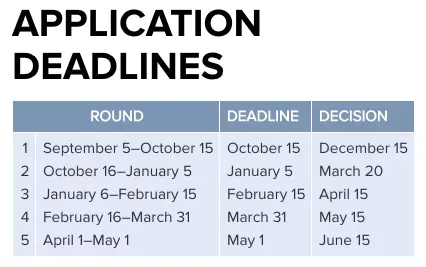
Also, some programs with rounds explicitly state that international students may not apply in the final round, such as the University of Chicago's Computer Science Round 3.
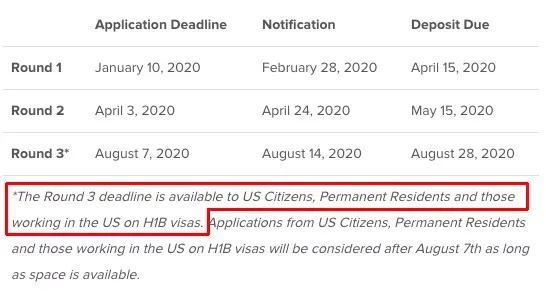
While some programs may say international students can apply in the final round, most universities advise early application to avoid visa processing delays that could impact enrollment.
Priority:
Some graduate programs set a Priority Deadline before the final deadline.
This type of deadline is mainly for scholarship/financial aid consideration or to ensure your application is reviewed.
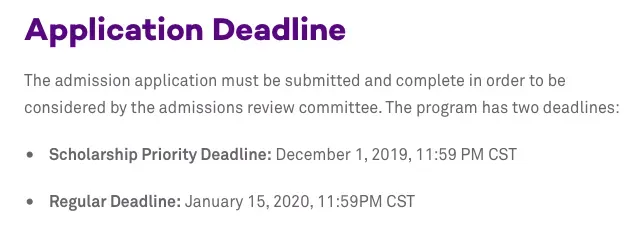
For instance, Northwestern University's Master's in Analytics has a final deadline of January 15, 2020, but the priority deadline for scholarships is December 1, 2019—over a month earlier.
Duke University's Master's in Electrical and Computer Engineering has a final deadline of February 29, 2020, but applications submitted by January 1, 2020 are guaranteed to be reviewed.
Applications submitted after that date may or may not be reviewed, depending on remaining availability.

Take It Seriously, Don't Procrastinate
In general, the later the application stage, the more applications flood admissions offices, as most students have their materials ready by then.
But applying during the December–January deadline crush around the holidays, or in the final round when few spots remain, will inevitably affect review times, competition, and admission criteria, making it harder.
So apply early—try not to rush at the last minute!
All procrastinators are advised not to delay when it comes to applications. Especially for those aiming for top graduate programs, prepare early to gain the time advantage and avoid last-minute cramming.