A Major Shift in the Study Abroad Market?
In recent times, the global study abroad landscape has been confusing. Under the shadow of the US-China trade war, visa policies have been tightened both overtly and covertly, and a flurry of unfriendly rumors about international students has made it difficult for the US study abroad reputation to improve.
While many media outlets have been collectively singing the blues about the US study abroad market, the UK market seems to be clear and bright. The UK government recently announced that starting from the summer of 2021, international students who complete a qualifying undergraduate or higher degree in the UK can obtain a 2-year post-study work visa.
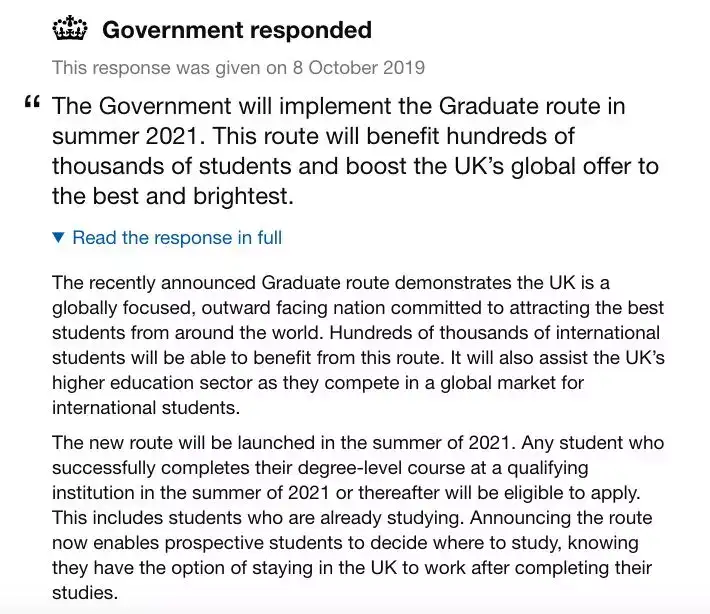
UK government's official response to petitions regarding the PSW visa
According to UCAS data, the number of undergraduate applicants to the UK in 2019 alone surged by nearly 30% compared to the previous year.
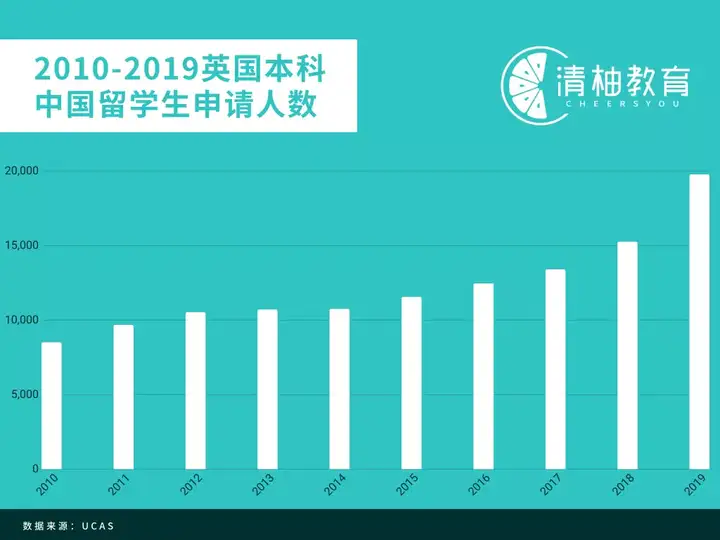
UK Study Abroad Applications Are Overwhelming This Year
Coupled with the recent favorable sentiment, the 2020 UK application cycle was predicted to be the 'most difficult application season in history' even before it opened.
Some students who originally planned to apply to the US are now considering applying to both the UK and US, or even only to the UK, so one can imagine the sheer volume of applications and competitive pressure this year.
Even before the application season began, many UK universities raised their admission requirements.
Some, like the University of Bristol, Durham University, University of Leeds, and University of Warwick, adjusted their 'list of recognized Chinese institutions', while others like the University of Manchester and King's College London directly raised their admission score thresholds.
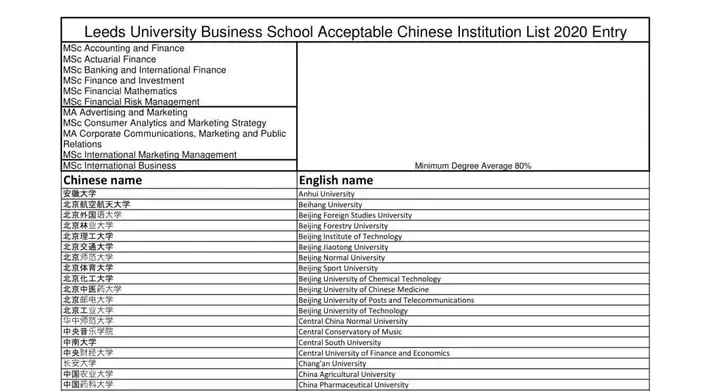
This year, Leeds University's business master's programs basically shut out graduates from non-985/211 Chinese universities.
UK universities generally follow a 'first come, first served' principle, closing applications once programs are full.
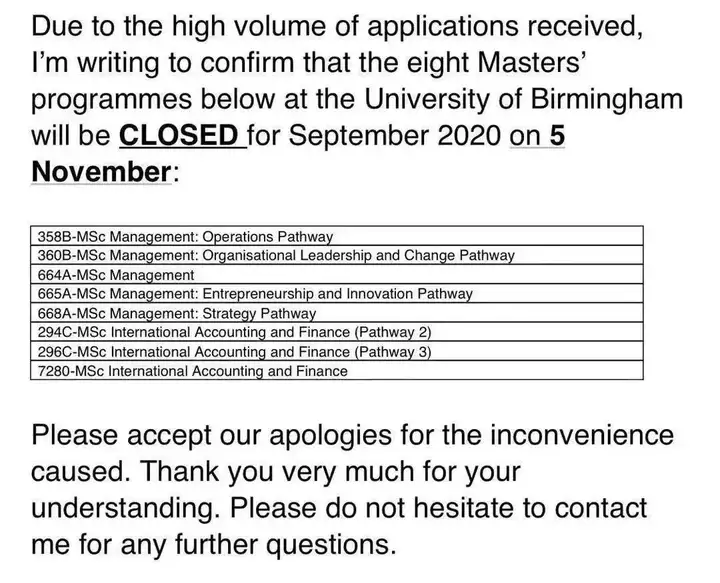
Despite higher requirements, this year's applications to UK universities have still been overwhelming, with application channels for many prestigious programs at universities such as Birmingham, Sheffield, Liverpool, and Nottingham already closing early.
University of Birmingham announced that 8 business master's programs closed on November 5:
University of Liverpool will close 3 popular business master's programs on November 19:
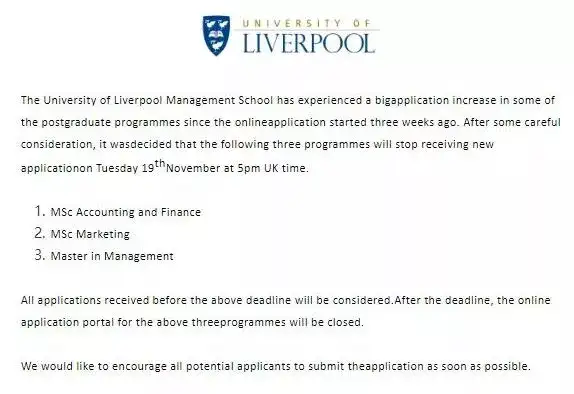
The reason across the board: overwhelming application volume!
The application cycle hasn't been open long, and already there are no spots? This must have caught many UK applicants, especially those solely set on the UK, off guard.
US Study Abroad Market Is Warming Up
Let's take a look at the recent situation on the US side.
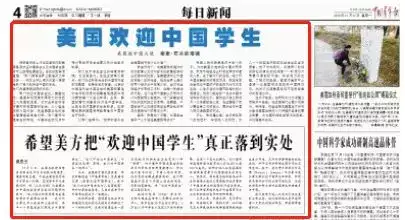
Just recently, the US Ambassador to China wrote an article in China Youth Daily titled 'America Welcomes Chinese Students', expressing that 'Chinese students are welcome on American campuses' and offering advice for those planning to study in the US and those already there.
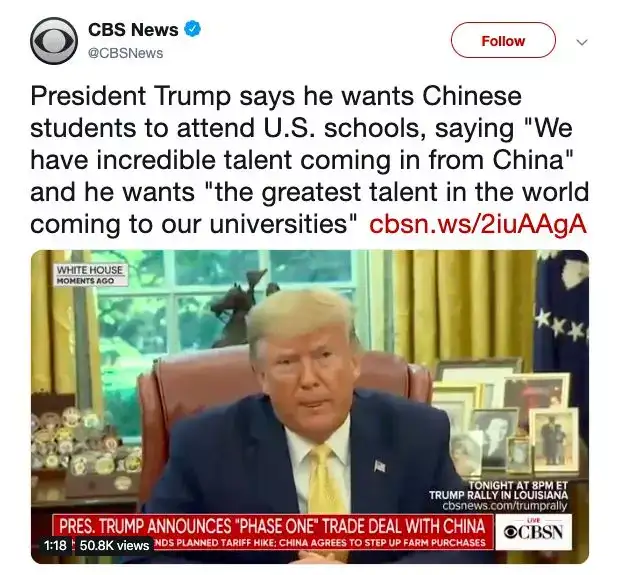
Last month, Trump also made a clear statement regarding the US government's stance on Chinese students studying in the US:
"The United States continues to welcome Chinese students to study in America. I can assure Chinese students: the United States will not discriminate against Chinese students, and I hope they will come to the US."
Clearly, the overall situation and policies for US study abroad are showing a gradual warming trend.
So for students who feel they might get rejected across the board from the UK, is it still possible to switch to applying to the US now?
Differences Between Applying to UK and US Graduate Schools
Under different education systems, universities in the UK and US have differing admission standards, especially regarding application materials.
Take graduate program applications in the UK and US as an example.
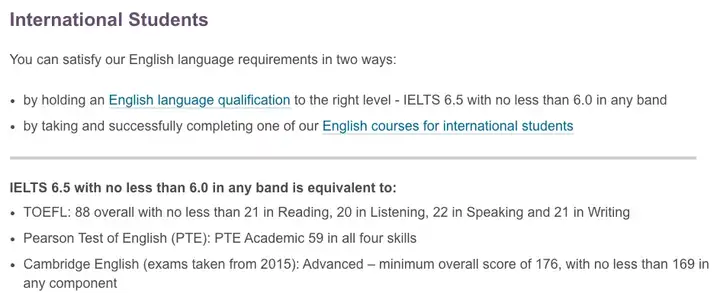
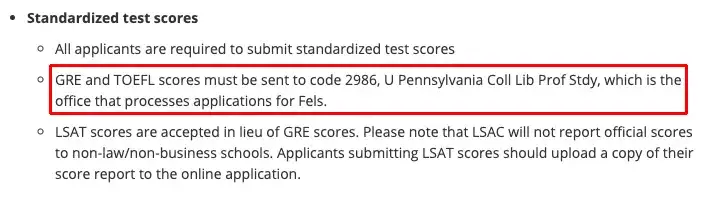
First, UK universities generally do not require GRE/GMAT scores, which means many students lack this fundamental standardized test material when applying to most US programs.
The University of Birmingham's MPA program does not require the GRE:
UPenn's MPA program explicitly requires submitting GRE/LSAT scores:
US universities also have stricter and more holistic admission standards; in addition to a solid academic background, they place considerable weight on applicants' internships, research, and other soft skills.
This is why students primarily targeting US schools may start planning and preparing as early as their sophomore year.
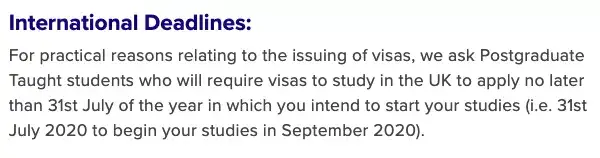
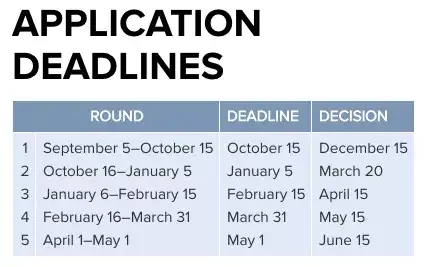
Additionally, US master's programs typically have Early/Final deadlines or admit in rounds, while UK master's programs generally follow a rolling admission policy until full, though many schools are now adopting US-style admission methods.
University of Liverpool indicates the latest deadline can be July 31 of the year of enrollment:
University of Rochester's Simon Business School has as many as five specific application rounds:
For UK master's programs still using a rolling policy, once a surge in applications fills the program, other applicants may be left powerless when faced with a sudden deadline.
Alternative Strategies for US Graduate Applications
So, given the situation, is there really no way to pivot and apply to US graduate schools?
First, it is currently the peak of the US application season; most prestigious graduate programs have deadlines from December to January of the following year, and some even have deadlines in February or March.
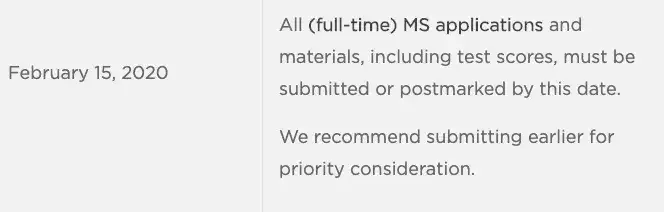
NYU Tandon School of Engineering's latest deadline is February 15, 2020:
If you can improve your IELTS or TOEFL scores during this time and quickly obtain GRE/GMAT scores, then finalize your school list and sprint through applications, it can still be done.
If you really can't get a competitive GRE/GMAT score, some US programs offer the option to not submit GRE/GMAT scores.
However, choosing not to submit GRE/GMAT scores means you'll need to put more effort into other application materials like your essays and recommendation letters.
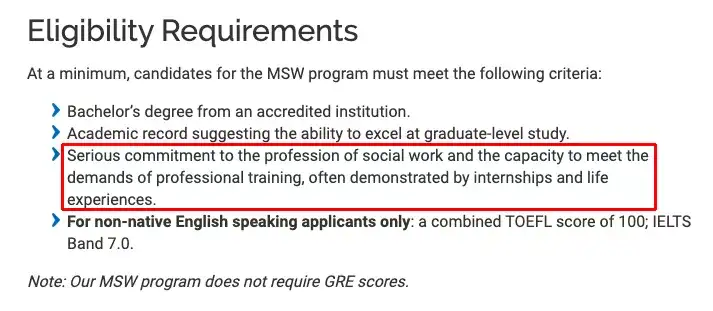
Columbia University's MSW program does not require GRE scores, but does require relevant internship or life experiences:
In summary, it is not impossible to catch the last train for US graduate applications, but applicants need to have a very comprehensive and precise grasp of their backgrounds in order to plan effectively in a short time and avoid missing opportunities.
For those applying in the future, CheersYou(清柚教育) would also like to remind everyone: it's always better to apply early rather than late. Early preparation provides more buffer time to adjust and optimize your application strategy.