The 2020 application season has entered its busiest period from December to January, when many top graduate programs have their deadlines clustered.
Prestigious U.S. universities like Princeton, Harvard, Yale, MIT, and Stanford generally close their application portals by early January. Most popular graduate programs at top schools also have deadlines between December and January.
Your social feed is already filled with Fall 2020 admission offers, while you are still struggling:
- Overwhelmed by coursework and internships, no time for applications
- Standardized test scores just won’t come, online applications can’t be submitted
- Perfectionism, can’t finalize personal statements and résumés
- Wrong school selection strategy, earlier applications all rejected
- Procrastination, ran out of time at the last moment
Every year, countless applicants miss the golden window of the application season for all kinds of reasons.
Is it truly impossible to get into a graduate program for Fall 2020?!
Whether you’re aiming for a dream school, a solid top-tier program, or a safety net, the most important thing right now is not to panic; instead, adjust your application strategy in a timely manner.
How can late applicants turn the tide and win? CheersYou(清柚教育) here recommends several effective strategies.
Rolling Admission Programs
Some graduate schools at top universities adopt a rolling admission policy, such as some programs at the University of Pennsylvania’s Graduate School of Education.
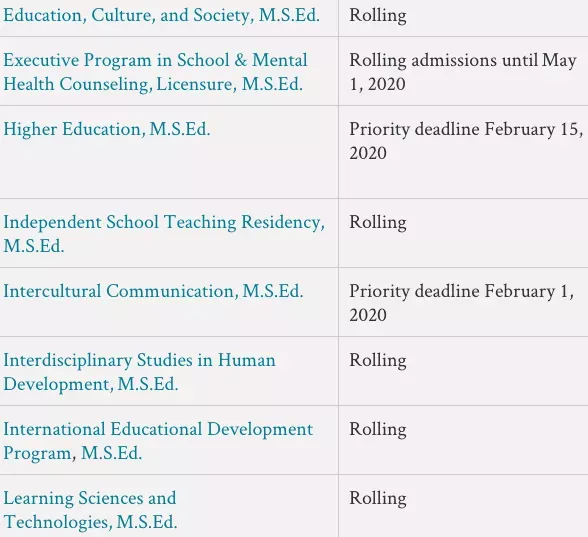
This means the application timeline for these programs is more flexible. Once the online application opens, the school begins reviewing materials; applying early yields earlier results.
As long as the program hasn’t filled its seats, students can continue to apply, and the admissions office will keep reviewing applications until the seats are filled.
From the rolling policy explanation by Columbia University’s Teachers College, we can see that rolling admission programs generally close their application channels between June 15 and August 1 of the enrollment year.
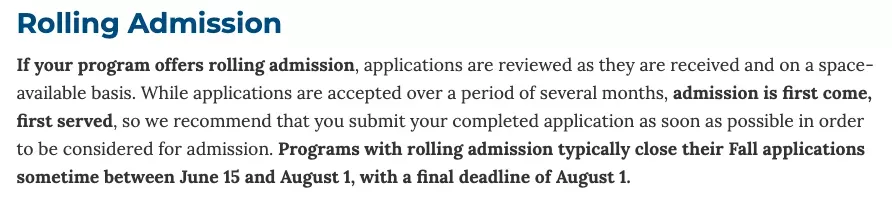
Rolling admission is indeed an option for many late applicants.
However, it’s important to note that while there is no fixed deadline, the principle of first-come, first-served applies. If you submit too late, the program might already be full, and even qualified applicants may be rejected.
So, even for rolling admission programs, it’s advisable not to submit your application too late.
Programs with Multiple Rounds or Late Deadlines
Compared to programs with a single final deadline, those with multiple rounds provide breathing room for late applicants.
Round-based applications are more common in business schools. Schools set multiple deadline rounds, and applicants can choose a round to submit their application.
For example, the Johns Hopkins Carey Business School has at least three rounds. After each deadline, a batch of decisions is released.
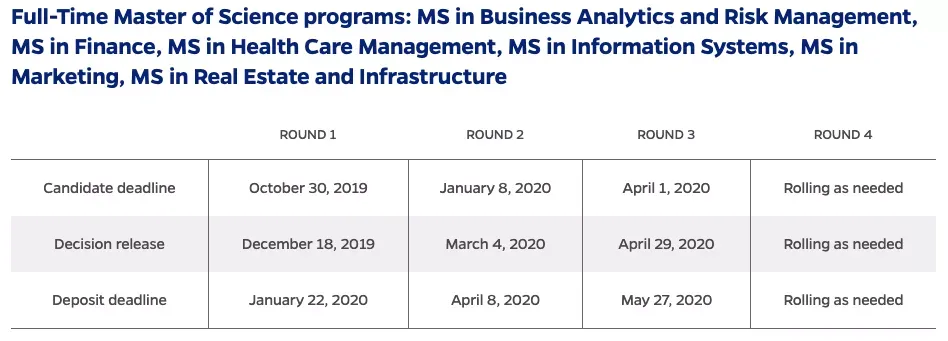
However, multiple-round programs do not mean you can procrastinate indefinitely. To avoid delays in visa processing and enrollment, most schools recommend on their websites that international applicants apply early.
Some round-based programs explicitly state that the final round is not open to international students. For instance, the University of Chicago’s Computer Science Round 3 is limited to U.S. citizens or permanent residents.
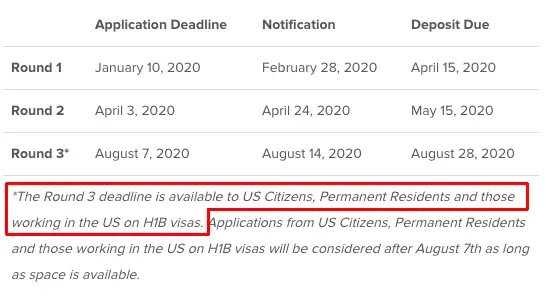
If your credentials meet the bar, early applicants have an advantage and a higher chance of success.
Many students think, “There’s still time, I’ll apply later.” But remember: you’re not alone in that thinking. Later rounds generally see significantly higher application volume and competition than early rounds.
Programs That Do Not Require GRE/GMAT
For students who just can’t produce GRE/GMAT scores in time, programs that do not require these tests are an option.
Georgetown University’s School of Continuing Studies, for instance, does not mandate GRE/GMAT scores and has a relatively late application deadline.
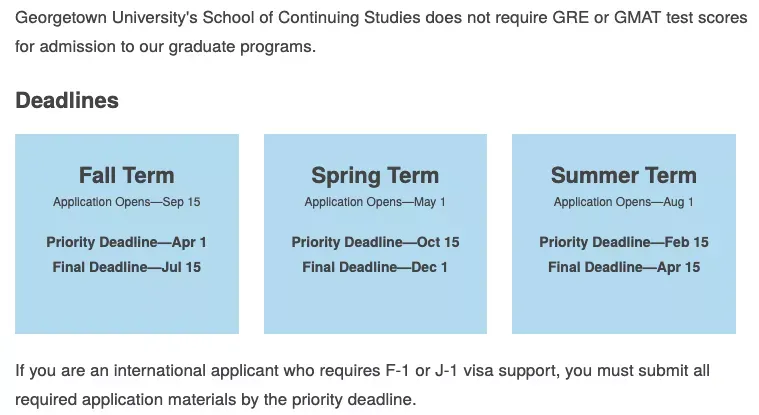
However, many students fall into two misconceptions about no-GRE/GMAT programs:
1. No GRE/GMAT means the deadline will be late.
2. No GRE/GMAT means the program is easy to get into.
Such thinking must be avoided. Take Columbia University’s Master of Social Work as an example:
The final fall admission deadline is on February 15 of the following year, which isn’t particularly late. While no GRE is required, the program’s scrutiny of English proficiency for non-native speakers is not lax—it requires TOEFL 100+ or IELTS 7+.
At the same time, the program demands more rigorous other application materials. Résumés need to include relevant volunteer experience with detailed, authentic descriptions of community and leadership activities; the personal statement must answer three specific essay prompts—it’s not as simple as a single PS.
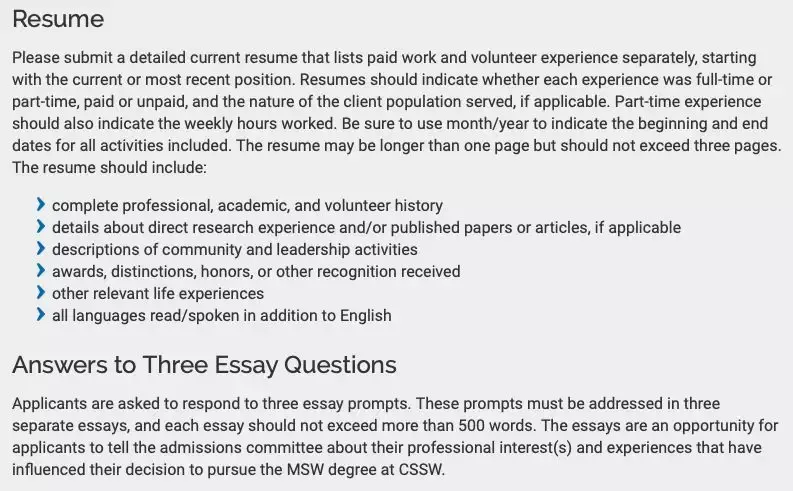
Clearly, programs that waive GRE/GMAT will scrutinize other materials more strictly—things like GPA, personal statements, and background experiences.
Waiving the GRE/GMAT does not free up your application timeline or reduce the work on materials.
If there’s still time, it’s best for students to push forward with standardized tests. After all, there aren’t many graduate programs that forgo GRE/GMAT; the vast majority of fields, especially hot programs like financial engineering and quantitative finance, require mandatory submission of GRE/GMAT scores.
Having a solid GRE/GMAT score means more options for schools and programs, and greater security in your applications.
As applications enter this critical sprint period, mindset is often the decisive factor. The closer you get to the end, the calmer you must stay.
For late applicants and those struggling with test scores, there are still fallback strategies. While adjusting your application approach, keep an eye on program updates, consult professionals promptly, and avoid stumbling at the crucial moment.