In the past few years, U.S. undergraduate transfers have been seen as a "high-barrier track"—low acceptance rates, limited spots at top schools, and increasingly fierce competition each year.
But recently, two top U.S. universities have sent consecutive signals:
Top universities are actively expanding transfer admission pathways!
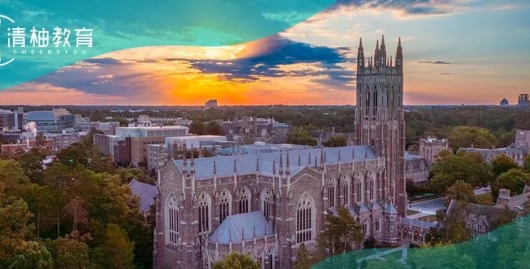
First, Duke University, ranked #7 nationally, announced a formal agreement with Durham Technical Community College (Durham Tech) to provide "guaranteed admission" transfer spots for community college students in engineering!
Next, Vanderbilt University, ranked #17, partnered with Verto Education to launch a "freshman year abroad program," offering some applicants a "guaranteed transfer admission" pathway.
For students who didn't get into their dream school on the first try or hope to take an alternative route to top universities, this could be a new window of opportunity for U.S. undergraduate transfers.
Duke University's Special Articulation Guaranteed Admission Program
According to Duke's latest official announcement, the university is in the final negotiation stage with Durham Technical Community College and will soon formalize the agreement.
If Duke finalizes the agreement, this will be the first formal community college transfer agreement for full-time undergraduates among U.S. News & World Report top-10 universities, and one of the first guaranteed admission programs among top private U.S. universities.
Source: dukechronicle
The news has drawn widespread attention from the U.S. education sector and international students worldwide.
The program adopts a "2+3" training model, allowing students to study at Durham Tech for two years before transferring to Duke for three more years to complete remaining core courses, practical projects, and thesis requirements, ultimately earning a Bachelor of Science in Engineering from Duke.
Importantly, the final diploma is exactly the same as those earned by students directly admitted to Duke, with no difference whatsoever.
Vanderbilt University Launches a New Transfer Pathway
Vanderbilt's newly introduced guaranteed transfer policy is essentially a "conditional transfer pathway."
Source: vertoeducation
Vanderbilt sends invitations to some applicants who are not directly admitted but are considered "highly promising." Students who accept the invitation do not become Vanderbilt freshmen right away; instead, they first spend a year studying at Verto Education's overseas centers in Spain, the U.K., etc.
Simply put, the freshman year is not at Vanderbilt; students first go to an affiliated program abroad for a full year, and after completion, they transfer directly into Vanderbilt for sophomore year.
(*The music performance major at Blair School of Music and the education major at Peabody College are not eligible for this pathway)
Keep in mind, Vanderbilt admits around 440 transfer students each year, with an acceptance rate around 10%—extremely competitive.
This pilot program plans to admit 120 students. For applicants who receive the invitation, this is undoubtedly a more certain and advantageous pathway to a top university.
Transfers Are No Longer Just a Plan B for U.S. Undergrads
In the past, many viewed transferring as a remedial solution akin to "retaking the college entrance exam"—a second chance after an unsuccessful application. But today, more and more U.S. universities are proactively designing various articulation pathways, enabling students to re-enter their dream schools through growth at different stages.
The most typical example is the University of California system.
For a long time, UC has maintained a mature transfer system with California community colleges. Among them, the TAG (Transfer Admission Guarantee) program offers guaranteed admission to qualified students. As long as they complete required courses, credits, and GPA thresholds, they can secure admission to one of six UC campuses, including UCI, UCD, UCSB, and UCSC.
Furthermore, the UC system has further rolled out the ADT (Associate Degree for Transfer) guaranteed transfer pilot program, with plans to first implement it at UCLA during the 2026-27 academic year. Transfer applicants who have completed the designated community college ADT degree will be given priority consideration.
Source: UCLA
Not only public universities, but more top private universities are also offering "non-traditional entry pathways."
Northeastern University's NUin program allows some students to first study at an overseas partner institution for the first semester before returning to the main campus as full-time students. From the moment of admission, students hold Northeastern student status, and it is essentially a transitional training program actively provided by the university.
New York University's spring admission program: some students do not directly enroll in the fall; instead, after completing a semester of study, internship, or overseas experience, they officially start at NYU in the spring of the following year.
Boston University's international study program in partnership with Verto allows students to integrate overseas study experiences directly into their undergraduate curriculum.
Cornell University's Transfer Option program is regarded by many applicant families as the "ultimate guaranteed admission"—the university pre-identifies promising applicants, and as long as they meet specified requirements during their freshman year, they can smoothly transfer into Cornell in their sophomore year to complete their bachelor's degree.
Although these programs vary in form, they all reflect the same trend: U.S. universities are gradually embracing the idea that a student's potential should not be decided by a single application during high school.
More and more institutions are paying attention to students' growth trajectories, academic performance, and development potential after entering college, and are willing to open more doors to top schools for outstanding students.
New Opportunities, New Challenges
Competition for U.S. undergraduate admissions has already entered a white-hot stage, and top universities are increasingly opening up more flexible entry pathways beyond traditional admissions.
For applicants, this means both opportunities and challenges.
On the one hand, more diverse entry pathways provide new possibilities, making the admission process no longer a single, decisive gamble; on the other hand, applicants need to understand the rules and requirements of different programs early on to make the right choice for themselves.
In the future, the competition may no longer be just about perfecting application materials for one season, but about who clarifies their goals earlier and prepares in a timely manner.