As the COVID-19 outbreak worsens in the United States and states successively declare states of emergency, international students in the US, numbering in the millions, are understandably worried about whether their health can be adequately protected.
Although China has provided a model response for the global fight against the pandemic, the US government's attitude toward the outbreak is disheartening, and the general public has not taken the severity of the situation seriously.
We even see cases where “not wearing a mask gets you infected, but wearing one gets you discriminated against.”
However, compared to the international students in the US, parents at home, who have just endured a severe epidemic in China, are even more anxious about their children's well-being.
Because of this, many are wondering: Should I now “return home to save myself”?
CheersYou(清柚教育) is here to answer all your questions at once:
Q: The US outbreak is serious now. Should I return home?
A: Not recommended. The US is currently in a stage similar to the early phase in China, with COVID-19 cases continuously emerging. For ordinary people, the best approach is to self-isolate at home and avoid potential sources of infection. Traveling back now, especially on planes and at airports with high concentrations of people, actually makes it easier to contract the virus than staying at home.
Q: Will taking online classes from home be affected?
A: Not recommended. First, as mentioned above, there is a high risk of infection during the return journey. Second, regarding online classes, the internet connection alone poses many uncertainties. Additionally, if the school changes any policies suddenly, students in China may not be able to respond in time, resulting in more harm than good.
Q: Is it necessary to take a gap year?
A: If you are currently in China and have not successfully returned to the US for your studies, you may consider discussing a gap year plan with your school. However, if you are currently in the US, it is advisable to wait and see for now, and not rush into it. Once you choose to take a gap year, all future plans will have to be adjusted and postponed, so you must consider it carefully.
Q: When would be a better time to return home?
A: When the pandemic situation becomes clearer and everything returns to normal, or when China issues official advice recommending overseas citizens to return home.
Q: Which US universities have suspended classes?
A: Many universities across the US have begun to widely implement class suspensions or online teaching.
The current incomplete list is as follows:
Amherst College
Arizona University
Babson College
Bucknell University
Case Western Reserve University
Cincinnati University
Columbia University
Cornell University
Davidson College
Dickinson College
Duke University
Fordham University
Grinnell College
Harvard University
Hofstra University
Indiana University
Johns Hopkins University
Kent State University
Massachusetts Institute of Technology
Miami University
Michigan University
Middlebury College
New York University
Ohio State University
Ohio University
Princeton University
Purdue University
Rice University
Rutgers University
San Jose State University,
Santa Clara University
Sarah Lawrence College
School of Visual Arts
Seattle University
Smith College
Stanford University
Syracuse University
University of California, Berkeley
University of California, Irvine
University of California, Los Angeles
University of California, San Diego
University of California, Santa Barbara
University of California, Santa Cruz
University of Southern California
University of Washington
Vanderbilt University
Yale University
Yeshiva University
……
Q: Will application and admission decisions be affected?
A: Currently, apart from a few summer programs, most schools have explicitly stated that the coronavirus outbreak will not affect application review and admission decisions. Many schools have also extended deadlines for international students and indicated that if you believe the outbreak has affected you, they will extend the time for submitting supplementary materials.
If you encounter such a situation, it is recommended to contact the school promptly.
Q: Will I face discrimination if I wear a mask?
A: There have been reported cases of discrimination in the US, but those are definitely isolated incidents. If you experience pandemic-related discrimination targeting a specific ethnic group, be sure to remain calm, handle the situation appropriately, remove yourself from it promptly, avoid physical conflict, and ensure your own safety.
During or after the incident, you should report it to the police and inform your school, community, or diaspora organizations. Use all legal means to urge local legislators, politicians, and media to take action and jointly curb social ills like discriminatory speech and behavior. When necessary, you can take legal avenues to protect your legitimate rights and interests, and contact the Chinese embassy or consulates in the US for assistance.
Q: Will there be social unrest in the US?
A: This is unlikely to happen currently. Do not believe rumors. Additionally, international students are advised not to blindly follow the trend of buying guns without a firearm license. Do not stockpile gasoline or other flammable and explosive items at home.
Q: Is there a shortage of masks and other supplies?
A: Many students report that masks are indeed relatively difficult to purchase in the US right now, but there are still many vendors selling them. It is recommended to stock up appropriately.
Q: Will New York City be locked down?
A: That is a rumor. The mayor of New York City has personally debunked it.
Q: Will there be an evacuation of nationals?
A: Currently, the embassy has no plan to arrange charter flights to assist Chinese citizens in returning home. The embassy advises all compatriots to carefully consider long-distance travel to reduce the risk of infection.
If you truly need to return home, please understand the relevant entry quarantine measures at your destination in China in advance, arrange your trip appropriately based on your actual situation, and strictly comply with relevant epidemic prevention and control regulations upon entry. If you develop suspected symptoms before departure, please seek medical attention promptly or self-isolate for observation. Do not travel hastily to avoid increasing the risk of spreading the virus.
Do not engage in “Wolf Warrior” behavior; deal with the epidemic rationally.
Q: I received a call claiming to be from the embassy, asking for my personal information?
A: There are always criminals trying to exploit the situation to commit fraud. Do not easily believe them. Be sure to verify the caller's identity and do not easily disclose your information. Remember, the embassy will not proactively call overseas citizens.
Fraudulent cases involving pandemic-related donation scams have already appeared. Please pay close attention to the security of your financial information. For specific preventive measures, refer to the reminder previously issued by the embassy, at http://www.china-embassy.org/chn/lszj/zytz/t1753204.htm
Q: What should I do if I get infected with COVID-19?
A: The biggest concern is undoubtedly what to do if we become infected with the virus.
Currently, the CDC has announced that testing and treatment for COVID-19 are all provided free of charge. If you develop symptoms, seek medical attention promptly. International students typically have school insurance, and it is recommended to review the details of your insurance before seeking care.
According to the US CDC, if you develop a fever (adults: 100.4°F/38°C or higher; children: if no ear thermometer is available, measure under the arm, fever at 99.4°F/37.4°C or higher), accompanied by cough, difficulty breathing, or other symptoms—especially if you have traveled to severely affected areas in the past 14 days or had close contact with someone who has—you should report to your local health department and follow their instructions for medical care.
Here are phone numbers for each state's health department. If you need emergency care, call 911 and inform them of your symptoms.
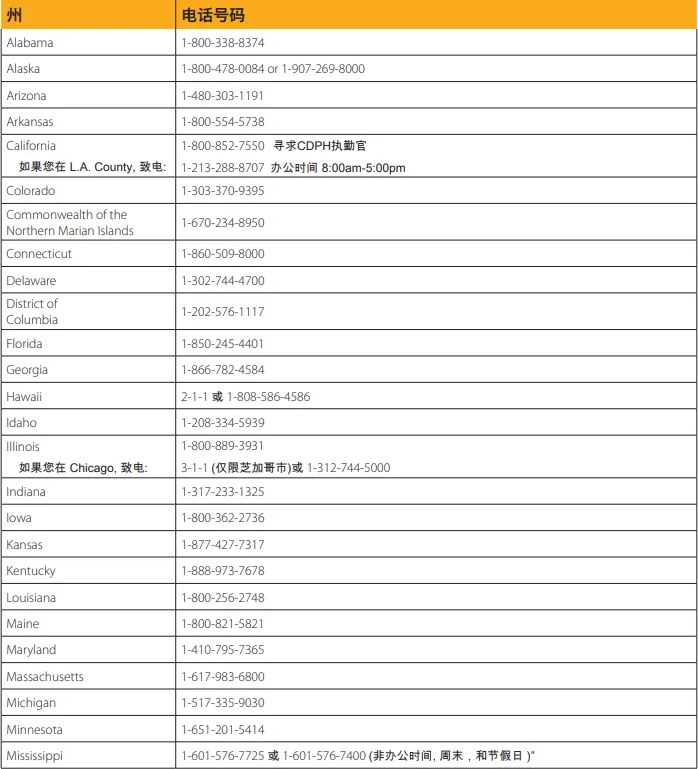
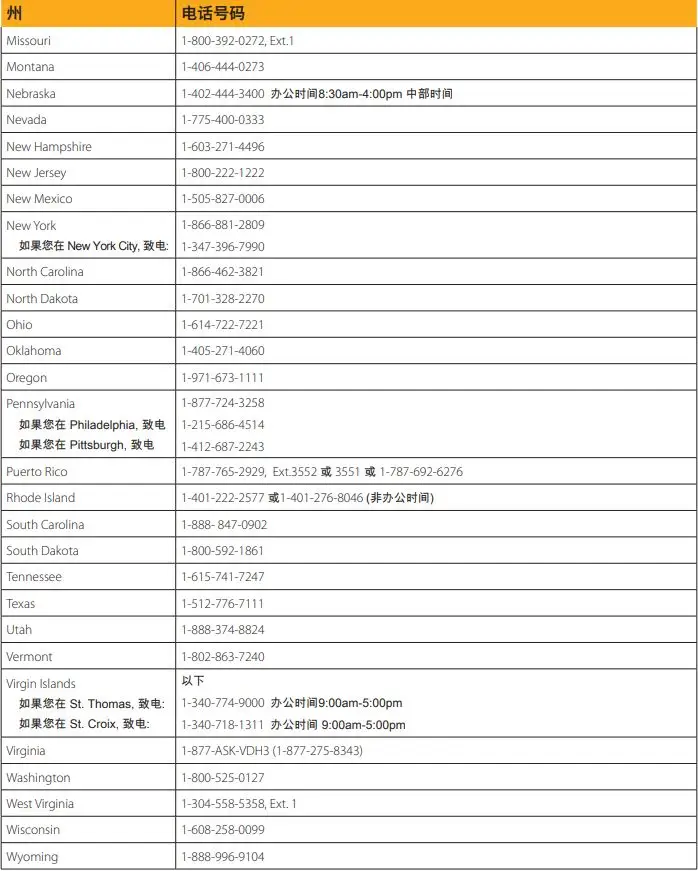
If you have difficulty seeking medical care, you can connect with doctors in China for online consultations.
Alibaba Health has announced the opening of an online medical consultation platform for overseas Chinese. You can consult domestic doctors for free between 8:30 AM and midnight Beijing time. The procedure: Open the Alipay app → search for the keyword “科学防疫” (Scientific Epidemic Prevention) on the homepage → click “科学防疫莫恐慌” (Don't Panic, Practice Scientific Prevention), enter the page for supporting overseas compatriots with medical consultations → click “全科医生免费问” (Free Consultation with General Doctor) to consult domestic doctors free of charge during the designated time.
If you encounter difficulties and need consular protection and assistance, or if you are diagnosed with the virus, please contact the embassy or consulate promptly:
Global Consular Protection and Services Emergency Hotline of the Ministry of Foreign Affairs: +86-10-12308, +86-10-59913991.
Consular protection and assistance phone numbers for Chinese embassies and consulates in the US:
Embassy in the US: +1-202-4952216
Consulate General in New York: +1-212-6953125
Consulate General in San Francisco: +1-415-2168525
Consulate General in Los Angeles: +1-213-8078052
Consulate General in Chicago: +1-312-7800170
Consulate General in Houston: +1-713-5219215
If you have more questions, you can click the consultation box in the lower right corner to ask. CheersYou(清柚教育) will answer them for you one by one.
We hope everyone will face the epidemic rationally. Together, we will get through this difficult time.