With the growing competitiveness of graduate students pursuing overseas education in recent years, more and more applicants are incorporating scholarship applications into their plans. We have also seen many students who have been admitted to prestigious universities and received scholarships, which is truly enviable.
Are many of you eager to apply for graduate scholarships? In fact, applying for scholarships is not difficult; as long as you meet certain application conditions, you can apply to the school.
Today, we will provide an overview of the most common types of U.S. graduate scholarships and how to apply for them.
What Are the Main Categories of Common Scholarships?
So, today let's discuss the major categories of U.S. graduate scholarships for your reference.
1. Fellowship (College Scholarship)
College fellowships generally offer the highest amount of funding but are also the most difficult to obtain. Typically, successful applicants receive a fellowship awarded by the specific college.
If you receive a full fellowship, in addition to tuition, fees, housing, insurance, and book expenses being covered, a certain amount of personal spending money is also provided.
For example, Columbia University's Women in Science Graduate Scholarship covers many tuition and fee expenses, essentially sponsoring students for various research projects.
Source: Columbia University official website
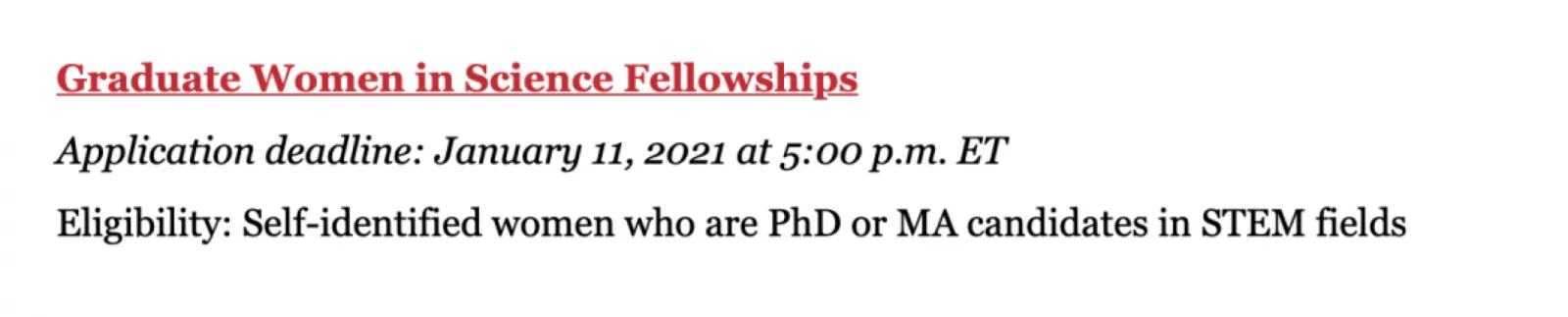
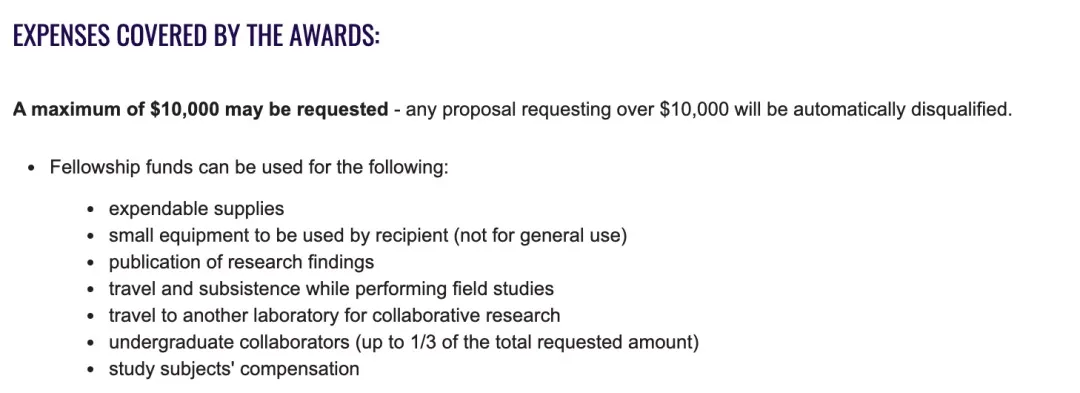
College fellowships are highly competitive and require exceptionally high TOEFL, GRE, or GMAT scores. In addition, a strong undergraduate GPA is also required, along with other materials such as recommendation letters and personal statements.
2. Scholarship
These scholarships are typically awarded based on the regulations of the school and funding bodies to students with outstanding academic performance. They can be a specified amount of money given as a reward to students who excel in their majors and demonstrate outstanding performance.
New York University's Dean's Graduate Scholarship is awarded to students in the form of a cash prize.
Source: NYU official website
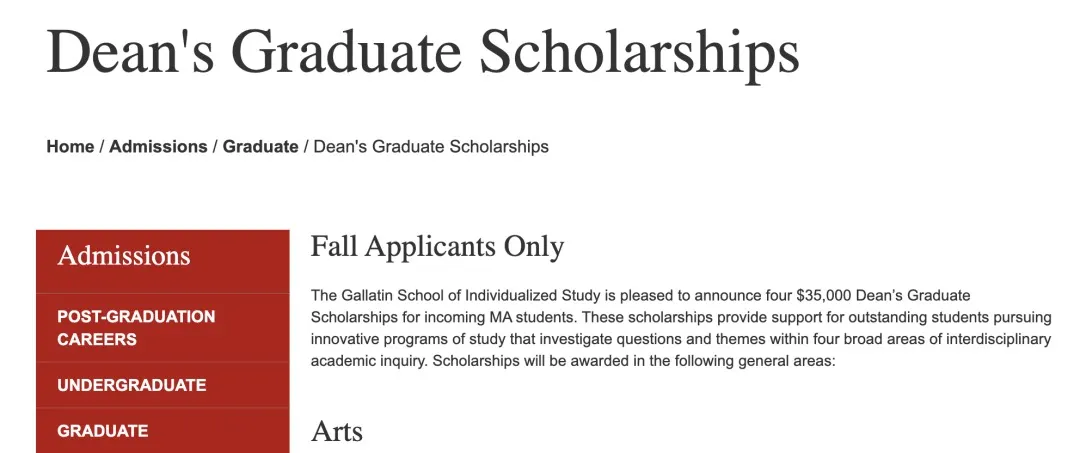
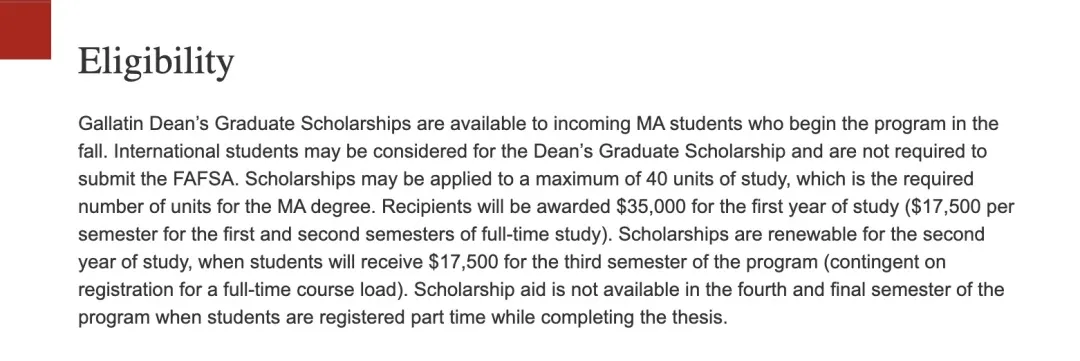
Scholarships can also take the form of full tuition or fee waivers, such as the common Tuition Scholarship or Tuition & Fees Scholarship.
Unlike fellowships, which have a single form, scholarships at the same university may come in several to over a dozen different types based on the field of study and different motivations. A student may be eligible to apply for more than one scholarship simultaneously.
For example, Johns Hopkins University's International Scholarship is specifically designated for international students to encourage outstanding academic performance.
Source: Columbia University official website


Another Johns Hopkins scholarship, the Hodson Gilliam Success Scholarship, is specifically established for minority groups, though not limited to them.
Generally, the probability of receiving a scholarship is much higher than receiving a college fellowship, but in terms of amount, scholarships usually award much less than fellowships.
3. Teaching Assistantship and Research Assistantship
Teaching assistantships, a special type of scholarship, are typically awarded to graduate and doctoral students. They provide a certain amount of cash or monthly stipends, and in most cases, tuition and fees are also waived.
However, recipients of such scholarships are required to work 15-20 hours per week as teaching assistants within the department or assisting professors with their research projects.
For example, Harvard University and MIT jointly offer research assistantships to support students engaged in scientific research with project funding and expenses.
Source: Harvard-MIT program official website
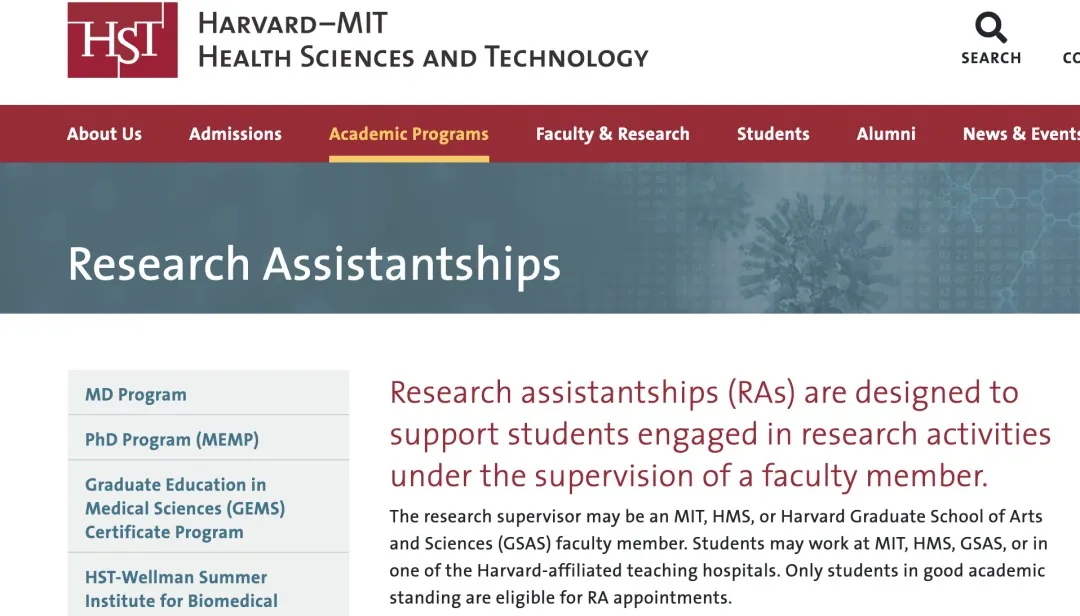
Applications for these scholarships generally do not set a minimum threshold for GRE or GMAT scores. As long as applicants provide complete application materials, meet other hard requirements, and pay attention to their personal statement when applying, they can secure the scholarship.
Teaching assistantships typically require strong English proficiency, especially spoken English, with varying requirements across schools. For pre-enrollment applications, a TOEFL score of no less than 100 and a speaking score above 23 are often required.
Teaching and research assistantships are generally provided by departments. Teaching assistantships require English proficiency as mentioned, while research assistantships require a certain level of research ability and are funded by professors through their own research projects.
Now that we have introduced the major categories of scholarships, I believe you have a good understanding of the types.
So, how should you apply for these scholarships?
Scholarship Application Requirements
Generally, applicants can check the eligibility requirements on the scholarship introduction page of the official website. Depending on your status, some scholarships are only open to specific grades; graduate students can usually only apply for scholarships under their graduate program.
Also, based on identity, international students may have limited scholarship options, but they can apply for scholarships that do not require U.S. citizenship. However, a significant number of scholarships have no citizenship restrictions and are open to international applicants.
There are also some scholarships designated for specific populations, such as those only for African Americans and other minority groups.
Therefore, before applying for a scholarship, it is important to check whether you meet the eligibility criteria.
Application Materials and Notes
Generally, scholarship application materials should be prepared before enrollment. The main materials include the scholarship application form and recommendation letters:
Source: Columbia University official website
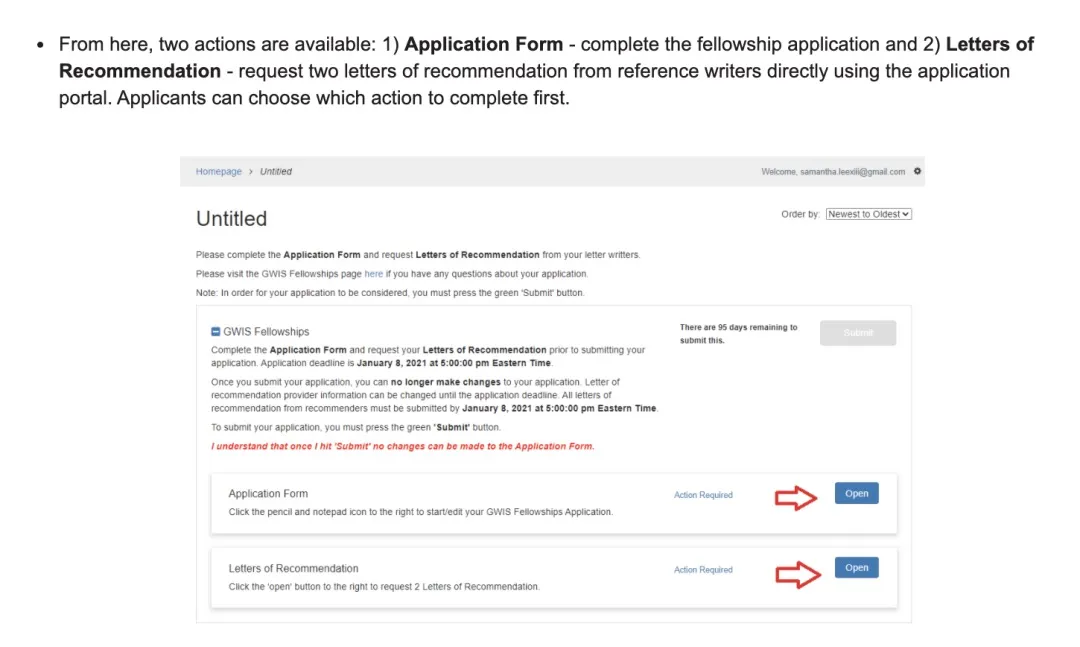
Now, let's go through the basic application documents required for scholarships one by one:
1. Application Form
Applicants need to download the admission application form, scholarship application form, and financial declaration form from the school's official website. They need to fill in basic personal information: name, address, nationality, date of birth, previous school attended, major, degree, recommender's name and contact address, various honors and certificates received during school, work experience. You can also list any published papers or books on the application form.
When filling out the form, try to include all honors and awards, and you may attach background descriptions of the awards along with copies of supporting documents.
The financial declaration form requires applicants to state their ability to pay for tuition and living expenses in the U.S. Specific contents include: applicant's name, address, nationality, date of birth, total expenses required for one year of study, etc. Applicants should fill it out based on their actual situation.
2. Recommendation Letters
Typically, applicants are required to provide 2-3 recommendation letters from professors. The letters should mention the applicant's academic performance, achievements, work ability, performance during school, and character traits. All recommendation letters must be written in English.
3. Resume
A resume for scholarship applications should include courses taken, awards received, work experience, published papers, language proficiency, research interests, etc. The resume should be tailored specifically for scholarship purposes, including all content that strengthens the application.
4. Personal Statement
Personal statements generally come in two types. One requires applicants to introduce their experiences, background, and future plans. The other requires them to focus on their academic or professional insights and elaborate in detail on their situation. In either case, the personal statement must clearly explain the reasons for applying for the scholarship, as well as the applicant's academic abilities and achievements.
4. Other Materials
Other required hard materials include TOEFL language scores, GRE/GMAT score reports, Chinese and English transcripts, and proof of undergraduate degree.
5. Special Circumstances This Year
Due to the pandemic this year, many scholarship application deadlines have been postponed. For example, Columbia University's college fellowships have been delayed. Therefore, students who want to apply for fellowships must pay attention to the application deadlines and apply within the specified time.
Source: Columbia GSAS official website
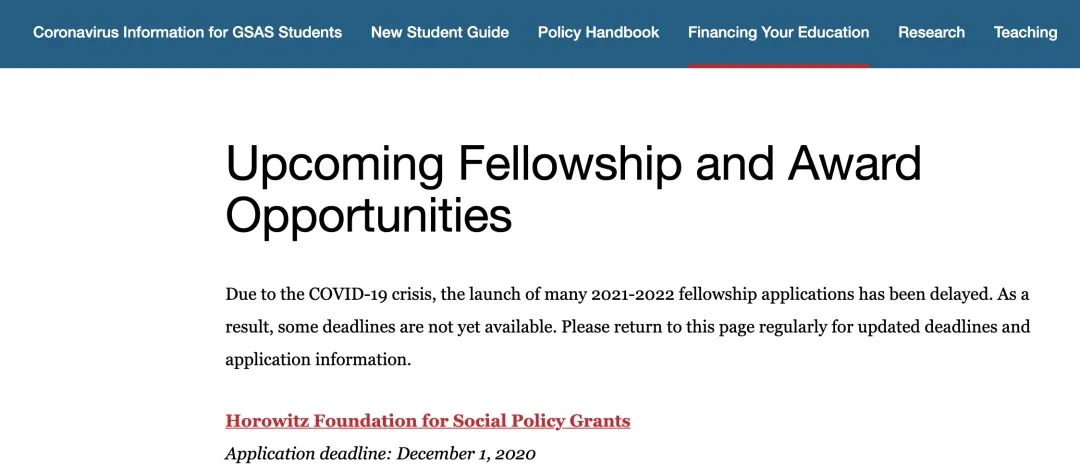
Additionally, some program scholarships do not require separate application materials; after the online application review, they will include the scholarship offer with the admission letter. Other programs require you to check a box in the online application system in advance to indicate your intention to apply.
Different universities and even different programs may have different scholarship application processes. We recommend carefully reading the scholarship terms and conditions for each program.
Finally, we wish all applicants the best of luck in securing both offers from their dream schools and generous scholarships!