
According to the latest "Open Doors Report on International Educational Exchange," the region with the largest number of international students in the United States is California.
As the educational institution with the largest number of Chinese students, the University of California system also receives the most applications nationwide, breaking records every year.
However, the UC system is actually going to reduce the number of slots for international students!
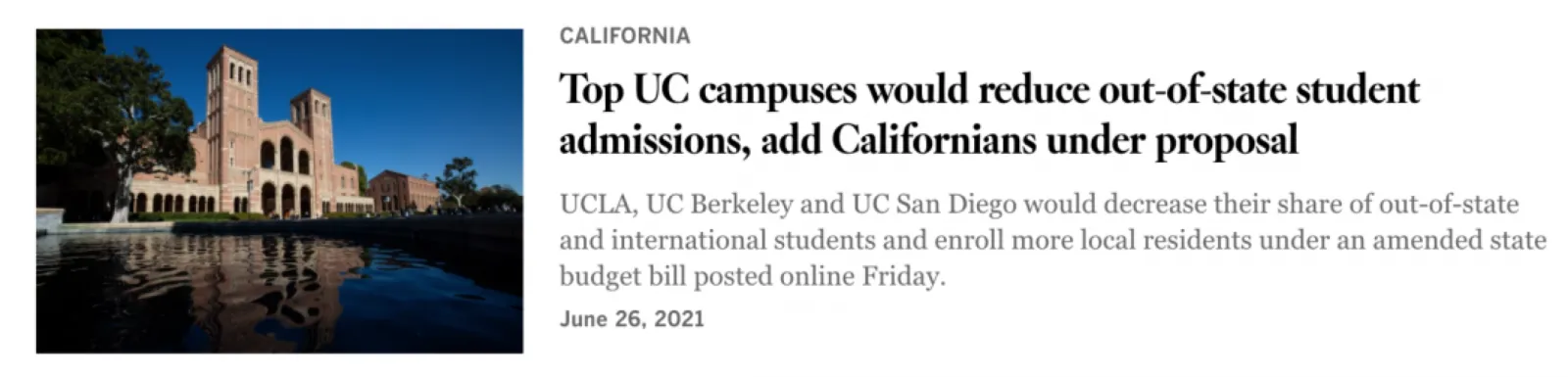
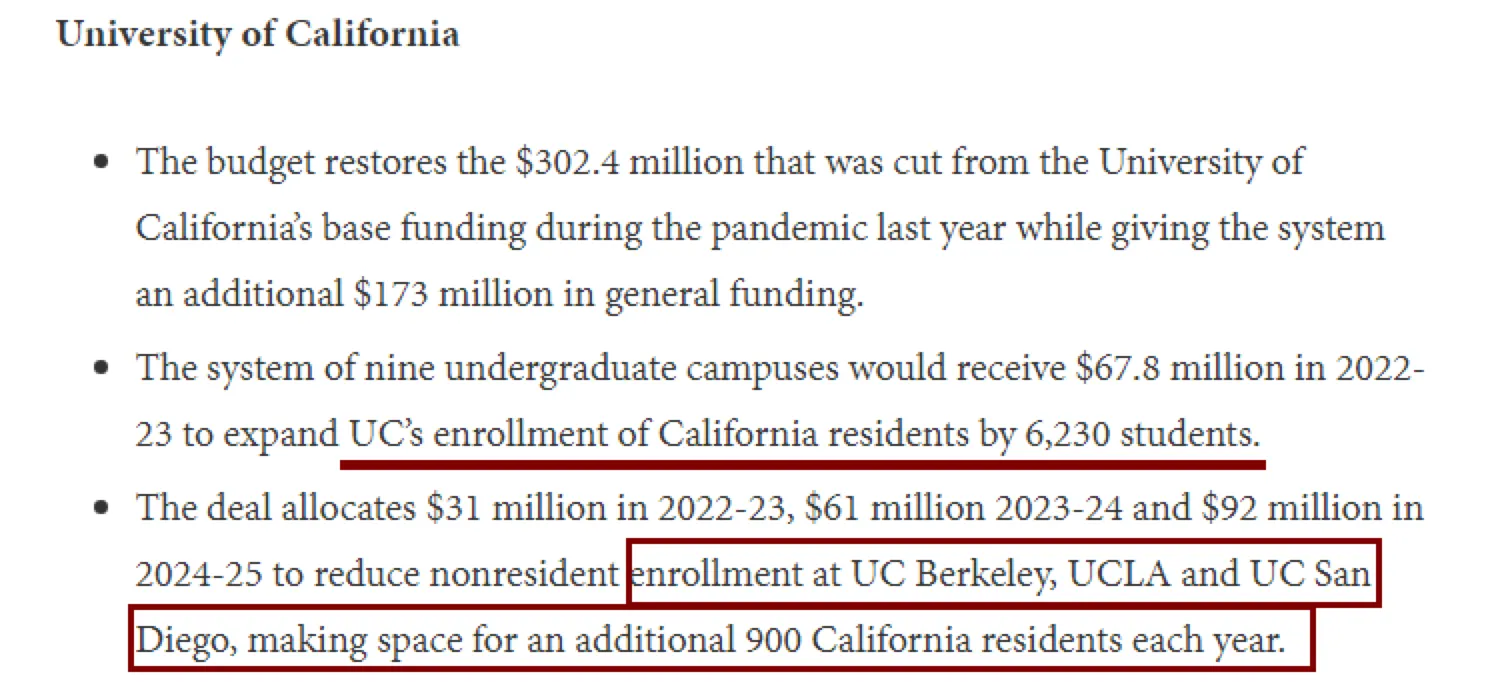
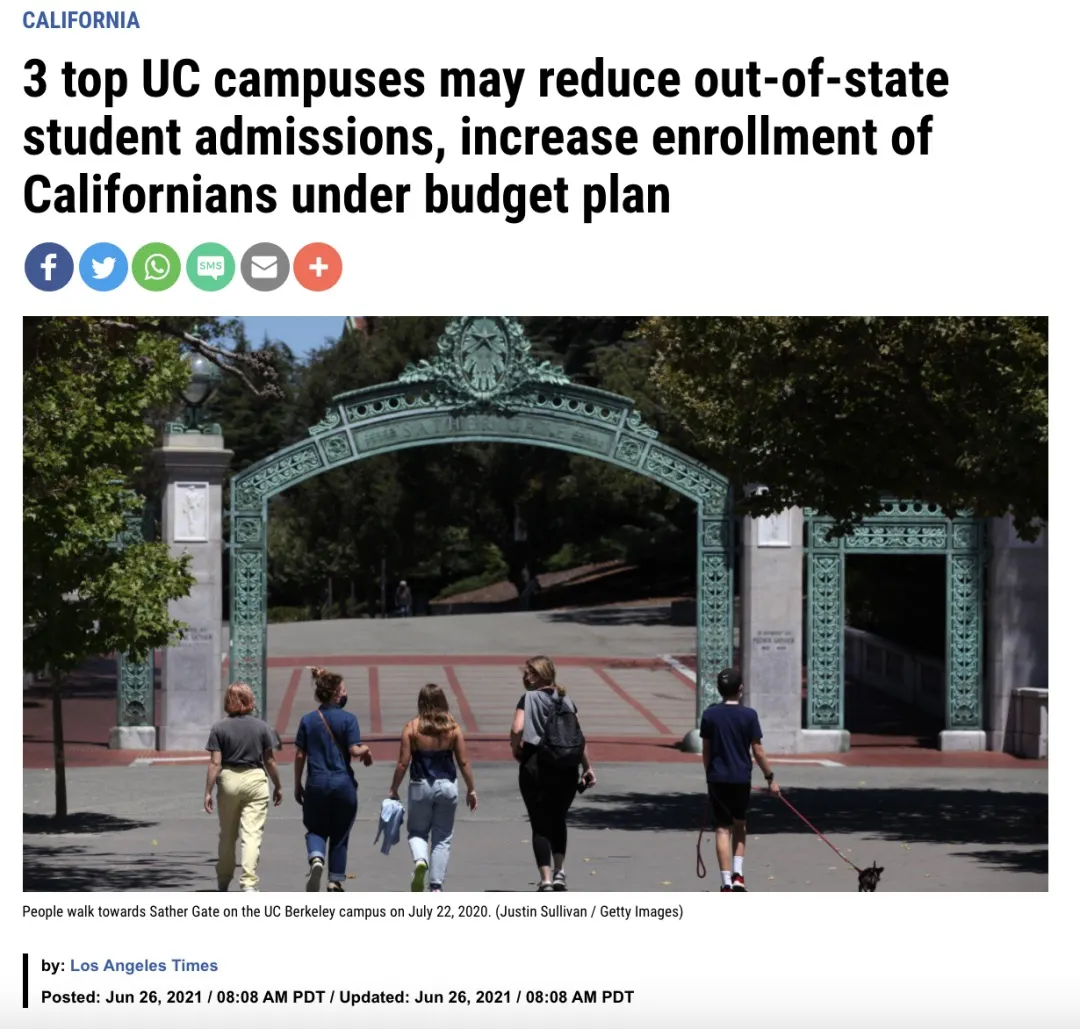
According to the proposed latest budget revision, over a five-year period starting in fall 2022, the California state government plans to reduce the proportion of nonresident undergraduate students at the three most popular UC campuses (UC Berkeley, UCLA, UCSD) from over 22% to 18%.
Previously, nearly 40% of international students chose California as their top destination, and after the announcement of the revision, this proportion may not necessarily decline.
In any case, the difficulty of applying to the UC system is bound to double, and international students will face more intense competition.
Why reduce the number of international students?
In fact, many students have heard about UC's enrollment reduction plan. In May this year, the California Senate unveiled a proposal: starting in 2022, over the next ten years, reduce the proportion of out-of-state freshmen from the current UC system average of 19% to 10%, and compensate the University of California for the lost revenue from out-of-state high tuition.
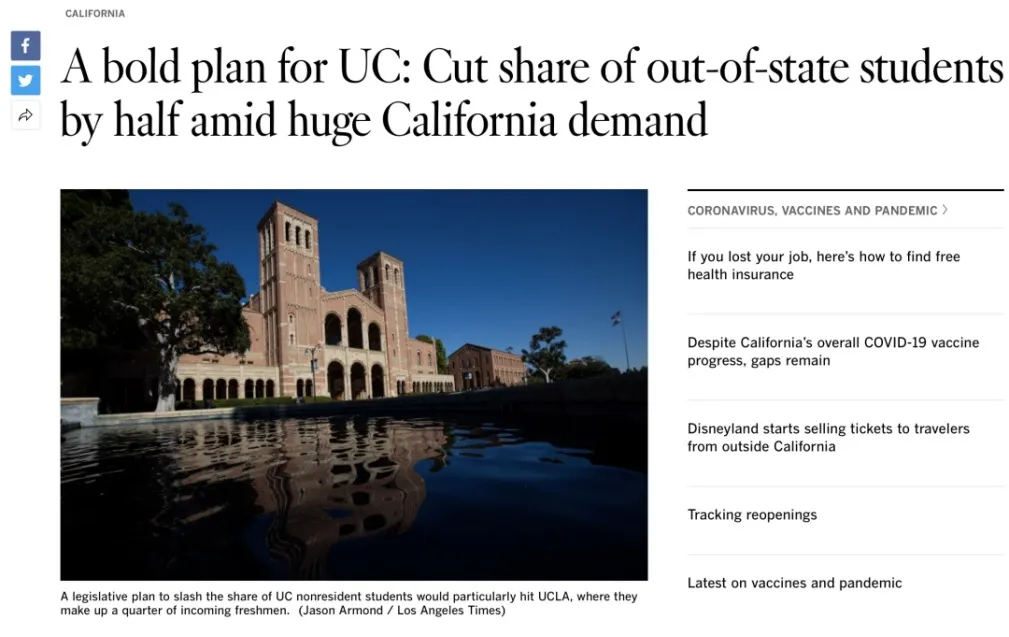
So why is California, as the most popular region for international students, making such a big move to reduce the proportion of out-of-state students?
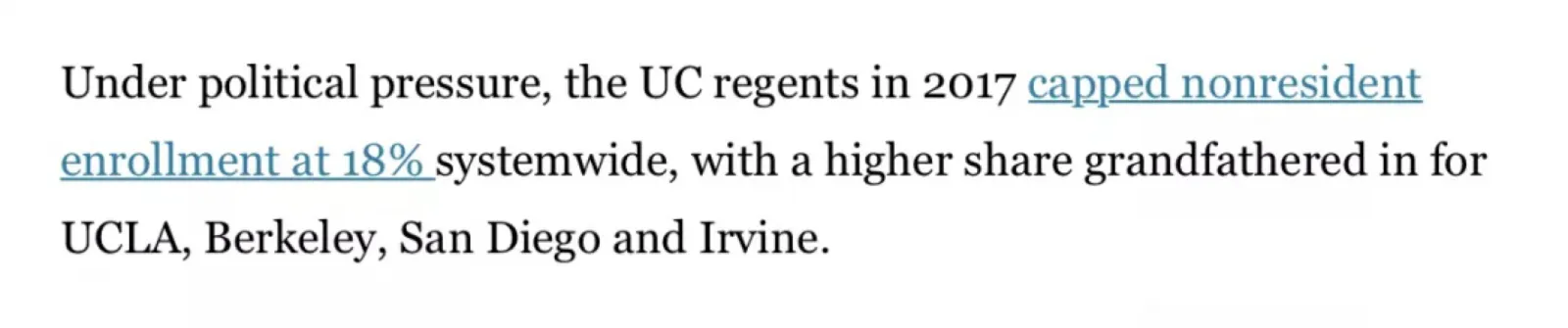
In fact, as early as 2017, the California government had already asked UC to take action. Under pressure, UC at that time capped the number of out-of-state students at 18%.
The main reason for urging UC to reduce the proportion of out-of-state students is that California legislators constantly receive a large number of complaints about the reduced admission opportunities for in-state students at UC:
"Although it is a public institution in California, educational resources are only enjoyed by a few."
Such complaints are not unwarranted.
Long-standing grievances among California in-state applicants
Since the 2008 global financial crisis, the UC system has partially made up for its financial shortfall by expanding international student enrollment.
This has led to the proportion of non-resident students rapidly expanding from 5% to the current 19%. Particularly at UCLA, UC Berkeley, and UCSD campuses, the share of out-of-state and international undergraduate students has exceeded 25%.
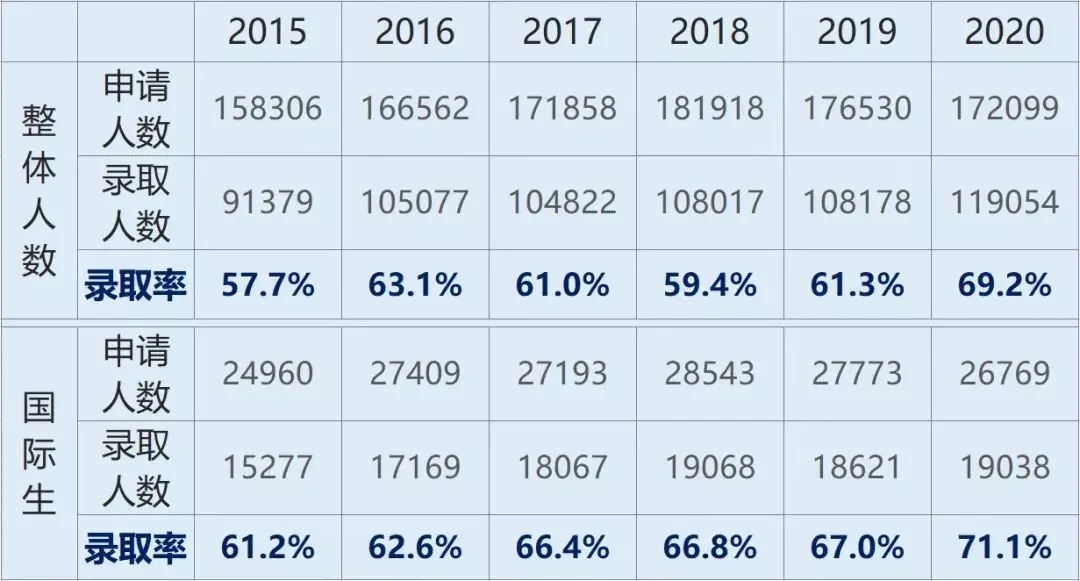
Take UCLA's 2020 application cycle data as an example: the international student admission rate was 9.3%, the out-of-state resident admission rate was 20.7%, and the California resident admission rate was 13.6%.
At UCSD, another California school with slightly lower application volume, in the 2020 application cycle, the international student admission rate was 36%, the out-of-state resident admission rate was 60%, while the California resident admission rate was only 34%.
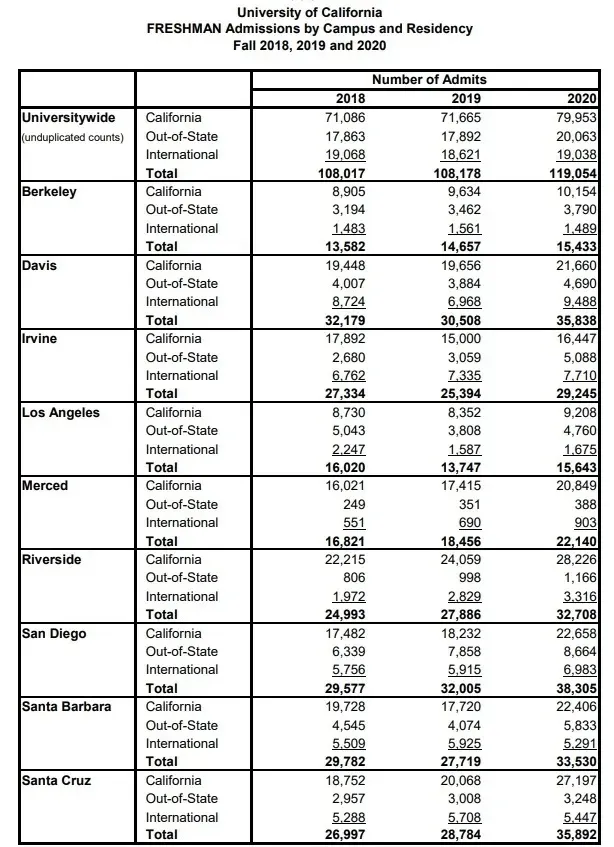
With California residents bearing the nation's highest tax rate (13.3%), UC, as a local public university system, not only fails to have a far higher admission rate for in-state residents, but sometimes falls behind that of international and out-of-state students, leaving many Californians heartbroken, frustrated, and angry.
To appease public outrage, the preliminary proposal mentioned above was released by the state Senate in May: over the next decade, cut the proportion of out-of-state freshmen by half, and the California state government would provide $1.3 billion annually in financial support to the UC system. For each out-of-state or international student not enrolled and each additional spot opened for in-state students, the schools would receive a reward of $30,000 per year.

Collective opposition from UC
According to the earlier plan to cut overall UC enrollment by half, the out-of-state student proportions at UCLA, UC Berkeley, UCSD, UCD, UCI, and UCSB would all be reduced. It can be said that once this proposal passes, the difficulty for out-of-state students to enter the UC system will double.
As soon as the initial proposal was announced, it faced opposition from many university officials.

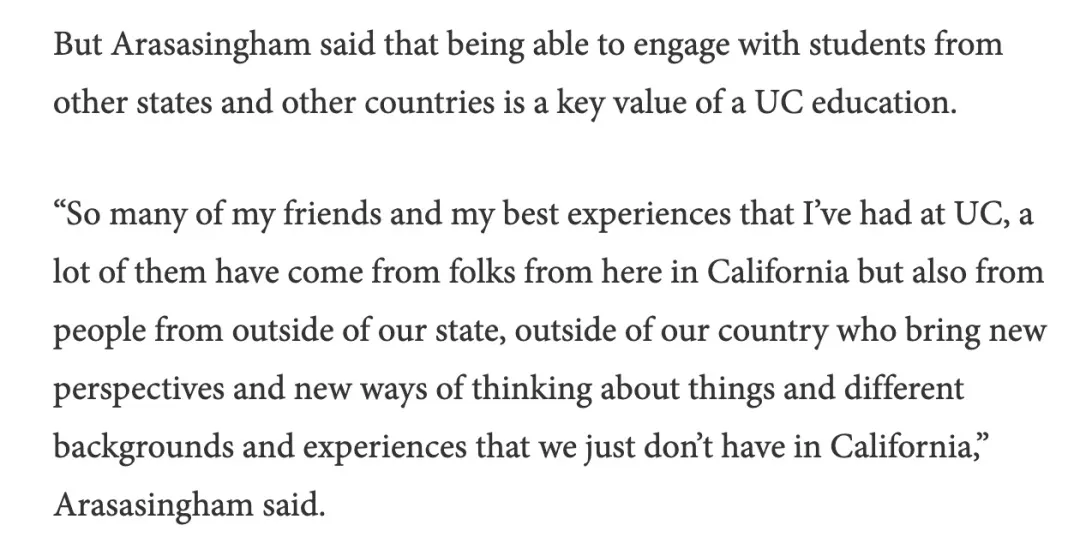
UC staff were among the first to oppose the plan to reduce to 10% overall: non-resident students provide a rich university environment for all students and pay more than $1 billion in supplemental tuition each year to fill budget gaps.
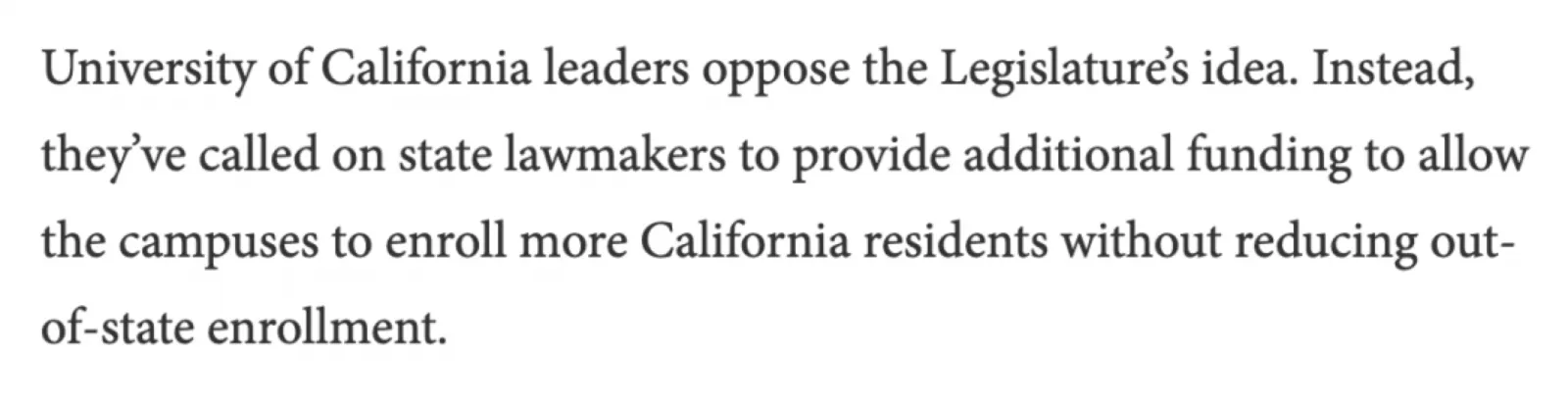
UC Berkeley Chancellor Carol Christ said: "The state subsidy for each California student does not cover the cost of education, and reducing the number of out-of-state students will inevitably create a budget gap that needs to be filled. More importantly, out-of-state and international students make significant contributions to the overall diversity of the student body. Moreover, many students still choose to stay and work in California after graduation."
After a month of heated debate, the "enrollment reduction policy" was considerably softened, ultimately settling on the latest budget revision mentioned at the beginning of the article: over a five-year period beginning in fall 2022, the proportion of non-California resident undergraduate students at UCB, UCLA, and UCSD will be reduced from over 22% to 18%.
What does this mean for international students?
Under this latest proposal, over the next five years, a total of 4,500 enrollment slots will be freed up for in-state students across the three main UC campuses, averaging 900 per year, including both out-of-state and international students.

Taking transfer students into account, we estimate that the number of Chinese freshmen enrolled at UCSD in the class of 2020 was close to 900, while at the more selective UCB and UCLA, approximately 250 and 350 freshmen enrolled, respectively.
Based on the proportion of Chinese freshmen among non-resident freshmen, once the proposal is officially passed, for the Fall 2022 application cycle, the number of Chinese students admitted to UCB, UCLA, and UCSD will be reduced by at least 50, 60, and 150 spots, respectively.
This means that over 260 Chinese international students may be forced to be diverted to other universities.
Enrollment cuts are a done deal; it's time to boost your competitiveness
As a public university, many decisions made by UC are influenced by the local political landscape. As international students, you must stay adaptable during the application season!
Plan early, prepare early, so that you can remain unbeatable.
For students who have California as their top study-abroad destination, the primary task is still to actively strengthen your overall profile to stand out from the intense competition.
Another application season is approaching. It is recommended that you quickly understand your strengths, improve your weaknesses, and make thorough preparations for your applications.
Even in such a grim admission environment, don't be intimidated by the difficulties. What's more important is to maintain a high GPA, achieve high standardized test scores, enrich your experiences, and strive for the greatest chance of getting into your dream university.
Students who prepare diligently tend to have good luck. Next year's list of lucky ones who successfully enroll at UC might just include your name.