The fall semester at U.S. universities is about to start offline, and recently there has been a mini-surge in travel for studying abroad.
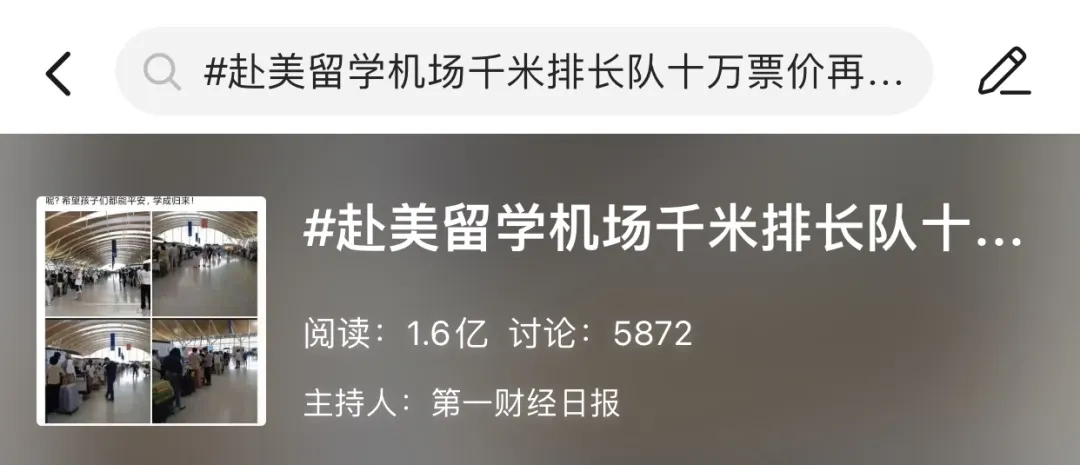
Recently, netizens shared a photo on Weibo showing Chinese students lining up for check-in at Shanghai Pudong Airport, with the queue stretching for what looked like a kilometer. The topic quickly trended on Weibo and has already garnered 160 million views.
While navigating the departure challenges, international students should also pay close attention to the latest entry policies and requirements upon arrival.
Due to the pandemic, customs checks on luggage have become increasingly strict, so extra caution is needed before traveling. Drawing on real-life experiences from fellow students, we’ve compiled a guide on what to bring and what to leave out.
We hope this detailed packing list helps students who are still struggling with their suitcases!
Top Regretted Items in Your Suitcase
Food / Cooked Dishes / Fruits
Regret Rating: ★★★★★ (Absolutely forbidden)
Food and cooked dishes are among the most commonly mentioned prohibited items. Before departure, family members often stuff your bags with all kinds of eats, worried you’ll miss home flavors—only for it to turn into a regretted decision…
Student L: I’m from Northeast China, and my family thought American food wouldn’t suit my taste at all. Worried I wouldn’t get authentic Northeastern cuisine, my sister packed over twenty Harbin red sausages into my luggage—half my suitcase was full of them! During customs inspection, it was super embarrassing. I could only leave those sausages with the customs officers.

Student D: I’m from Chongqing and I love spicy food—can’t live without it! Before leaving, my family prepared lots of packaged spicy rabbit heads, spicy duck necks, and duck collarbones for me. At customs, they simply couldn’t get through; everything was confiscated. It broke my heart! I almost wanted to tell the officers to eat them for me! (Customs: ? You trying to burn my mouth?)

Students entering the U.S. should definitely avoid bringing meat and fresh produce items.
Meat, dairy, eggs, poultry, and products made from them are not allowed, whether raw or cooked. Fresh fruits, vegetables, plants, and seeds are also prohibited from entry.
In reality, Chinese supermarkets in the U.S. or online stores have everything you could want, so there’s absolutely no need to risk bringing food from home through customs.
Prohibited Medications
Regret Rating: ★★★★★ (Absolutely forbidden)
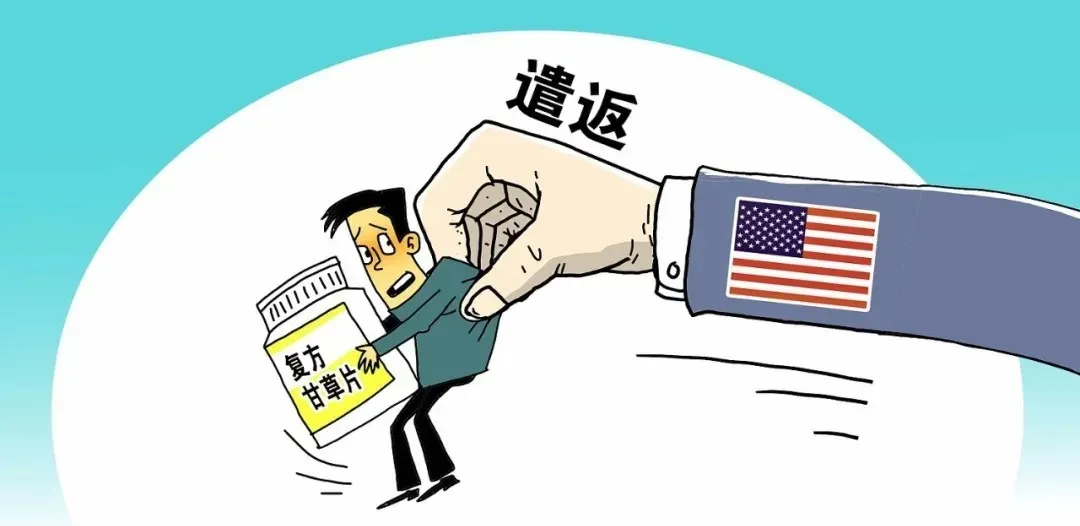
You’ve likely heard the story about someone bringing 16 bottles of licorice tablets into the U.S. and getting deported. What’s considered a common remedy in China could land you in prison in the U.S.
Be especially careful with traditional Chinese medicine or patent medicines containing banned substances—these must never be brought in:
1. Ephedrine-containing drugs: Rhinitis tablets, Chai Lian oral liquid, Da Huo Luo pills, Zhuifeng ointment, Compound Chuanbei cough syrup, acute bronchitis syrup
2. Strychnine-containing drugs: Die Da Wan Hua oil, rheumatism & arthritis tablets, Bone Spur capsules, Arthritis ointment, Jing Yao Kang capsules, Weierkang tablets, Yao Tong Ning capsules
3. Morphine-containing drugs: Chang Wei Ning, Ke Chuan Ning, Ke Su Ting, Ke Ke, Xiao Er Zhi Xie Ling
4. Traditional Chinese medicine or patent medicines containing animal or animal organ ingredients
Electrical Appliances
Regret Rating: ★★★★
Many students bring rice cookers, hair dryers, and other small appliances, but the voltage in the U.S. is different from China, and without a voltage converter these items are useless.
Student M: As a ramen enthusiast, I bought a small electric ramen cooker on Taobao before leaving. I imagined late-night sessions cooking a deluxe instant noodle with two slices of luncheon meat and an egg. But after arriving, I realized the voltage incompatibility made it unusable—and similar noodle cookers on Amazon cost just over $20. I really jumped the gun!
When it comes to electronics, there’s no shortage in the U.S. A quick search on Amazon reveals all kinds of small appliances like rice cookers and noodle cookers; you definitely don’t need to lug them all the way from home.
Comforters / Bedding
Regret Rating: ★★★
Comforters and bedding take up a huge amount of suitcase space, and even if you bring them, the sizes might not match American beds. Plus, you can easily buy them here!
Student Y: Growing up in the south, I was terrified of New York winters before heading to NYU. My parents prepared a thick cotton comforter and a full set of bedding, which nearly filled an entire suitcase. But when winter hit, the heating in school buildings was like a blazing summer sun; I was fine in a T-shirt and even felt like eating ice cream to cool down!
Unless you’re extremely attached to your own bedding, we strongly advise against bringing comforters and bed linens!

Essential Items to Pack in Your Suitcase
Money, Credit Cards, Phone, Passport, I-20
Recommendation Rating: ★★★★★ (Must-have)
These are absolutely the most important things for entering the U.S.! Veteran international students say that as long as you have money, you don’t really need to bring anything else—because you can buy almost everything you can think of.
If some insist that certain items can only be bought in China, well, the shipping forwarding industry is also very well-developed; you can pool orders on Taobao and have them forwarded—quite convenient!
Note: Students carrying cash exceeding $10,000 must remember to declare it.

Spare Glasses
Recommendation Rating: ★★★
A spare pair of glasses is an absolute must for students who wear them! Getting glasses in the U.S. is not only more expensive than in China but also far more complicated.
Not every optical shop offers eye exams; you need to go to specific locations, and after the exam, there’s a long wait for the glasses to be made. Buying glasses online usually also requires a prescription.
If your glasses break and you have no spare, you could be figuratively blind for quite a while.

Common Medicines
Recommendation Rating: ★★★
Getting medication abroad (especially prescription drugs) can be a very complicated process. For a common cold or fever, doctors might just advise you to take more vitamins, and it can easily cost over a hundred dollars.
.jpg?x-oss-process=style/opt-webp)
That’s why it’s really necessary to pack some common medications. We’ve listed a few here:
1. Erythromycin ointment: Whether it’s acne anywhere or inflammation, applying erythromycin ointment is super effective—it’s a lifesaver!
2. Essential antibiotics (such as cephalosporins, amoxicillin, etc.): Take when a cold becomes severe
3. Gastrointestinal medicine: Useful when adjustment to the new environment causes stomach discomfort
4. Digestive aids: For poor digestion, these can help promote digestion
Students who bring medications must remember to keep the instructions! If your luggage is inspected, having the instructions makes it much easier to explain.
Other Considerations
Which U.S. airports have a nicer entry experience?
.jpg?x-oss-process=style/opt-webp)
We summarized the entry experiences of fellow students at various airports:
San Francisco (SFO) is generally strict;
New York (JFK, EWR) and Los Angeles (LAX) customs can be hit-or-miss, somewhat luck-based;
Chicago, Dallas, Las Vegas, and Hawaii tend to be friendlier.
Although most customs officers are friendly, we still advise everyone to obey the law and not take chances. Prohibited items should never be brought, no exceptions!
What if your luggage gets inspected at customs?
First of all, whether you have prohibited items or not, always fill out the customs declaration form honestly—don’t conceal anything.
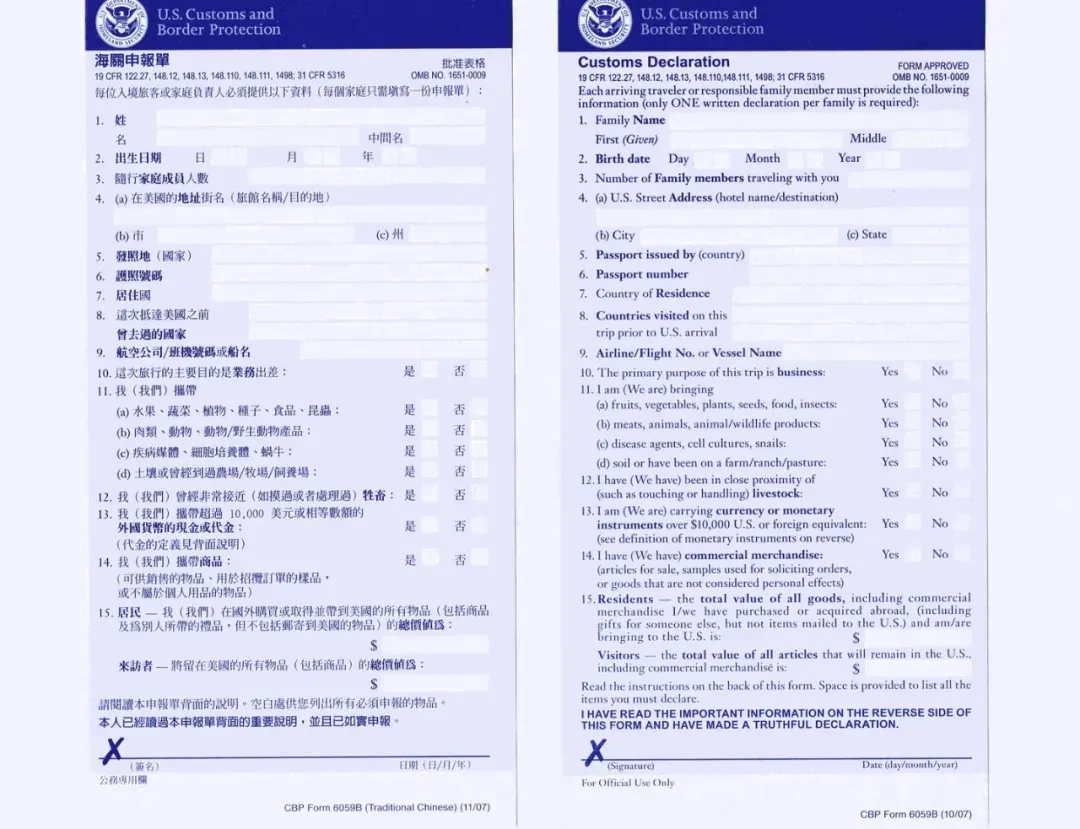
If asked to open your luggage for inspection, answer whatever the customs officer asks truthfully.
Generally, customs officers are reasonable and won’t deliberately make things difficult. If you unknowingly brought some prohibited items and explain honestly, at most they’ll confiscate them—no fines or jail time.
If you lie, deliberately conceal, or argue without cause, that’s when trouble can really start.
Standing in long lines to go abroad for studies isn’t easy, so don’t slip up at immigration.
We wish all students heading to the U.S. a safe journey, smooth school re-entry, and a fresh start for the new semester!