Since the shocking nationwide “illegal vaccine” incident, society and the government have begun to pay more attention to biomedical sciences, and biomedical engineering has become a rising star in study-abroad applications.
Biomedical Engineering (BME) may, at first glance, raise doubts: is it about biology, medicine, or engineering?
Today, CheersYou(清柚教育) will provide an in-depth analysis of this seemingly “niche” but promising field.
Program Introduction
Biomedical Engineering is a young, interdisciplinary field closely related to bioengineering.
Its main feature is the application of engineering and applied science principles to solve scientific problems in biology and medicine, thoroughly studying life systems and their behaviors, and developing related biomedical systems and devices, ultimately helping patients receive better care and improving the quality of life for healthy individuals.
BME curricula typically involve biology, medicine, and engineering. Therefore, applicants with a combined biology and engineering undergraduate background are recommended; those with a pure biology background should ideally have taken some computer or engineering courses.
Research Directions and Curriculum
Biomedical Engineering includes six major subfields: neural engineering, medical devices, biomechanics, biomaterials, imaging and signal processing, and tissue/cellular engineering.
Curricula vary by institution and specialization, but here are some foundational courses:
- Biomaterials
- Tissue Engineering
- Medical Devices
- Medical Imaging
- Genetic Engineering
- Computational Modeling
In addition to BME undergraduates, applicants from materials science, medicine, mechanics, and other backgrounds are also well-suited for this field.
Recommended Institutions
Johns Hopkins University
Johns Hopkins is renowned for its medical programs, and all bio-related fields enjoy an outstanding reputation in the US, with its BME program ranking first in the nation.
It offers four types of graduate programs:
Master's of Science and Engineering program:
This master's program in the Department of Biomedical Engineering is designed for students pursuing academic or medical careers. It requires two years to complete, including 24 credit hours of coursework and a thesis.
Master of Science in Bioengineering Innovation & Design:
This is a non-research, one-year engineering master’s program focusing on biomedical device design and technology commercialization.
PhD:
Typically takes 4-7 years, with research areas including cell and tissue engineering, computational biology, medical imaging, molecular neuro-cardiovascular systems, etc.
MD PhD:
Requires at least 7 years and is more rigorous than the PhD alone, but offers distinct advantages for those interested in clinical research within hospital systems and healthcare.
Columbia University
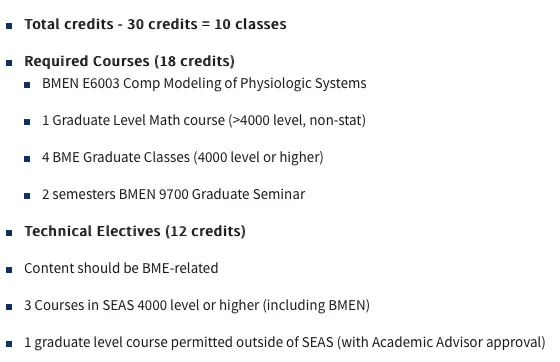
Columbia University’s BME graduate program admits MS, PhD, and D.Eng students and requires GRE scores, though no minimum cutoffs are specified.
MS: Applicants need a math and science background. The flexible curriculum enriches the experience for those interested in BME and builds an academic foundation for advanced study.
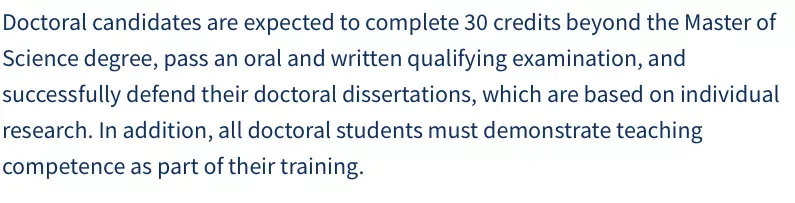
PhD: Applicants must hold a bachelor’s in engineering or another science discipline and submit GRE scores. PhD students complete 30 more credits than MS students, must pass oral and written qualifying exams, successfully conduct independent research, and defend their dissertation.
Application deadlines:
Spring: early October
Fall: mid-February

University of Pennsylvania
As an Ivy League veteran, Penn boasts many prestigious programs, with Bioengineering as a flagship major ranked 5th in the nation.
Admission requirements:
GPA: 3.8+ GRE: 326+
TOEFL: 100+; waived for students who have studied in the US for three or more years


Application deadlines:
Master’s: February 1

PhD: December 15
.png?x-oss-process=style/opt-webp)
University of Wisconsin-Madison
UW-Madison aims not only to train engineers who can collaborate with biological scientists but also to cultivate those who can design engineering solutions to test biological hypotheses.
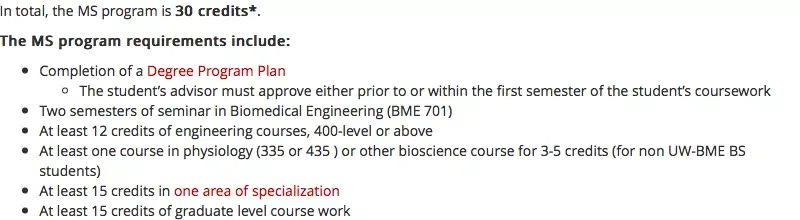
Master’s students need 30 credits, covering core courses such as:
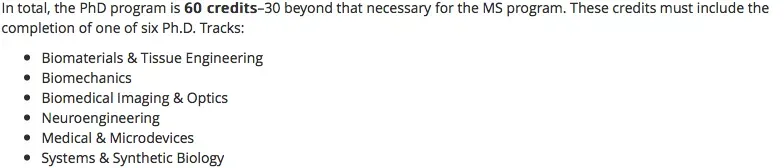
PhD students require 60 credits, with core courses including:
Admission requirements:
GPA: 3.5
GRE: No stated minimum, but scores must be submitted by November 1.
Application deadlines:
Spring: October 1
Fall/Summer: December 1

University of Southern California
USC has a long-standing tradition of advancing biomedical engineering through the development and application of novel concepts. Since its founding, the school has been committed to cutting-edge research across various domains.
USC’s Department of Biomedical Engineering offers four master’s programs:
M.S. Biomedical Engineering
M.S. Biomedical Engineering (Neuroengineering)
M.S. Biomedical Engineering (Medical Imaging and Imaging Informatics)
M.S. Medical Device & Diagnostic Engineering
Doctoral program:
- Ph.D. Biomedical Engineering
Application deadlines:
Master’s: January 15
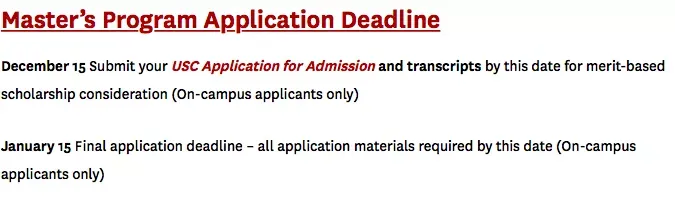
PhD: December 15

Career Prospects
BME graduates can pursue a wide range of careers, including biologist, chemist, healthcare administrator, researcher, surgeon, computer hardware engineer, and more.
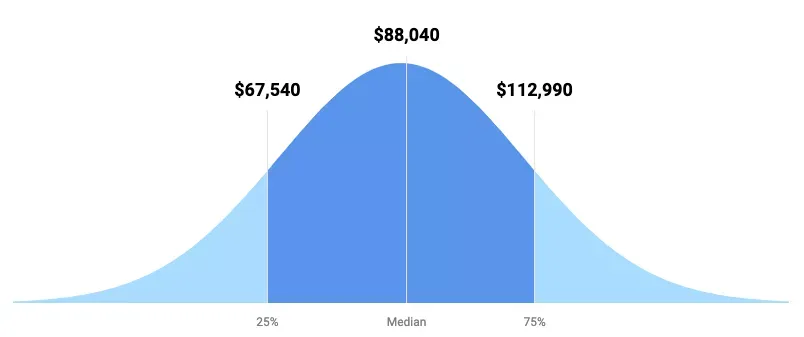
According to U.S. News, the median salary for biomedical engineers in 2017 was $88,040, with top earners making over $110,000 annually.
In 2017, the average annual wage for biomedical engineers was $92,970, higher than that of mechanical engineers, medical scientists, and forensic science technicians.
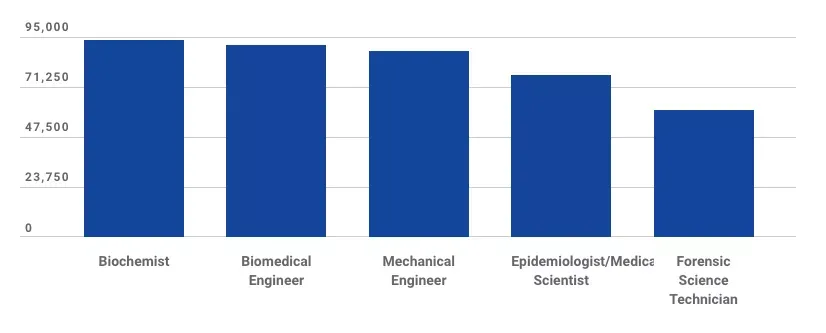
In conclusion, biomedical engineering is a field with promising financial prospects.
More analyses of popular US study-abroad majors:
Comprehensive Guide to IEOR Programs in the US
Data Science Experts from Facebook and Amazon Answer Your Questions about Data Science Applications!
Liberal Arts to STEM: Yes, You Can! Latest Guide to STEM Majors in 2019