
As the application season enters its final sprint, you should be preparing all materials and getting ready to submit applications; or perhaps you've already submitted and are waiting for offers.
But some students are still stuck on recommendation letters at this point.
Throughout the application process, you've carefully selected schools, actively prepared for the GRE/GMAT, balanced academics to maintain a high GPA, gained valuable internship experience, and even nearly finished your personal statement... Yet, you still can't get a recommendation letter from a professor.
Looking back, why is that?
Your Pool of Professor Candidates Is Much Smaller Than You Think
When it comes to academic recommendation letters, students naturally start by looking at their transcripts.
They screen courses where they earned an A, then upper-level major courses, consider how many classes taken with the same professor, then look at the professor's title and reputation, and think about whether they've had any interactions with the professor...
For those with lower grades, they have to settle, possibly including courses with A- or B+.
As you add more conditions, you'll find fewer options remaining. At first there might be a dozen, then down to a few, and finally perhaps even fewer than you can count on one hand.

Choosing a professor as a recommender should be a process of lowering expectations and gradually screening based on criteria. But some students' blind confidence and thoughtless considerations lead to a misjudgment of the candidate pool from the start, planting the seeds for later rejections.
A Variety of Strange Rejection Reasons
Before sending recommendation request emails, everyone might have anticipated being rejected.
But you might not have imagined that professors could come up with so many bizarre ways to say no.
According to CheersYou(清柚教育)'s incomplete count, professors have rejected students in these ways:
1. I only write for students who have taken at least two of my classes and earned an A or A+.
2. I only write for students in my lab.
3. I'm too busy to write any more.
4. I only write a certain number of recommendation letters each year, and my quota is full.
5. I might not be able to write letters for that many schools.
6. I think my course doesn't align with your application direction; you should find a professor in that field.
7. I can write it, but it won't be a strong letter. I suggest you find another professor.
8. Template rejection.
9. Extremely slow or no email response...
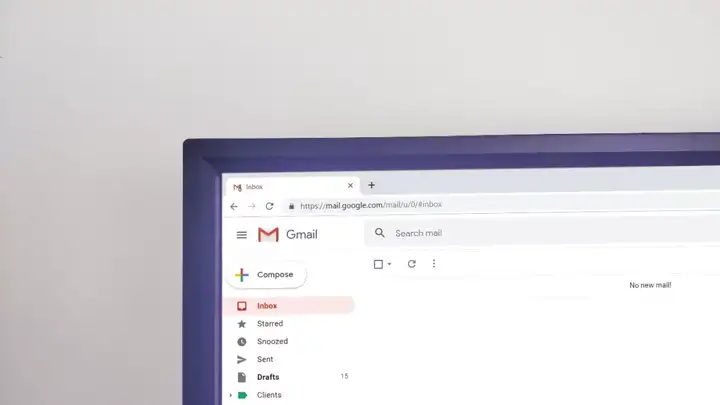
After receiving a continuous stream of various rejection emails, students' hearts are already shattered.
For reasons like the first three, there's basically no room for compromise. As for the later replies, even writing long, persuasive emails and trying to talk in person might honestly be futile.
Although the professors are being polite, they are essentially saying, 'Please don't bother me anymore.' Winning back their recommendation letters would take far more time and energy than you think.
Professor: It's Not What You Think, It's What I Think!
Even if you've taken multiple classes with a professor, earned A's, and visited their office many times, you still can't assume everything is set and all that's left is sending an email.
Countless students have had this painful experience:
They confidently send a sincere email to the professor, only to receive an immediate reply: 'I don't think I know you well enough to write a letter'—a rejection that essentially says, 'We're not close enough.'

What's going on? Actually, it's not hard to understand if you think about it.
For you, in one semester and one course, you face one professor. But for the professor, they might teach two or three classes each semester, facing hundreds of different faces. The number of students who earn an A in their class alone can be nearly a hundred.
A year or two later, they've taught nearly a thousand students, not to mention factors like 'Asian faces are hard to distinguish,' 'international student names are hard to remember,' and 'getting older makes things easy to forget'...
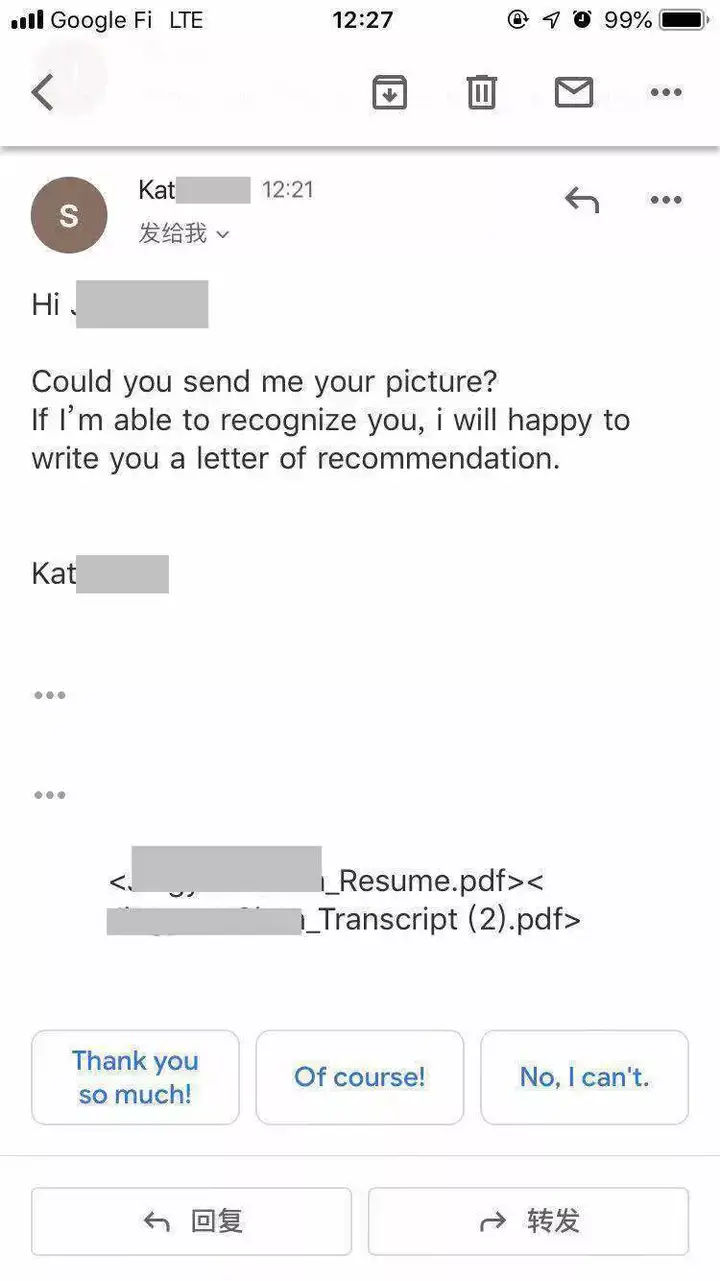
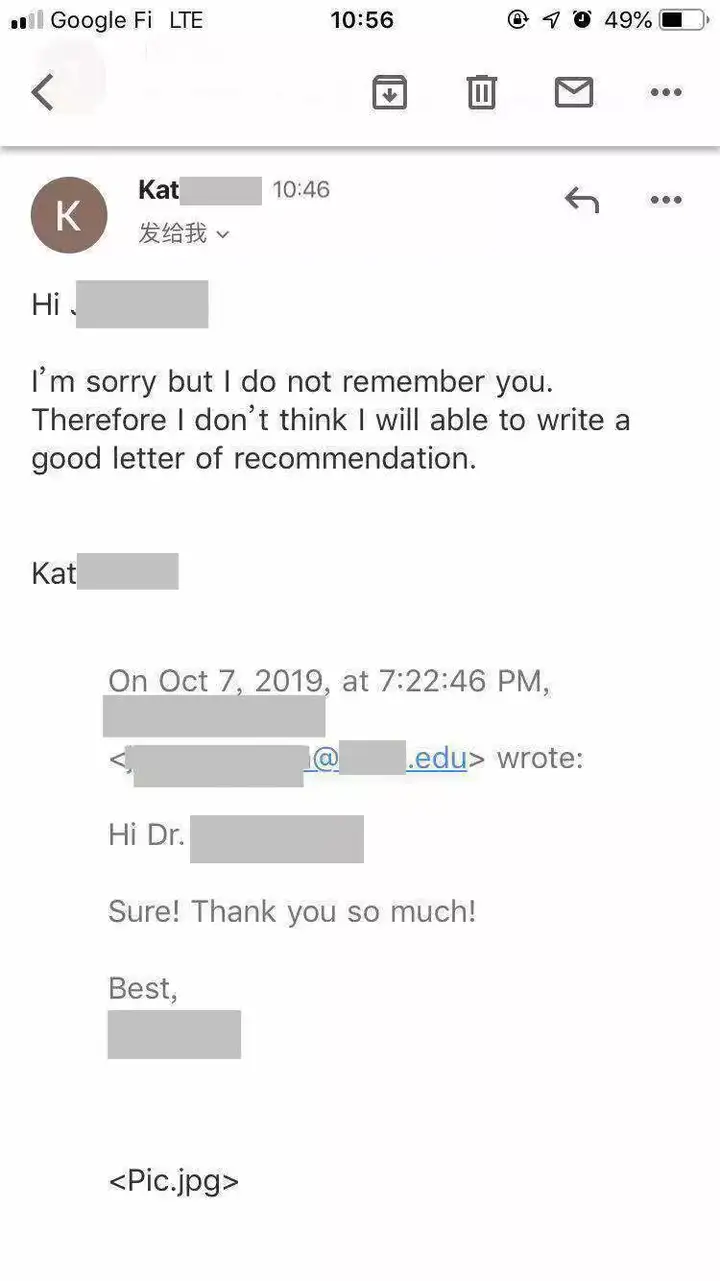
In short, thinking you have a good relationship with the professor is useless; it only matters if they think so. Some students are too presumptuous, put off dealing with recommendation letters, thinking it'll be fine, only to end up with nothing.
Senior Students: Fight for a Glimmer of Hope
For seniors applying for next fall admission, if you still haven't secured enough recommendation letters by now, you really need to hurry!
Some universities accept internship recommendation letters in place of professor letters. In that case, you can ask other internship supervisors if they can provide another recommendation.
For schools with strict requirements for professor recommendations, if you don't have enough, I suggest you go to the professor in person—now, immediately, right away. Stop emailing!

With many holidays at year-end, many professors don't check email promptly, and you no longer have time to wait. You can ask other students about the professor's office hours and go directly with your resume, transcript, list of programs you're applying to, and personal statement. The likelihood of being rejected in person is lower.
During face-to-face meetings, be sure to show great initiative and enthusiasm for the professor and their courses, express your dilemma and urgent need. You can even visit a few times; even if the professor can't recall you, they might be willing to help because of your sincerity.
Sophomore and Junior Students: Prepare in Advance
Sophomores and juniors, you still have time, but don't assume it's abundant.
Getting professor recommendation letters is not a result but a process. I strongly suggest you identify potential professors early, focusing on those with relevant research areas, friendly personalities, and high academic titles in upper-level major courses. To be safe, choose about five.

In class, interact more with professors, work hard to get good grades, and become familiar through office hours, leaving a good impression as a dedicated student.
It's best to ask in advance what standards are required to get a recommendation letter, and confirm with the professor after the course whether they can write one. Finally, confirm details 2-3 months before the application deadline, giving the professor at least over a month to write the letter, ideally completing it before November.
Opportunities only come to those who are prepared. Now, universities have increasingly high requirements for recommendation letters, and with applicants often having a list of 8-10 schools, this undoubtedly makes professor recommendation letters an even more challenging and competitive application component.
Why can't you get a professor's recommendation letter? Simply put, it's procrastination, laziness, and not taking it seriously.
CheersYou(清柚教育) would like to remind future graduate school applicants: never get stuck on the basic material of recommendation letters during the critical application period.
We also hope that seniors who are still anxious about professor recommendation letters can quickly adjust their mindset, actively seek solutions, and successfully catch the last train of applications.