Recently, American universities have successively released early application data for the undergraduate class of 2021, and the results have been surprising.
Contrary to the overall decline in early applications reported by the Common Application in November, early application enthusiasm for prestigious U.S. universities in fall 2021 has surged against the trend. Duke University, Cornell University, Brown University, Johns Hopkins University, Emory University, and many other top American universities all saw a sharp increase in early-round applicants.
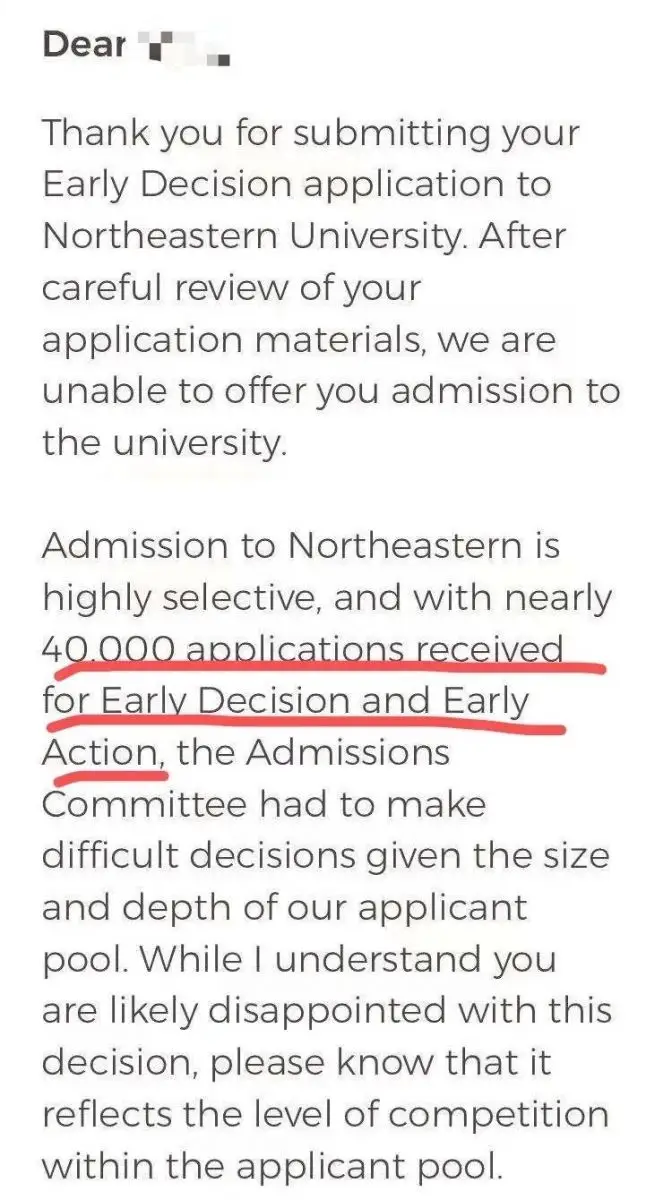
Even admissions officers at some elite institutions expressed that the application volume exceeded their expectations, presenting an "unprecedented" situation. Northeastern University stated that it received nearly 40,000 ED/EA applications this year, requiring difficult decisions in screening and admissions. It is reported that students with a 3.6+ GPA were rejected.
In addition, the University of California's independent UC application system was overwhelmed on November 30, forcing the school to extend the application deadline to December 4.
What is going on with this year's U.S. undergraduate applications? Weren't we told it would be a "down year"? For Chinese international students, what should be the next steps in this current situation?
Next, CheersYou(清柚教育) will sort through the early application data of many prestigious U.S. universities and analyze and predict the admissions landscape.
Top 30 Universities See Surge in Early Application Numbers
Duke University
Ranked 12th by U.S. News, Duke University saw a surge in early applications this year, receiving 5,040 ED applications, an increase of nearly 18% over last year.
University admissions officers also stated that Duke's ED round acceptance numbers will hit a new low, with an acceptance rate of only 16%-17% and an estimated 800-850 admitted students.
Compared to the 880+ admitted in the previous two application cycles, this year's ED admission numbers are lower, partly to accommodate students from the Class of 2024 who took a gap year due to the pandemic.

Cornell University
Cornell, an Ivy League school traditionally friendly to Chinese students, is facing an exceptionally difficult early application season. The ED round directly received over 9,000 applications, a nearly 36% surge over last year.
ED admission results will be announced on December 17 at U.S. Eastern Time. Cornell also officially stated that ED applicants with incomplete materials will be automatically moved to the RD round, and ED-rejected applicants cannot apply RD.

Brown University
Another Ivy League school, Brown University, also saw a significant increase in early applicants this year. The university's admissions officer stated in November that early applications for fall 2021 surged by 16%.
He pointed out that under the pandemic, the overall number of early applications to U.S. universities dropped by 6%, but the early application enthusiasm for top universities like Brown rose against the trend, aided by the school's robust financial aid programs and online promotion strategies.

Johns Hopkins University
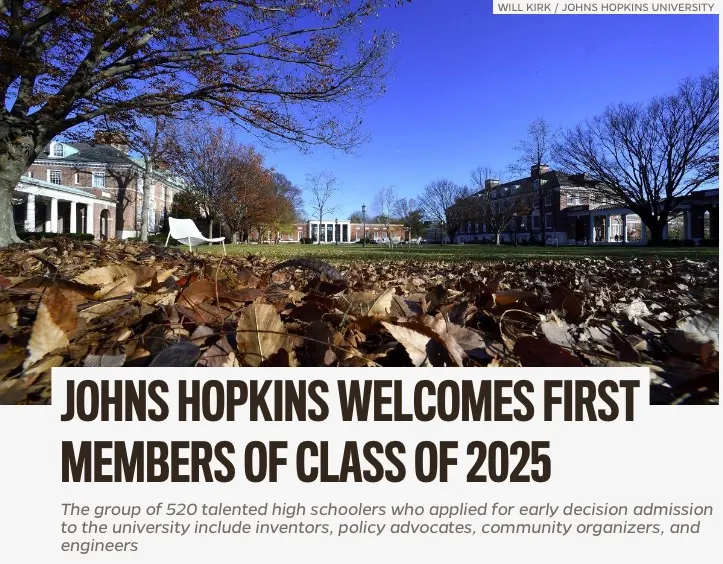
Perennially in the Top 10, Johns Hopkins University saw an 11% increase in early applications this year, and the school issued 520 offers globally.
To ensure yield and attract high-quality students, JHU also added an ED II round this year, with an application deadline of January 4, 2021.
Emory University
Emory University, often called the "Harvard of the South," received 1,975 applications in its ED I round this year, an 8% increase over last year and a 43% increase compared to five years ago.
The school issued 769 offers in ED I, including 57 offers to students from mainland China, far exceeding last year's 33.
Under this year's test-optional policy, a significant proportion of applicants did not submit SAT/ACT scores. For applicants with less competitive standardized test scores, this has somewhat lowered the admissions difficulty.

UVA
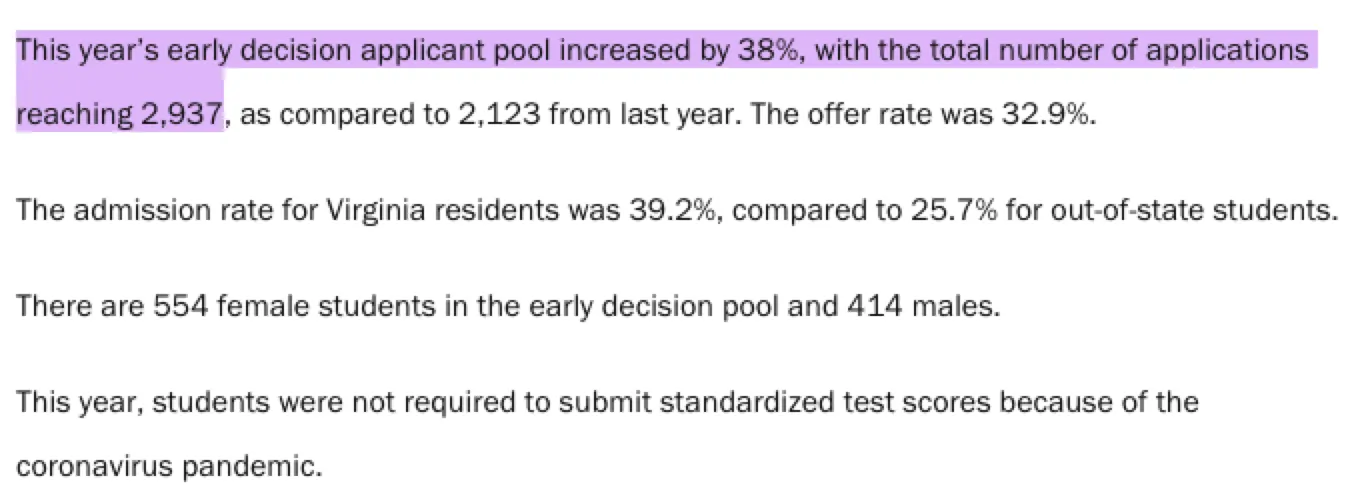
As one of the nation's top public universities and one of the original eight "Public Ivies," the University of Virginia saw a 38% surge in early applications this year, reaching 2,937. The ED acceptance rate was 32.9%, with 968 offers issued.
Due to the pandemic, UVA also adopted a test-optional policy. The university's admissions director stated that this is an unprecedented "application boom year," with a larger and more diverse applicant pool.
UNC
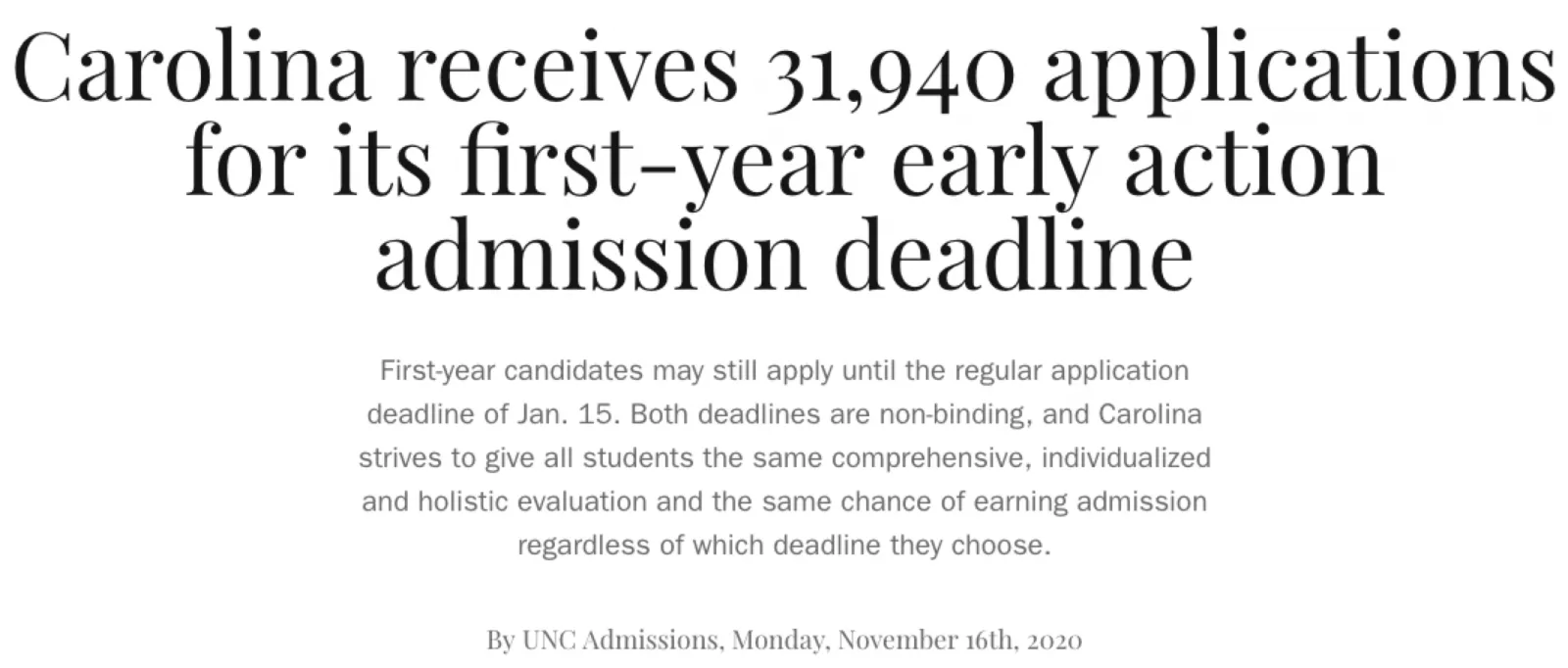
As a Top 30 school, the University of North Carolina at Chapel Hill received 31,940 early applications this year, a 10% increase over last year.
Georgia Institute of Technology
Georgia Tech received over 6,000 EA 1 applications this year, an increase of more than 20% over last year. The school admitted 2,330 students, for an overall acceptance rate of 38%.

Why Did Early Applications to Top 30 Universities Surge Against the Trend?
According to the Common App's early application data released in November, overall early application numbers to U.S. universities decreased by 6% this year. However, against this trend, early applications to elite schools, especially the Top 30, surged. The main reasons are as follows:
1. During the pandemic, applicants gravitate toward elite universities
Education is a long-term investment; even impacted by the pandemic, many applicant families have not abandoned study-abroad plans years in the making. Even those applying to multiple countries still haven't given up on the U.S. and are even more attracted to top-tier universities, considering both risks and returns.
2. Flexible test-optional application policies
Many top universities adopted SAT/ACT test-optional policies this year. For students with previously weaker standardized test scores, the admissions difficulty has relatively decreased, naturally attracting a large number of applicants to try for a reach school.
3. Multiple universities extended application deadlines
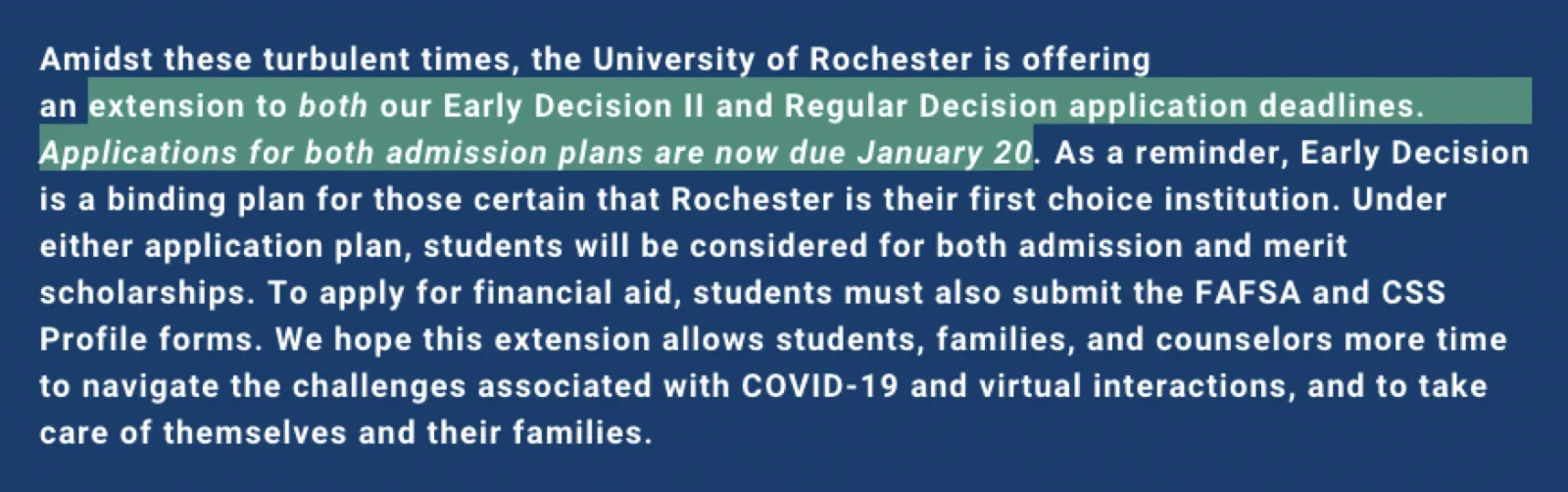
Due to the pandemic and other factors, Duke, Cornell, the University of Rochester, and others extended their ED application deadlines. These policies have given applicants more ample time to prepare for early applications.
Additionally, schools like Johns Hopkins University and Syracuse University added ED II rounds, which is expected to further increase early application numbers.
An "Early Application Boom Year" of Opportunities and Challenges
Applicant enthusiasm for top U.S. universities remains undiminished, but overall acceptance rates are not necessarily optimistic, and the variable of gap years must also be considered.
As we mentioned earlier, Duke's ED acceptance rate hit a new low in recent years. One reason was the surge in applicants, but another was the need to accommodate Class of 2024 gap year students.
Last year, Harvard University had over 340 students choose to take a gap year, accounting for more than 20% of admitted students in the Class of 2024. Whether these gap year students enroll this fall will also impact the Class of 2025 acceptance rate.

Although Stanford University's early decision results for mainland China so far show that offers have doubled compared to the previous two years, the overall ED admissions landscape for U.S. undergraduate programs this year remains uncertain.
Given the surge in early applications and the impact of gap years, regardless of final admission results, one thing is clear: competition pressure at top universities this year remains intense.
What Should Students Who Haven't Submitted Applications Do?
For students who have not yet submitted applications, they can still make the ED II deadline. For example, JHU, NYU, Northeastern, and other schools have ED II deadlines in early January, the same as RD deadlines, but the advantage is that ED acceptance rates are usually higher.
Taking Northeastern University as an example, its ED acceptance rate is 32%, while the RD acceptance rate is only 20%.

Furthermore, with many universities adopting test-optional policies this year, having strong standardized test scores can still somewhat enhance competitiveness in applications.
After all, even if schools said they wouldn't consider SAT/ACT, when application materials surge unexpectedly, it's hard to say whether admissions officers might subjectively use test scores as a convenient way to evaluate applicants.
For instance, nearly half of the students admitted to Boston College's ED I round this year submitted test scores, with an average SAT of 1443 and ACT of 33, showing that high test scores still carry weight.
There are always opportunities within crises. We hope everyone can diligently prepare their applications and ultimately receive an offer from their dream school!