
With the lifting of travel bans for international students and US universities announcing the resumption of in-person classes for the fall semester, many of you are likely preparing to return to campus.
Today, we’ll go over what you need to prepare for traveling to the US post-pandemic and what adjustments you’ll need to make based on current policies.
1. Documents
Important documents that international students generally need to prepare and carry with them when traveling to the US:
— Passport
— I-20 form
— SEVIS fee receipt
— Admission letter
— Health examination certificate
— Vaccination certificate
In addition, during the pandemic, international travelers to the US must comply with CDC regulations and present a negative nucleic acid test result taken within three days before departure.
It’s important to note that some universities are only providing electronic I-20s this year, which students need to print out and sign themselves.
At present, whether or not you’ve been vaccinated against COVID-19 does not affect international students’ ability to travel to the US. However, policies may change at any time, so it’s advisable for those who have received a US-approved vaccine to bring their vaccination record card (Covid-19 Vaccination Record Card). If you received the Sinopharm or Sinovac vaccine in China, you can print a certificate through the relevant international travel health certificate mini-program and carry it with you.

Moreover, some US universities require students to upload proof of vaccination, otherwise they cannot return to campus in the fall. More than 100 universities have announced similar policies in 2021.
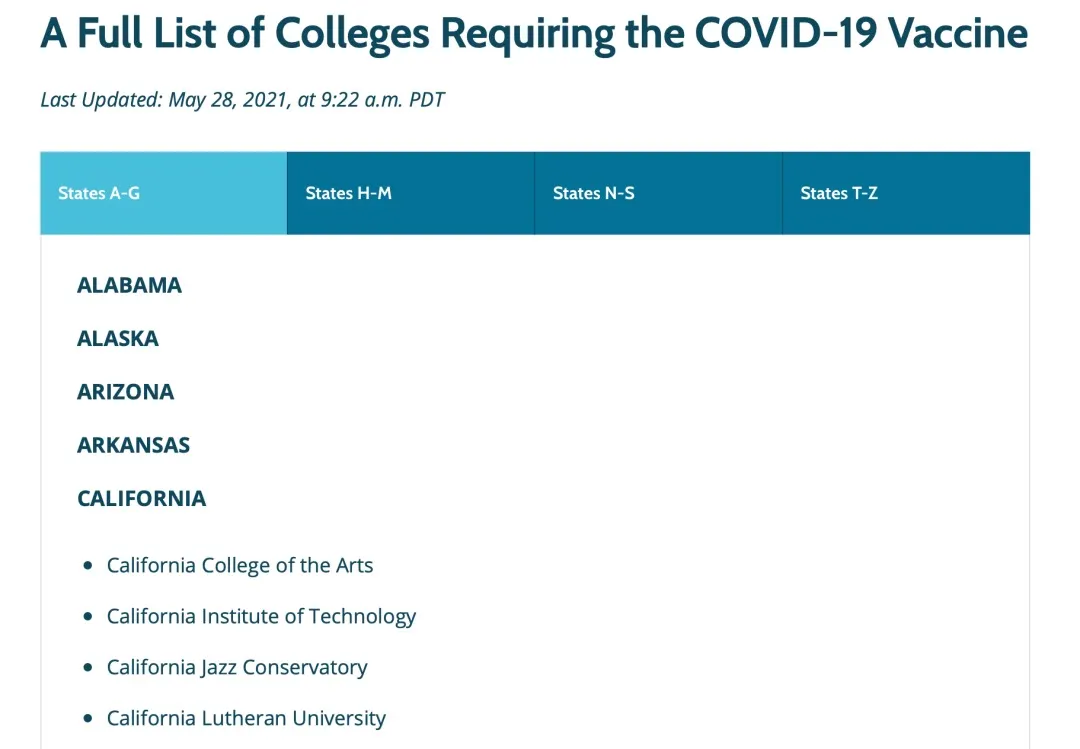
Several US universities, including Harvard, Columbia, NYU, and the University of California system, have already recognized the WHO-approved Chinese vaccines. Students can check their university’s website and, if necessary, arrange to get vaccinated before departure.
2. Visa
Starting from May 2021, the US embassies and consulates in Beijing, Shanghai, Guangzhou, and Shenyang resumed visa services. After receiving your I-20, you can submit a visa interview application on the GSS website (https://www.ustraveldocs.com/cn_zh/
index.html).
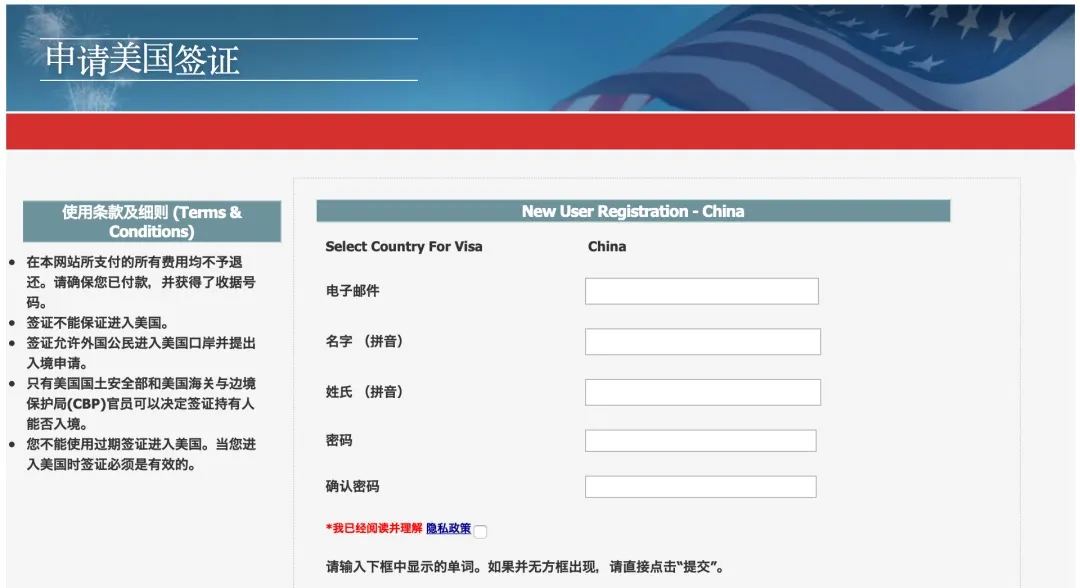
As of now, the embassies and consulates do not require F1 visa applicants to provide proof of COVID-19 vaccination.
Steps for international students applying for an F1 visa interview:
-
Pay the SEVIS fee
-
Complete and submit the DS-160 form online, ensuring all personal information is accurate
-
Pay the visa application fee online and schedule an interview appointment
-
Prepare relevant documents, including passport, I-20, admission letter, transcripts, SEVIS and visa fee receipts, resume, parents’ income certificate, etc. To avoid being unable to answer clearly during the visa officer’s questioning, try to familiarize yourself with the information on the materials.
Visa applicants need to bring their documents to the embassy on the day of the interview. There is usually a line at the embassy entrance, so it’s recommended to arrive 40 minutes early.
There are three common interview outcomes: approval, administrative processing, and denial. Administrative processing (also known as “being checked”) includes routine processing (no further action required) and cases where additional documents are needed.
Being asked for additional documents does not mean you’ve been denied, so be sure to submit the required materials as soon as possible following the instructions in the letter.
3. Health and Vaccination Booklets
You can search online for a nearby International Travel Healthcare Center to schedule an exit health check. The addresses of the medical examination centers in China’s three major cities are as follows:
Beijing International Travel Healthcare Center
Address: No. 20, Hepingli North Street, Dongcheng District, Beijing
Phone: 010-64274239
Shanghai International Travel Healthcare Center
Address: No. 15, Jinbang Road, Changning District, Shanghai
Phone: 021-62688851
Shenzhen International Travel Healthcare Center
Address: Building 1, Comprehensive Building, Huanggang Port Living Area, Futian District, Shenzhen
Phone: 0755-83774005
Prepare the following before the physical examination:
— Passport or ID card
— 4 two-inch photos
— Admission letter, I-20
— The vaccine examination form sent by the school
— Previous vaccination records, including originals and copies
— At least 1,000 RMB in cash
On the day of the check, follow the instructions of the medical staff and complete the entire process. After receiving all the vaccines, you can get the vaccination record booklet on the spot; the health certificate will take a few working days.

Although the health booklet and vaccination booklet are not usually checked upon entry, random inspections are possible, so keep them with you on your journey to the US.
4. Ticket Purchase and Luggage Preparation
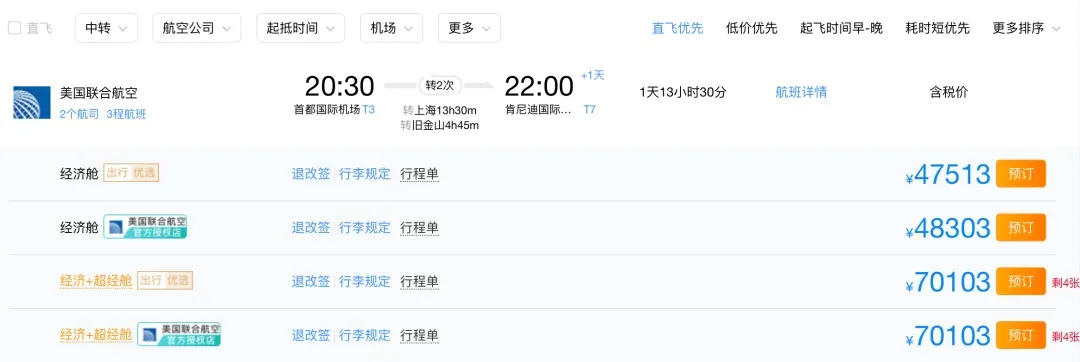
Due to the pandemic, a United Airlines flight from Beijing to New York with two layovers at the end of August costs around 40,000 RMB. Therefore, it is strongly recommended that students who have decided to return to campus in the fall purchase their tickets as early as possible.
Currently, domestic ticketing websites generally do not offer direct flights to the US for late August or early September. If you’re not flying direct, be sure to check the entry and pandemic policies of the stopover locations in advance to avoid delays.
For checked luggage, pack 2-3 large suitcases with essentials (such as a change of clothes, bed sheets, common medications, toiletries, power adapters). Most daily necessities can be purchased after you arrive in the US.
Note that domestic airlines generally allow two pieces of checked luggage for free, but each piece must weigh less than 23 kg; excess weight will incur additional charges.
In addition to the important documents mentioned above, students should also prepare pandemic prevention supplies, such as masks, disposable gloves, alcohol-based hand sanitizer, etc., and keep them in their carry-on luggage.
Parents can provide students with a dual-currency (RMB/USD) credit card, which settles directly in USD for overseas spending. Keep the amount of cash you carry reasonable and do not exceed 10,000 USD, otherwise you’ll need to declare it at customs.
Before boarding, remember to activate international roaming on your mobile phone through the China Mobile/Unicom app, so that you can contact your family, school, or landlord promptly after landing.
International travelers arriving in the US will not be subject to mandatory government quarantine, but must still comply with state health department regulations.
For example, in New York State, local authorities recommend that unvaccinated international travelers get a COVID-19 test 3-5 days after arrival, self-quarantine for 7 days (or 10 days if not tested), and avoid contact with people at high risk for severe illness for 14 days.
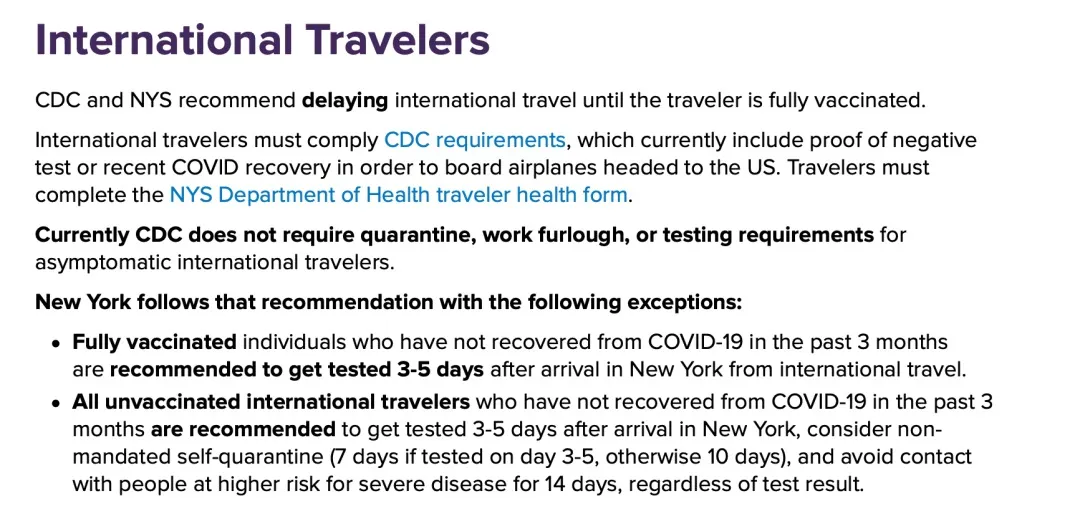
Students who need to self-quarantine are advised to find out about testing sites near their school in advance, so they can get tested and seek medical help promptly if symptoms appear.
5. Renting an Apartment
Since July and August are peak months for international students returning to campus, those planning to live off campus should resolve housing issues one to two months in advance.
There are three common channels for international students to find rental housing: searching for listings on rental websites yourself, using a real estate agent, or finding a sublet from someone you know.
Some recommended websites: Realtor, Zillow, Rent, Apartment Guide
Here are some key points to keep in mind when renting:
-
When choosing a property, get a general understanding of the surrounding environment and transportation to ensure the neighborhood is safe (during the pandemic, it’s especially important to check the local crime and infection rates).
-
Some apartments in the US don’t have washers and dryers; if you want to avoid going to a laundromat, it’s best to choose a place with these amenities.
-
Agree in advance with your roommates on how to split the rental deposit, rent, utilities, and internet costs, and ideally keep written records to avoid future disputes.
-
When signing the lease, read the terms carefully and don’t rush to sign. If there’s something you don’t understand, ask for help; don’t be afraid to bother others. After signing, keep the contract, receipts, and other important documents safe, so you can protect your rights if necessary.
-
If you notice any damage to the facilities after moving in, contact the landlord immediately to avoid misunderstandings when moving out.
Finally, we wish everyone a smooth arrival in the US for the fall semester and an exciting college life in the post-pandemic era.