The new application season is in full swing, and deadlines for universities worldwide are being released one after another.
This year, many university programs have opened first-round applications, or moved up their Round 1 deadlines.
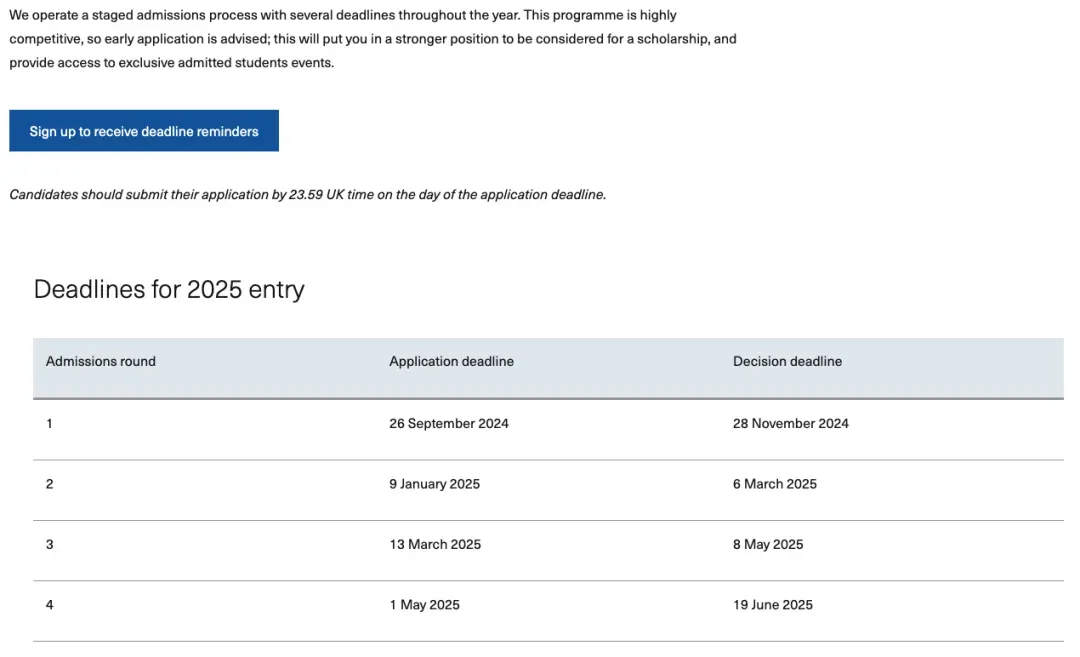
For example, Imperial College Business School has adjusted its admission rules for Fall 2025 to round-based admissions, and the first-round application deadline is September 26!
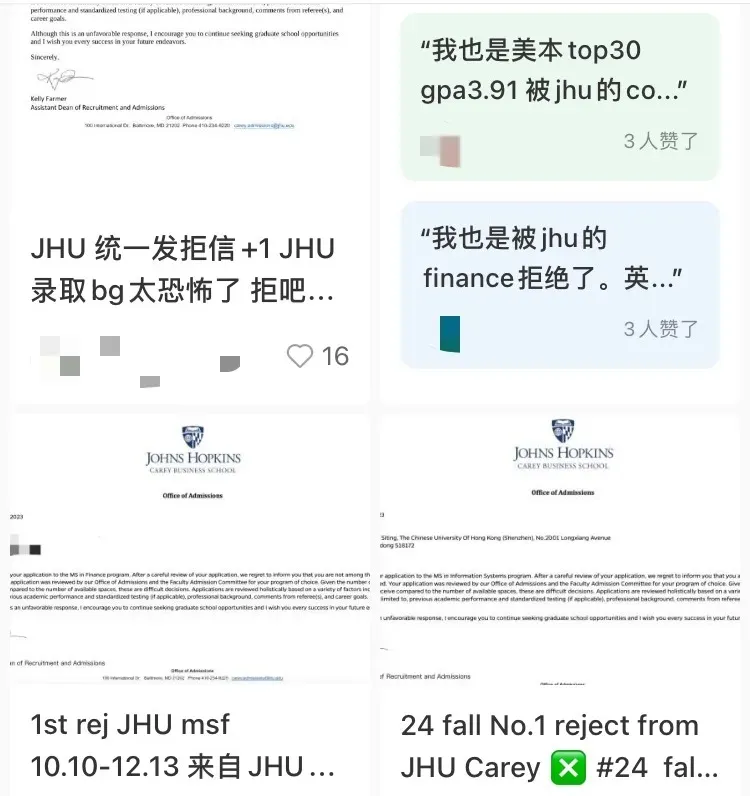
It's understandable that universities are eager for talent, but if you lack sufficient strength, rushing into a one-sided pursuit will only result in a defeat in the first round.
Many students may not have planned to apply early, but after seeing others submit their applications early on "humblebrag" social media platforms, they can't help but feel tempted to give it a try themselves.
Hence, despite all the lessons learned, every year we still see waves of applicants rushing to become cannon fodder in the early rounds.
As this year's application season battle unfolds, we earnestly invite all applicants to ask themselves once again:
Am I really suited for early application?
.png)
Understanding the Different Deadlines for Graduate Schools
Unlike undergraduate applications with unified deadlines, graduate applications have their own requirements and deadlines for each school and even each program.
Take Harvard University as an example. Harvard College has a unified deadline, but its graduate schools set their own distinct deadlines.
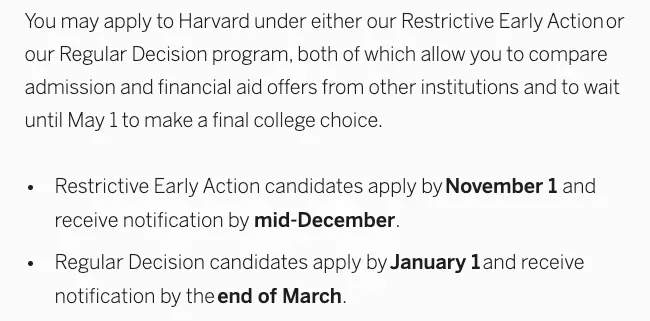
Harvard College Application Deadlines
EA: November 1; RD: January 1
Sample Graduate Application Deadlines at Harvard
Harvard Law School LL.M.: December 1

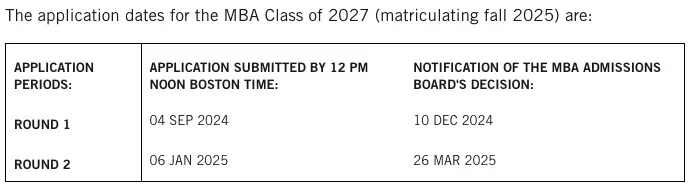
Harvard Business School MBA: September 4, 2024; January 6, 2025
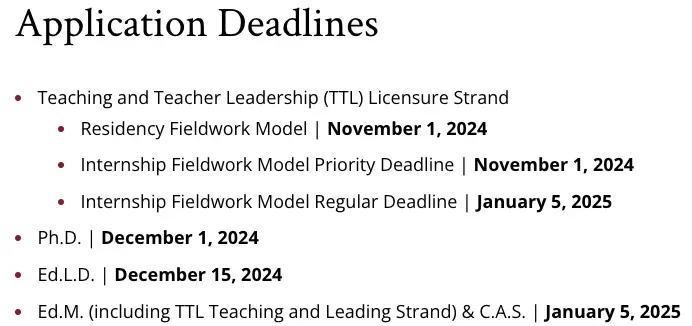
Harvard Graduate School of Education: November 1, 2024 (TTL); January 5, 2025 (Ed.M.)
Understanding Different Graduate Admission Rules
It's evident that beyond fixed deadlines, many graduate programs have special application policies.
Priority Deadline/Early Round
Some graduate programs set a Priority Deadline before the Final Deadline, i.e., a priority round deadline.
This type of deadline is mainly set for applying for scholarships or ensuring that application materials are reviewed.
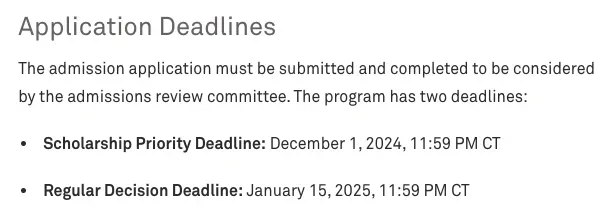
For example, Northwestern University's Master's in Machine Learning and Data Science has a Final Deadline of January 15 of the following year, but the priority deadline for scholarships is December 1 of the current year, over a month earlier.
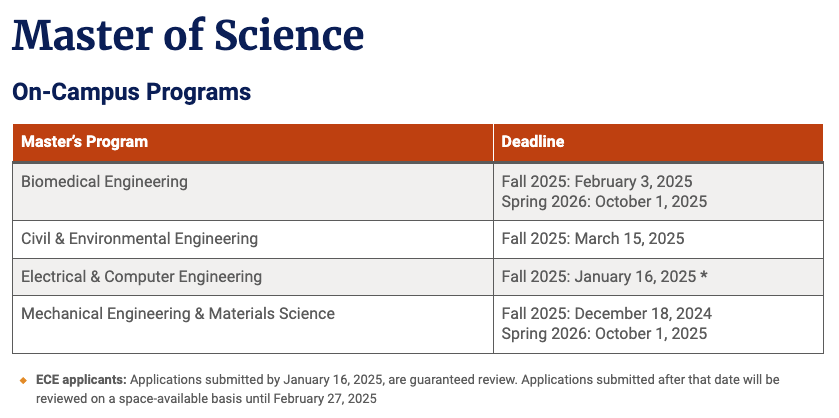
Another example is Duke University's MS in Electrical and Computer Engineering. Although the final application deadline is February 27, applications submitted before January 16 are guaranteed to be reviewed. Whether later applications will be reviewed depends on available space.
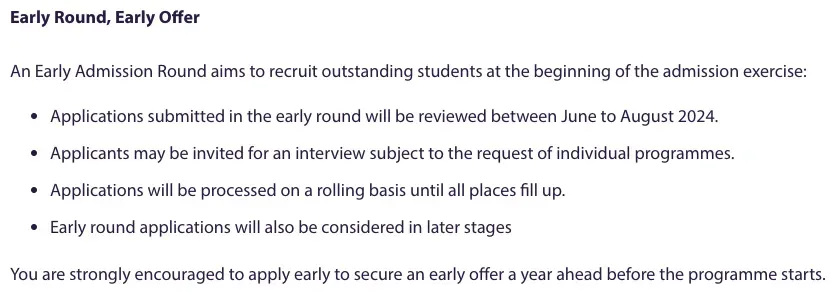
Or, some universities in the UK, Hong Kong, and Singapore have an Early Round, with the clear aim of recruiting outstanding students early.
Rolling Admissions
Some graduate schools use a rolling admissions policy. For example, some programs at the University of Pennsylvania's Graduate School of Education typically conduct rolling admissions after the priority round.
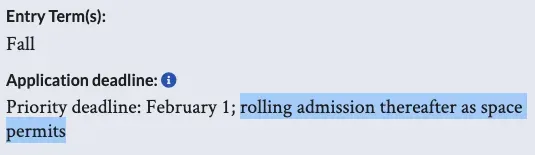
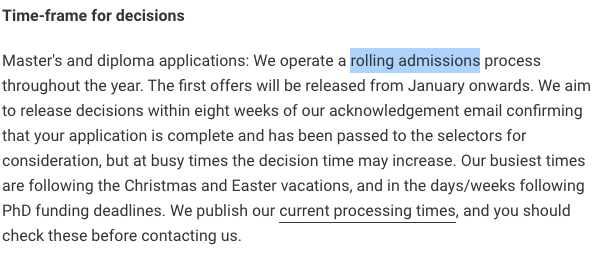
Rolling admissions are even more common in Commonwealth countries. For instance, the London School of Economics clearly states on its website: Master's programs use rolling admissions, and the first batch of offers will be released starting in January.
The flexible application timeline means schools start reviewing materials as soon as applications open. The earlier you apply, the earlier you get a decision, until the program fills its spots. This is often referred to as "first come, first served until capacity is reached."
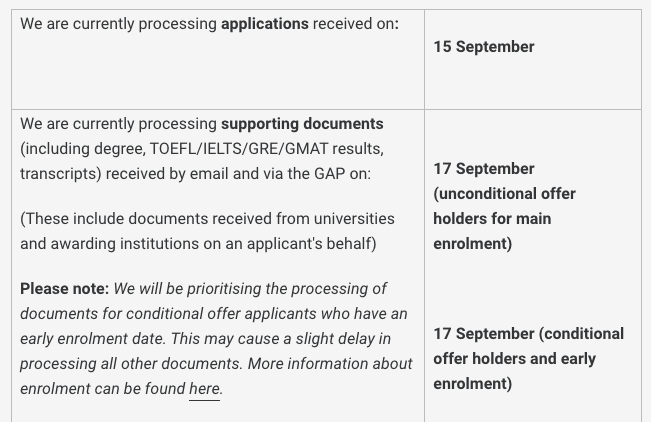
For programs without explicit deadlines, applying earlier naturally means more available spots and a greater chance of admission. Especially for popular destinations like the UK, Hong Kong, and Singapore, where applications flood in every year, it's common for programs to fill up and stop accepting applications soon after the application window opens.
Rounds
Round-based admissions are more common in business schools. Programs set multiple round deadlines, and applicants can choose a specific round to submit their applications.
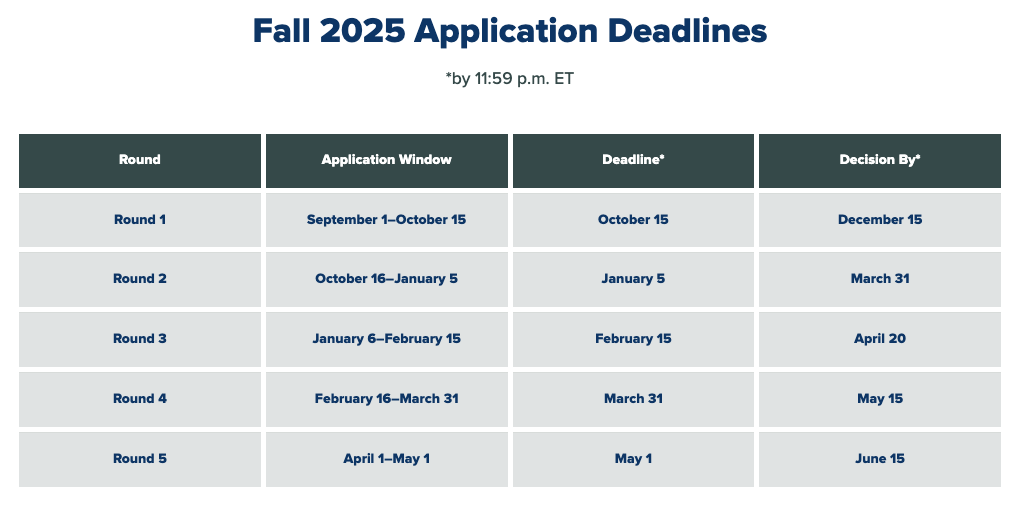
For instance, the Simon Business School at the University of Rochester has up to five application rounds for its master's programs. After each deadline, a batch of admission decisions is released. If you meet all the hard requirements, applying early offers certain advantages and a higher success rate.
Additionally, some round-based programs explicitly state that the final round is not applicable to international students, such as Round 3 for the University of Chicago's CS program.
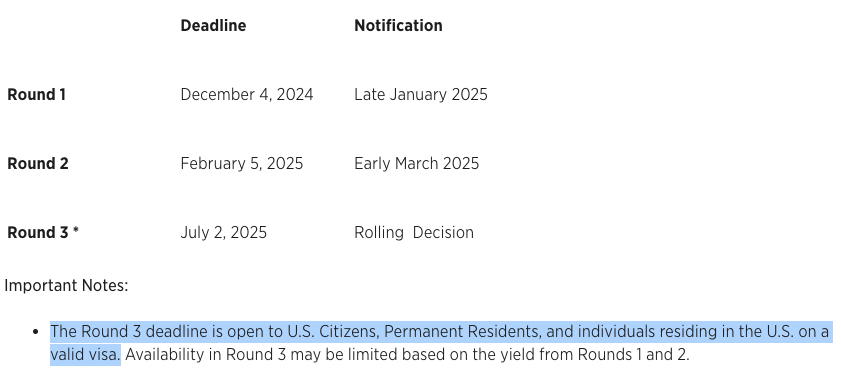
Although some programs note that international students can apply in the final round, to avoid delays from visa and other formalities, most schools recommend on their websites that students apply as early as possible.
Should I Really Jump on the Early Application Bandwagon?
The concept of early application has become increasingly hyped in study-abroad circles in recent years, even to the point of being "demonized."
Early application deadlines are no longer the early November many used to think. More and more programs are moving their first-round or early/priority deadlines earlier and earlier.
The most drastic is the National University of Singapore, whose early applications are typically accepted between May and July, with offers sent out even before other schools' online applications open.

It's understandable that schools want to snatch up talent early, as they all aim to secure outstanding students ahead of time. But as an applicant, if everyone tries to jump on the early application bandwagon, it doesn't quite make sense.
NUS also clearly states: It recommends early application for students who have well-prepared materials, or who have consistently achieved excellent academic performance and practical accomplishments.
Am I Really Suitable for Early Application/Early Submission?
Here, we also provide a checklist for you:
☐ Is your hard-threshold GPA sufficiently outstanding?
☐ Do your standardized test scores (GRE/GMAT, TOEFL/IELTS, etc.) meet the required cutoffs?
☐ Is your internship/research background strong enough?
☐ Have you finalized your school and program choices? (Generally, it's not advisable to apply to more than one program within the same school.)
☐ Are all your application materials—recommendation letters, resume, personal statement, etc.—fully prepared?
☐ Do you have enough confidence to handle program-specific interviews?
☐ *Does your target program use rolling admissions, or is there a scholarship deadline round?
☐ *Is this your first time going abroad, requiring a student visa? (Late visa applications could delay enrollment.)
…………
Based on years of experience, the early application round is usually a "battle among gods." If you can ensure that you basically meet all the yes requirements on the checklist above, then feel free to apply early with confidence.
Adjust Your Mindset and Approach Your Application Rationally
If your background isn't strong and your preparation isn't thorough, CheersYou(清柚教育) advises against rushing to become cannon fodder at the start of the application season, personally enacting the tragic epic of "the earlier you die, the sooner you're reborn."
You Only Apply Once
If you are rejected in the early round, you generally won't have the opportunity to participate in subsequent rounds or resubmit materials for the same admission cycle.
For non-"god-level" applicants, giving yourself more time to polish your background, address weaknesses, learn from the experiences of earlier-round applicants, and choose to apply in the second/third round or submit materials later can be a better choice.
Of course, don't delay too long either. Applying too late has its own drawbacks.
You Only Apply Once
If you are rejected in the early round, you generally won't have the opportunity to participate in subsequent rounds or resubmit materials for the same admission cycle.
For non-"god-level" applicants, giving yourself more time to polish your background, address weaknesses, learn from the experiences of earlier-round applicants, and choose to apply in the second/third round or submit materials later can be a better choice.
Of course, don't delay too long either. Applying too late has its own drawbacks.
We hope that all students who are applying or about to apply can become their own "time management masters."
For sophomores and juniors, seeing the increasingly competitive application season, it's time to put your graduate school plans on the agenda. Early planning and preparation will give you more confidence when it comes to early application.
Wishing all students the best of luck and success in securing offers from your dream schools!