STEM stands for Science, Technology, Engineering & Mathematics, traditionally referred to as “STEM” fields.
In the U.S., a STEM designation not only indicates that a program belongs to these technical fields but, more importantly, it allows international students up to 36 months of OPT (Optional Practical Training) after graduation, compared to only 12 months for non-STEM programs.
STEM graduates can apply for a 24-month STEM OPT Extension before their initial 12-month OPT expires. This means STEM graduates have two additional chances to participate in the H1B work visa lottery compared to non-STEM graduates, which is highly advantageous for those who wish to work in the U.S. after graduation.
The STEM OPT process from application to completion
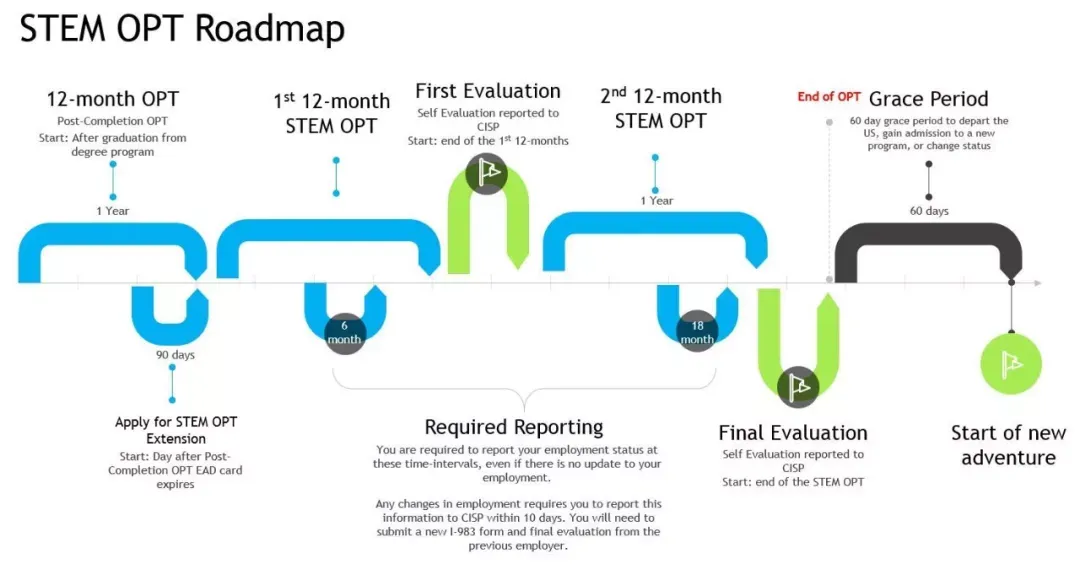
Image source: Cleveland State University official website
Many students with an undergraduate background in liberal arts assume that STEM fields are out of reach when applying to graduate school.
However, this is not the case. Although STEM literally stands for science and engineering, the scope of fields it covers is actually very broad. In addition to traditional STEM disciplines, many programs in business, social sciences, humanities, and other areas also fall under the STEM umbrella.
Official USCIS STEM Designated Degree Program List (partial)
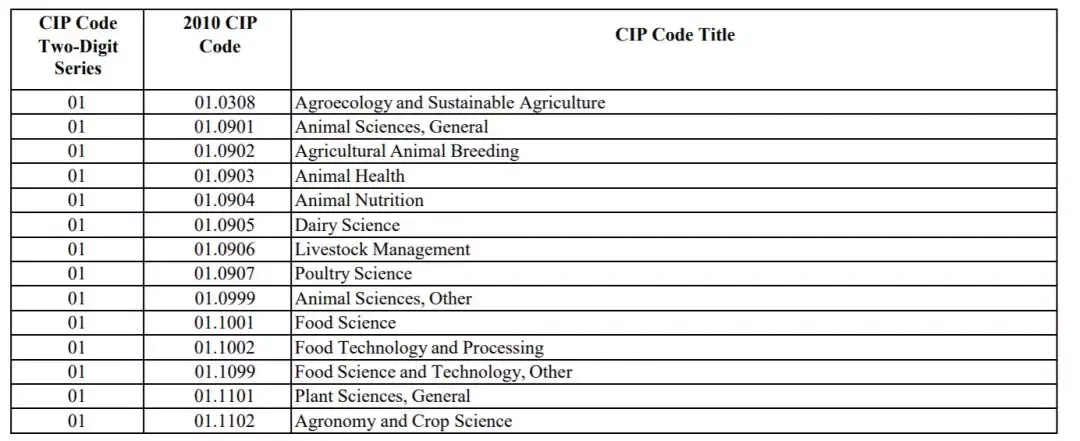
Therefore, for students interested in applying to these areas or transitioning into them while seeking more opportunities to stay in the U.S., STEM-designated programs are a better choice when applying to graduate school.
Management
Management is a relatively broad field with a wide range of career paths. If a management program includes an interdisciplinary component related to STEM fields—such as Data Analytics, Information Systems, or Statistics—it typically qualifies as a STEM program.
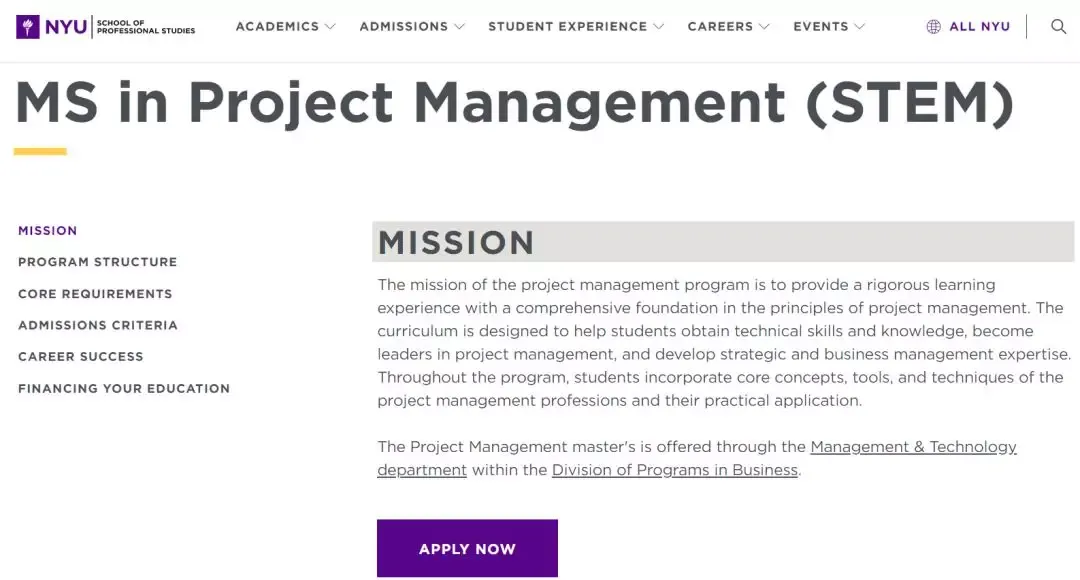
For example, New York University’s Project Management and Management and Systems programs are considered STEM due to courses involving information systems management. Similar programs include Northeastern University’s Project Management.
NYU official website indicates that the MS in Project Management is STEM-designated
Finance
In recent years, programs such as Financial Engineering and Financial Mathematics have become very popular. Even traditional finance programs have kept pace with market trends by incorporating courses related to computer science and statistics, thus transforming into interdisciplinary STEM programs.
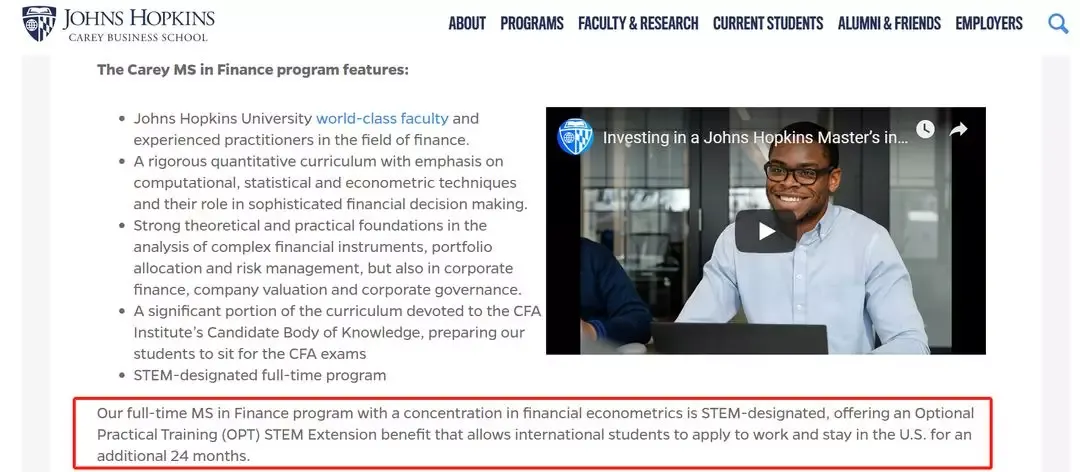
For instance, Johns Hopkins University’s MS in Finance program was designated as a STEM program starting in fall 2019, and Brandeis University’s MS in Finance transitioned from a non-STEM to a STEM program in 2017.
Additionally, programs like Pepperdine University’s Applied Finance and Fordham University’s Global Finance are also STEM-designated.
JHU official website indicates that the MS in Finance is STEM-designated
Marketing
Traditional marketing is an interdisciplinary field combining social sciences and business, covering areas such as psychology, advertising, and behavioral science.
With the rise of digital social platforms and smart devices over the past decade, digital marketing and marketing analytics have emerged as major sectors alongside traditional marketing.
In recent years, an increasing number of large companies have started building their own marketing analytics and digital advertising optimization departments to reduce costs and improve communication efficiency, gradually moving away from reliance on external marketing agencies.
Examples include renowned media company Netflix and cosmetics giant L’Oréal.
Netflix announced a 54% increase in marketing budget last year
.png?x-oss-process=style/opt-webp)
Driven by the enormous job market, many STEM-designated marketing programs related to digital marketing and marketing analytics have been established at U.S. universities.
Examples include University of Rochester’s MS in Marketing Analytics, Washington University in St. Louis’s MA in Customer Analytics, and University of Maryland’s MS in Marketing Analytics.
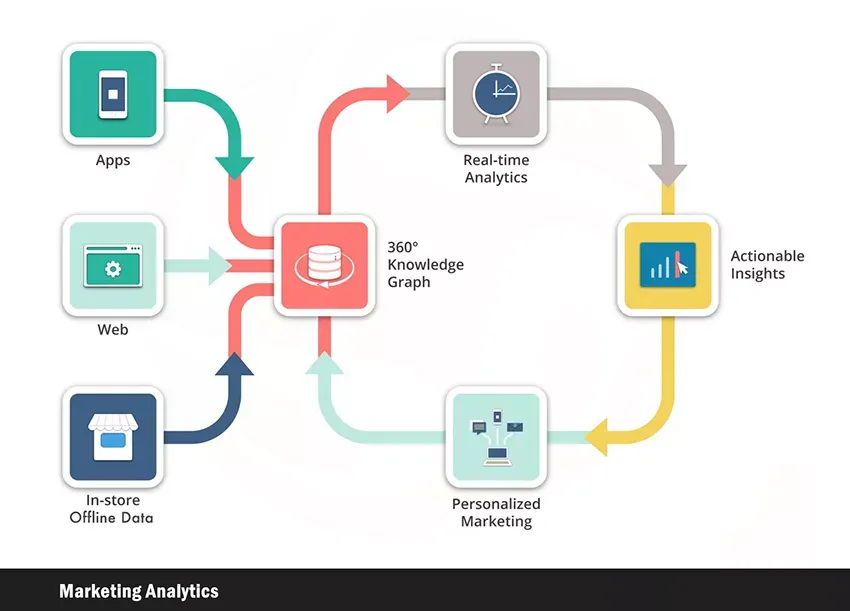
Image source: Marketing Strategy Consulting
Accounting
Yes, you read that right. Accounting programs are often considered “soft” business fields, but due to consistently strong market demand for accounting and tax professionals in the U.S., many business schools have been finding ways to transform their accounting programs into STEM-designated ones through interdisciplinary approaches.
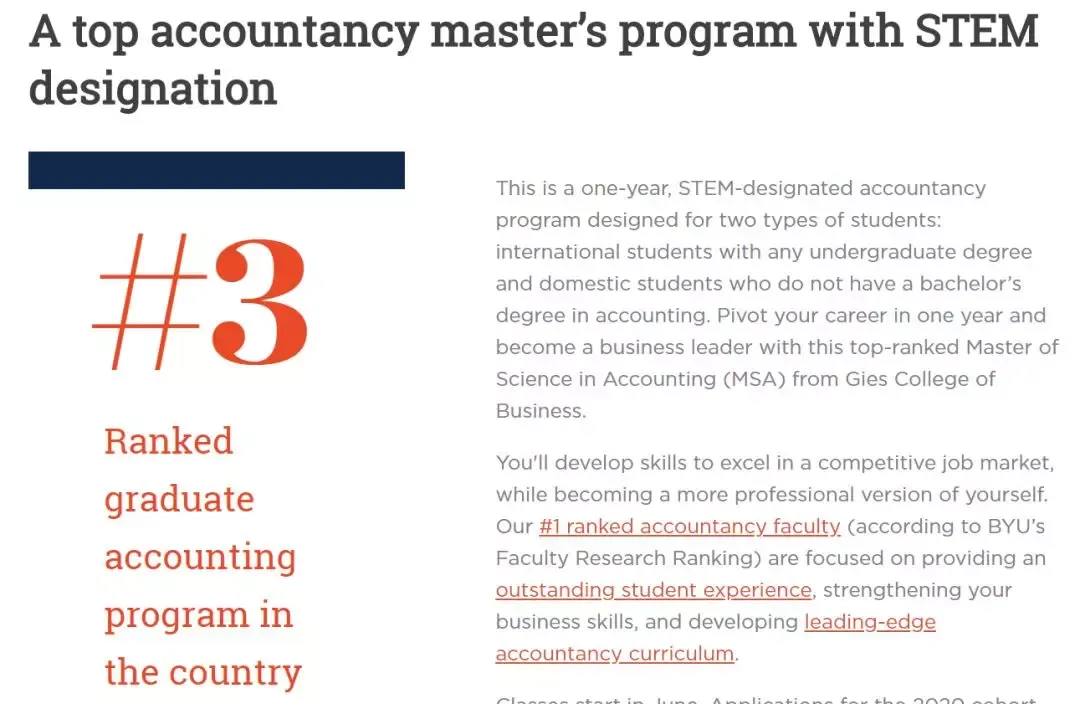
UIUC’s Master of Accounting Science program pioneered this trend. In recent years, programs like Bentley University’s Master of Audit Analytics and Fordham University’s Accounting (with certain electives) have also become STEM.
UIUC’s Master of Accounting Science is not only STEM-designated
but also ranked #3 among U.S. graduate accounting programs by U.S. News
Education
Many students aspiring to pursue advanced studies in education may think they are excluded from STEM programs. However, social sciences and humanities also often employ research methods, data analysis tools, and mathematical models from STEM fields, so many education-related programs at various universities are STEM-designated.
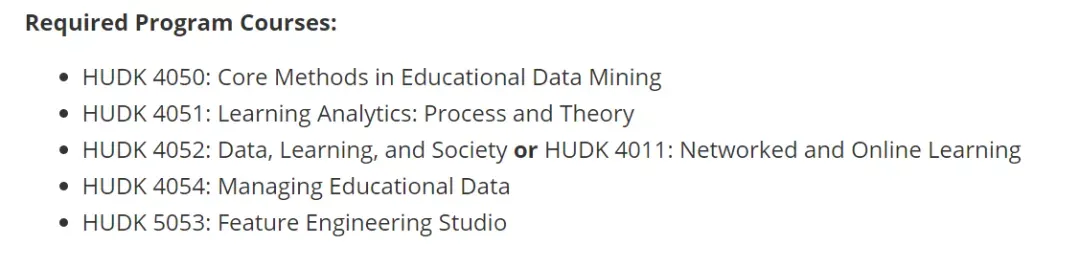
Examples include the University of Pennsylvania’s M.S.Ed. program in Statistics, Measurement, Assessment, and Research Technology (SMART) and Columbia University’s M.S. in Learning Analytics.
Columbia’s Learning Analytics program includes courses such as data mining
Conclusion
Many business, humanities, and social science schools in the U.S. offer a variety of STEM-designated programs, including those in economics, journalism and communication, social policy, and more. As interdisciplinary studies become increasingly prevalent, we can expect even more programs to be included in the STEM category in the future.